
Understanding Beatles White Album First Pressing Variations
The Beatles White Album was released simultaneously in the UK and US on November 22, 1968, creating two distinct first pressing categories that command different values in today's market. UK first pressings on Apple Records feature the catalog number PCS 7067/8 for stereo and PMC 7067/8 for mono, while US pressings carry the catalog number SWBO-101 for stereo and SWBO-1 for mono. Each copy was individually numbered on the cover, with lower numbers generally commanding higher prices—though this relationship isn't linear and other factors significantly impact value.
The most valuable Beatles White Album ever sold was UK first pressing number 0000001, originally owned by Ringo Starr, which fetched $790,000 at Julien's Auctions in December 2015. While this represents an extreme outlier due to provenance, low-numbered UK first pressings (under 10,000) in Near Mint condition routinely sell for $2,000-$5,000 on platforms like Discogs and at specialized auction houses. Numbers below 1,000 can reach $5,000-$10,000 when complete with all inserts and in exceptional condition. US first pressings with low numbers typically sell for $300-$1,200 depending on number and condition, representing a more accessible entry point for collectors seeking valuable Beatles vinyl.
Beyond serial numbers, identifying authentic first pressings requires examining specific label and matrix details. UK first pressings feature the distinctive Apple logo label with "An EMI Recording" text at the bottom and "Sold in U.K. subject to resale price conditions" on the label rim. US first pressings display the Apple label with "Mfd. by Apple Records Inc." and Capitol logo on the label bottom. Understanding these identification markers for rare vinyl is essential before purchasing or selling, as countless reissues exist that superficially resemble originals but carry minimal collector value.
Matrix Numbers and Pressing Plant Identification
Matrix numbers stamped in the vinyl runout groove provide the definitive method for authenticating Beatles White Album pressings and determining their origin. UK first pressings contain specific matrix codes etched into the dead wax: YEX 709-1 and YEX 710-1 for sides one and two, with YEX 711-1 and YEX 712-1 for sides three and four. These codes indicate mastering at EMI Studios, and the presence of these exact numbers confirms a genuine UK first pressing. Variations like YEX 709-2 or higher indicate later pressings from the same stampers or subsequent re-cuts.
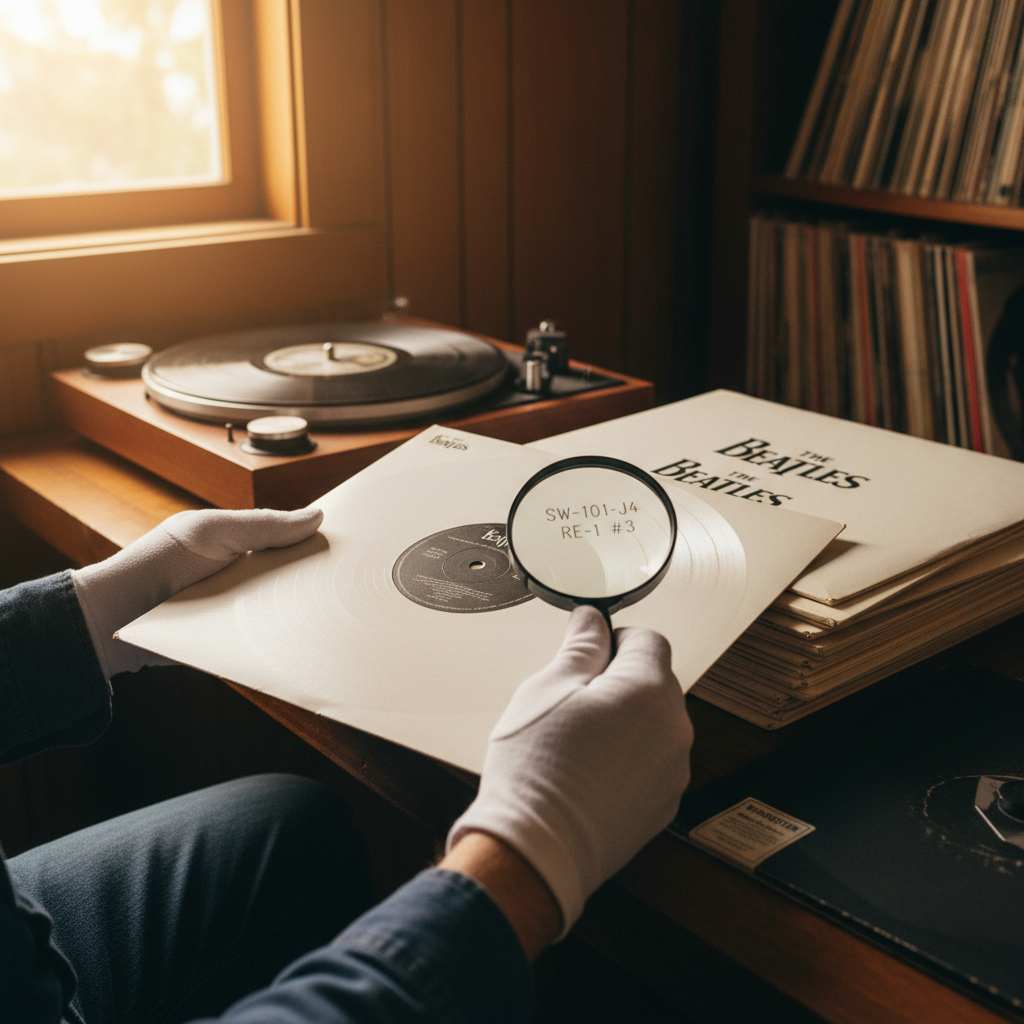
US first pressings display different matrix information depending on the pressing plant. Capitol Records manufactured the White Album at multiple facilities, with the most common plants being Scranton, Pennsylvania; Los Angeles, California; and Jacksonville, Illinois. Scranton pressings typically show matrix codes beginning with "SWBO" followed by the side number and additional plant codes. Los Angeles pressings often include "Hollywood" or specific engineer stamps in the runout. Collectors prize certain plant pressings for superior sound quality—the Los Angeles plant pressings are particularly sought after and can command 15-25% premiums over other plants when identified and verified.
The embossed serial number on the cover also provides authentication clues. UK pressings feature stamped numbers, typically on the front cover's lower right area, while US pressings show embossed numbers that create an indentation visible from the back of the cover. Photocopied or printed numbers indicate later reissues or counterfeits. When examining a potential purchase, always verify that matrix numbers, label details, and cover numbering align with known first pressing characteristics, as mismatched elements suggest a frankensteined copy assembled from multiple pressings.
Beatles Vinyl Value: Mono vs. Stereo Pressings
The mono versus stereo distinction dramatically affects Beatles White Album value, with mono pressings representing significantly rarer and more valuable variants. In the UK, mono production ceased shortly after the initial pressing run, making PMC 7067/8 mono copies exceptionally scarce—estimates suggest fewer than 10,000 mono copies were pressed compared to millions of stereo versions. UK mono first pressings in VG+ condition start around $1,500-$2,000, with Near Mint examples reaching $3,000-$6,000. Exceptional copies with low serial numbers can exceed $10,000 at specialized auctions.
US mono pressings (catalog number SWBO-1) are similarly rare, though slightly less valuable than UK mono equivalents. Capitol pressed limited mono quantities as the format was being phased out in favor of stereo for album releases. US mono White Albums in VG+ condition typically sell for $800-$1,500, with Near Mint copies reaching $2,000-$3,500. The mono mixes feature distinct differences from stereo versions—different balances, effects, and even some alternate takes—making them desirable not just for rarity but for sonic characteristics preferred by many collectors and audiophiles.
Stereo pressings, while more common, still command substantial prices when in first pressing form with desirable characteristics. UK stereo first pressings (PCS 7067/8) in Near Mint condition with low numbers sell for $800-$2,500, while US stereo first pressings (SWBO-101) range from $200-$800 depending on condition, number, and insert completeness. Understanding these value differentials helps collectors prioritize acquisitions and recognize when they've discovered a genuinely valuable copy. Tools like VinylAI can help you quickly identify pressing details by scanning barcodes and accessing comprehensive pressing databases, though White Album first pressings predate barcode usage and require manual verification of matrix and label details.
The Critical Importance of Inserts and Completeness
Original Beatles White Album copies included specific inserts that dramatically affect current market value: a large fold-out poster featuring a collage on one side and lyrics on the reverse, plus four individual portrait photographs of each band member. Complete sets with all inserts in excellent condition can command 50-100% premiums over copies missing these components. A UK first pressing worth $1,000 without inserts might sell for $1,500-$2,000 with pristine, complete inserts included.
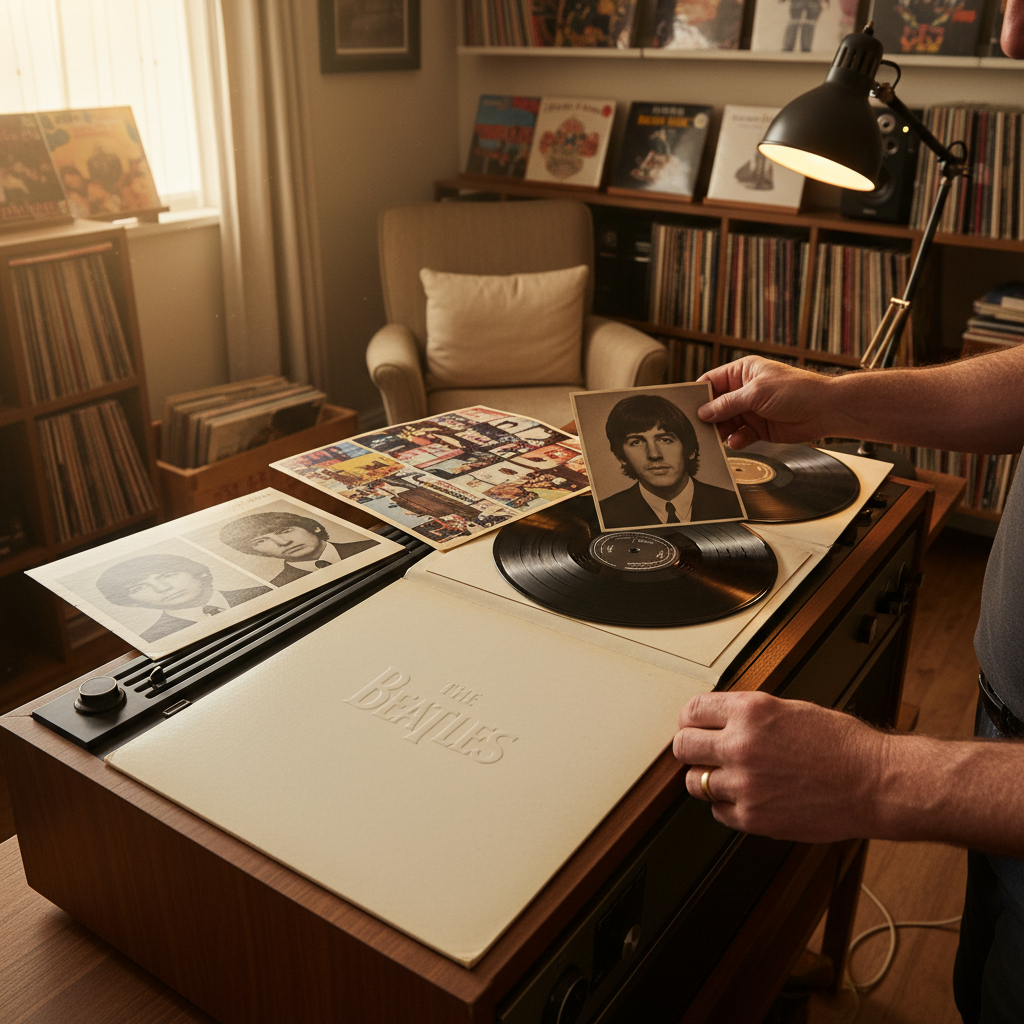
The poster measures approximately 24" x 36" when unfolded and features a psychedelic collage designed by Richard Hamilton and pop artist Peter Blake on one side, with complete album lyrics printed on the reverse. Original posters show specific printing characteristics including particular color saturation and paper stock that differ from later reproductions. Many collectors removed and displayed these posters in 1968-69, resulting in most surviving copies showing pin holes, creases, or tears. Posters in truly Near Mint condition without any damage are exceptionally rare and can individually sell for $100-$300, while damaged but complete posters typically add $20-$50 to album value.
The four portrait photographs measure approximately 8" x 10" and feature individual black-and-white portraits of John, Paul, George, and Ringo. Complete sets in excellent condition add $50-$150 to album value, with individual photos worth $10-$30 each depending on condition. When evaluating valuable vinyl records, completeness always affects pricing—incomplete White Albums should be valued accordingly, and sellers should accurately describe missing components to avoid disputes. Original inserts show period-appropriate printing techniques and paper aging; bright white, crisp reproductions indicate replacements that don't add authentic value.
Condition Grading and Value Impact
Condition represents the single most important factor affecting Beatles White Album value after pressing identification. The all-white cover design shows wear, soiling, and damage more readily than printed covers, making truly clean examples exceptionally rare. Understanding vinyl grading standards is essential for accurate valuation. A UK first pressing graded Near Mint (NM) might sell for $2,500, while the same pressing in Very Good Plus (VG+) condition might bring $1,200, and in Very Good (VG) condition only $400-$600—demonstrating how condition can triple or quadruple value.
The gatefold cover presents specific grading challenges. Examine the spine for splits, which are extremely common due to the album's double-LP weight and frequent opening. Even small spine splits can drop a cover from NM to VG+ grading. Check the cover edges and corners for bumps, bends, and wear—the white surface shows every imperfection. Ring wear from the vinyl pressing against the cover interior is common and appears as circular impressions visible on the white surface. Soiling, staining, and discoloration from age, storage conditions, or handling also significantly impact grading and value. A cover with noticeable yellowing or staining might grade VG at best, regardless of other condition factors.
The vinyl condition equally affects value, with visual and play grading both important. Examine the discs under good lighting for scratches, scuffs, and marks. Light surface marks consistent with VG+ grading are acceptable to most collectors if playback remains excellent, but deeper scratches that cause audible ticks, pops, or skips dramatically reduce value. The original inner sleeves were plain white paper that often caused surface scuffing during storage—many collectors replaced these with modern poly-lined sleeves, which is generally acceptable and even preferred for preservation. When buying or selling high-value White Albums, consider professional grading services for copies potentially worth over $1,000 to establish authoritative condition assessments that support asking prices.
Real Market Values: Recent Sales Data and Price Trends
Analyzing recent sales data from Discogs, eBay, Popsike, and auction houses provides concrete Beatles White Album value benchmarks. Over the past 24 months (2022-2024), UK first pressing stereo copies in NM condition with complete inserts and serial numbers below 50,000 have consistently sold in the $1,200-$2,500 range. Numbers below 10,000 in similar condition reach $2,000-$4,000, while numbers below 1,000 achieve $3,500-$7,500 depending on specific number and exact condition nuances. A UK first pressing numbered 0000023 in NM condition sold for $8,750 at Heritage Auctions in March 2023, while number 0000156 brought $6,200 on Discogs in August 2023.

US first pressing values show more moderate but still substantial numbers. Stereo copies (SWBO-101) in NM condition with complete inserts and low numbers (below 100,000) typically sell for $300-$600, with exceptional examples reaching $800-$1,200. A US first pressing numbered A0000047 in NM condition with pristine inserts sold for $1,350 on eBay in January 2024. Numbers below 10,000 command premiums, though less dramatically than UK equivalents—a number below 5,000 might bring $500-$900 in NM condition compared to $300-$500 for higher numbers in similar condition.
The following table summarizes typical market values across different pressing types and conditions:
| Pressing Type | VG Condition | VG+ Condition | NM Condition |
|---|---|---|---|
| UK First Pressing Stereo (low number) | $400-$800 | $1,000-$1,800 | $2,000-$4,000 |
| UK First Pressing Stereo (high number) | $200-$400 | $500-$900 | $800-$1,500 |
| UK First Pressing Mono | $800-$1,500 | $1,500-$3,000 | $3,000-$6,000+ |
| US First Pressing Stereo (low number) | $100-$200 | $200-$400 | $400-$1,200 |
| US First Pressing Mono | $400-$800 | $800-$1,500 | $1,500-$3,500 |
These values assume complete inserts in comparable condition to the album itself. Incomplete copies should be discounted 30-50% depending on which components are missing. Market trends show steady appreciation for top-condition first pressings, with NM UK mono copies appreciating approximately 8-12% annually over the past five years, outpacing most other Beatles vinyl investments.
Special Variations and Rare Anomalies
Beyond standard first pressings, several Beatles White Album variations command premium prices due to rarity or unique characteristics. The most notable is the "top loader" gatefold variation found in some early UK pressings, where the opening is at the top rather than the standard right-side opening. These represent manufacturing variations from the initial production run and can command 20-30% premiums when identified and verified. A top-loader UK first pressing in NM condition might sell for $2,500-$3,500 compared to $2,000-$2,800 for a standard opening in comparable condition.
Some UK first pressings contain printing errors or variations on the cover numbering, including double-stamped numbers, misprinted numbers, or numbers stamped in unusual locations. While these don't necessarily increase value significantly, they represent interesting collectibles for Beatles completists. More valuable are copies with documented provenance connecting them to the band, production team, or significant historical events—though authentication of such claims requires substantial documentation and expert verification.
Japanese first pressings from 1968-69 on Apple Records (catalog number EAS-77001/2) represent another collectible variation, particularly the red vinyl promotional version pressed in extremely limited quantities for radio stations and industry insiders. These red vinyl Japanese promos can sell for $2,000-$5,000 in excellent condition, making them among the most valuable vinyl records from the Beatles catalog. Standard black vinyl Japanese first pressings with obi strips intact typically bring $200-$500 depending on condition, with the obi strip contributing significantly to value—copies missing the obi should be valued 40-50% lower.
Promotional copies marked "Not for Sale" or "Demonstration" exist for both UK and US pressings, typically featuring white labels with black print rather than the standard Apple label design. US white label promos in NM condition sell for $500-$1,200, while UK promos can reach $1,500-$3,000. These promotional copies often feature superior vinyl quality and pressing characteristics, as they were intended for radio play and review purposes where sound quality was paramount.
Authentication Tips and Avoiding Counterfeits
The high values commanded by Beatles White Album first pressings have inevitably attracted counterfeiters and created a market filled with misidentified reissues. Authenticating a potential first pressing requires systematic examination of multiple elements that counterfeiters struggle to replicate accurately. Start with the cover embossing—genuine UK and US first pressings feature deeply embossed serial numbers that create substantial indentation visible and feelable from the reverse. Printed or lightly stamped numbers indicate later pressings or reproductions.
Label examination provides critical authentication evidence. UK first pressing labels feature the Apple logo with specific text layout: "An EMI Recording" at the bottom, "Sold in U.K. subject to resale price conditions, see price lists" around the rim, and the distinctive green Granny Smith apple design. The label should show period-appropriate printing quality—modern reproductions often display colors that are too vibrant or printing that's too sharp compared to 1968 production standards. US first pressing labels show "Mfd. by Apple Records Inc." with the Capitol logo, and similar period-appropriate printing characteristics.
Matrix number verification represents the most definitive authentication method. Use a strong light source and magnification to read the complete matrix information in the runout groove. Cross-reference these codes against known first pressing matrices documented in authoritative sources like the Beatles discography compiled by researchers and collectors. Discogs entries for verified first pressings include detailed matrix information submitted by collectors—compare your copy against multiple verified examples. Be suspicious of any matrix numbers that don't match documented first pressing codes, as this definitively indicates a later pressing regardless of other characteristics.
When purchasing high-value copies, request detailed photographs showing matrix numbers, label details, and cover characteristics before committing. Reputable sellers understand that serious collectors need this information for authentication. For purchases over $1,000, consider using escrow services or purchasing from established dealers who guarantee authenticity and accept returns if professional authentication reveals discrepancies. The investment in professional grading and authentication for a potentially valuable White Album pays for itself by preventing costly mistakes and providing documentation that supports resale value.