

What Makes Vinyl Records Valuable: The Core Factors
The value of rare vinyl records is determined by a complex interplay of factors that go far beyond simple supply and demand. Rarity is the most obvious driver—pressings with limited production runs, withdrawn releases, or promotional copies never sold commercially automatically command premium prices. However, rarity alone doesn't guarantee value; a rare record nobody wants remains worthless. The intersection of scarcity and desirability creates the market conditions for truly valuable records.
Condition is equally critical and often misunderstood by novice collectors. Goldmine's grading standard, which has become the industry benchmark, separates Near Mint (NM) from Very Good Plus (VG+) by small signs of play and handling, and on a rare pressing that small step routinely makes a large difference: dealers and price guides price a VG+ copy well below a Near Mint one. For investment-grade records worth over $1,000, even minor surface marks or spindle wear can reduce value by thousands of dollars. Understanding proper vinyl grading standards is essential before making significant purchases or selling valuable pieces from your collection.
Historical significance adds another dimension to value. Records connected to pivotal moments in music history—first recordings of legendary artists, sessions that changed genres, or releases banned or censored—carry premium valuations. The Sex Pistols' "God Save the Queen" on A&M Records, pressed in March 1977 and scrapped when A&M dropped the band six days after signing them, has sold for £11,142 on Discogs (November 2017) and £24,320 including premium at Wessex Auction Rooms (5 July 2024), despite being a simple 7-inch single. The story behind the record matters as much as the grooves themselves.
Twenty Records Worth Real Money That People Actually Own
Lists of the world's most valuable records are entertaining and useless: nobody has an acetate in the loft. The table below is the other half of the subject — well-known albums where one specific pressing carries the value, which is the situation almost every collector is actually in. For each record it names the pressing that holds the money, the catalogue number to check yours against, and what the cheapest copy currently listed is being asked for.
| Record | The pressing that holds the value | Year | Catalogue no. | Cheapest copy asking | For sale | Wanted by |
|---|---|---|---|---|---|---|
| The Beatles Please Please Me | Parlophone — LP / Stereo / Album / Gold & Black Label, Dick James Credits UK | 1963 | PCS 3042 | $12563.90 | 2 | 1636 |
| Nirvana Bleach | Sub Pop — LP / Album / Limited Edition / White US | 1989 | SP 34 | $2580 | 6 | 7393 |
| Led Zeppelin Led Zeppelin | Atlantic — LP / Album / Stereo / Turquoise Lettering UK | 1969 | 588171 | $2040.06 | 13 | 11464 |
| The Velvet Underground The Velvet Underground & Nico | Verve Records — LP / Album / Stereo / West Coast Pressing, Torso Cover, Gatefold US | 1967 | V6-5008 | $1075 | 3 | 4388 |
| Pink Floyd The Piper At The Gates Of Dawn | Columbia — LP / Album / Stereo / 1st sleeve UK | 1967 | SCX 6157 | $1020.82 | 3 | 2110 |
| John Coltrane Blue Train | Blue Note — LP / Album / Mono / No® US | 1958 | BLP 1577 | $463.95 | 7 | 3330 |
| Radiohead OK Computer | Parlophone — LP / Album / Repress / 180g. UK | 1998 | NODATA 02 | $424.99 | 3 | 2163 |
| The Cure Disintegration | Elektra — LP / Album / Club Edition US | 1989 | 9 E1 60855-1 | $236.50 | 1 | 1428 |
| Joy Division Unknown Pleasures | Factory — LP / Album / Textured Sleeve UK | 1979 | FACT 10 | $172.74 | 10 | 2993 |
| The Smiths The Queen Is Dead | Rough Trade — LP / Album Japan | 1986 | 25RTL-3015 | $146.19 | 19 | 1640 |
| Aphex Twin Selected Ambient Works 85-92 | Apollo — LP / Album Belgium | 1992 | AMB LP 3922 | $94.23 | 8 | 7489 |
| The Beatles The Beatles | Apple Records — LP / Album / Misprint / Numbered / Mono / First Pressing UK | 1968 | PMC 7067/8 | $75.58 | 66 | 6282 |
| Miles Davis Kind Of Blue | Columbia — LP / Album / Stereo US | 1959 | CS 8163 | $68.80 | 8 | 2842 |
| The Rolling Stones Beggars Banquet | Decca — LP / Album / Mono / Gatefold Unboxed Decca Logo UK | 1968 | LK 4955 | $54.97 | 30 | 2652 |
| Bob Dylan The Freewheelin' Bob Dylan | Columbia — LP / Album / Mono / Pitman Pressing US | 1963 | CL 1986 | $50.74 | 21 | 5935 |
| Queen A Night At The Opera | Elektra — LP / Album / CTH, Embossed Gatefold US | 1975 | 7E-1053 | $38.70 | 3 | 937 |
| Beastie Boys Licensed To Ill | Def Jam Recordings — LP / Album / Stereo / Gatefold Sleeve UK | 1986 | 450062 1 | $37.30 | 17 | 986 |
| Prince Purple Rain | Warner Bros. Records — LP / Album Jamaica | 1984 | 25110-1 | $33.33 | 6 | 788 |
| David Bowie The Rise And Fall Of Ziggy Stardust And The Spiders From Mars | RCA Victor — LP / Album / Stereo UK | 1972 | SF 8287 | $31.41 | 143 | 15279 |
| Wu-Tang Clan Enter The Wu-Tang (36 Chambers) | Loud Records — LP / Album Europe | 1994 | 74321 20367 1 | $23.26 | 9 | 3538 |
| Fleetwood Mac Rumours | Warner Bros. Records — LP / Album / Stereo / Made in West Germany UK | 1977 | K 56344 | $23.26 | 13 | 1738 |
| Michael Jackson Thriller | Epic — LP / Album / Stereo / Gatefold Australia | 1982 | ELPS 4328 | $17.44 | 10 | 1018 |
Source: Discogs marketplace, checked 2026-09-11. For each record, the pressing whose cheapest listed copy is being asked the most for — an asking price, not a sale price. “Wanted by” is how many Discogs users have it on a wantlist, which is demand, not scarcity. 22 records shown.
Read the third and fourth columns before the fifth. The price belongs to that pressing and not to the album: the same title in a later reissue is usually a common record worth a few dollars, and the gap between the two is frequently a factor of a hundred. The catalogue number and the runout are what separate them, and our guides to runout and matrix numbers and to catalogue numbers explain how to read both off a record you already have.
Two cautions about the numbers, because they matter. They are asking prices — what a seller wants today, not what anyone paid — and the "wanted by" column measures how many people have the record on a wantlist, which is demand rather than scarcity. A record wanted by thousands and owned by tens of thousands is popular, not rare.
The Most Expensive Vinyl Records Ever Sold at Auction
The upper echelon of valuable records includes pieces that have sold for six and seven-figure sums at major auction houses. The Beatles' White Album numbered 0000001 tops the list at $790,000 including premium (Julien's Auctions, Los Angeles, 5 December 2015). It was Ringo Starr's own copy, kept in a London bank vault for decades and sold by him for charity; the buyer was not named. This particular pressing holds significance as the first numbered copy from the initial run where each album was individually numbered, with lower numbers commanding exponentially higher prices.
Other record-breaking sales include Elvis Presley's "My Happiness" acetate, which sold for $300,000 at the Auction at Graceland on 8 January 2015; the buyer was later revealed as Jack White. This was the first recording Elvis ever made, cut in 1953 at Sam Phillips' Memphis Recording Service (the Sun Studio building), a one-of-a-kind acetate said to be a gift for his mother. Similarly, The Quarrymen's "That'll Be The Day/In Spite of All The Danger" acetate from 1958—featuring Paul McCartney, John Lennon and George Harrison before The Beatles formed—has never been sold at auction: pianist John "Duff" Lowe kept the only copy for over 20 years, and McCartney bought it from him privately in 1981. Guinness World Records puts its value at about £100,000. These acetates represent unique artifacts rather than commercial pressings, placing them in a special category of collectibility.
For Elvis Presley in particular — the Sun singles, the first RCA mono LPs and why most Elvis records sell for a few dollars — see our Elvis vinyl value guide.
Among commercially released records, Bob Dylan's "The Freewheelin' Bob Dylan" with four withdrawn tracks holds legendary status. A stereo copy with the original tracklist (before Columbia withdrew and replaced four songs) sold for $150,000 at Heritage Auctions in July 2022, and a mono copy made $20,000 there in April 2025. Only two stereo and about 20 mono copies have been documented. The withdrawn tracks—"Rocks and Gravel," "Let Me Die in My Footsteps," "Gamblin' Willie's Dead Man's Hand," and "Talkin' John Birch Blues"—make this one of the most sought-after Dylan releases. You can explore more examples in our comprehensive top 100 most valuable vinyl records guide.
Singles Are Counted Separately
Everything above is about albums. Seven-inch singles run on a different economy: the scarcity comes from withdrawn soul and doo-wop pressings, tiny regional labels, radio promos and picture sleeves rather than from famous albums, and the prices behave differently as a result. A common hit single is a five-dollar record no matter what the album market does.
That has its own page, because mixing the two produces a list that is wrong about both: the 100 most valuable 45 RPM singles.
Beatles Records: The Blue-Chip Investment of Vinyl Collecting
No artist commands higher prices across a broader range of releases than The Beatles. Beyond the famous White Album, numerous Beatles pressings regularly sell for five and six-figure sums. The "Butcher Cover" version of "Yesterday and Today" remains one of the most valuable US releases, with first-state copies (never pasted over, with the controversial butcher photo intact) at the top of the market: a sealed first-state copy sold for $125,000 at Heritage Auctions on 20 February 2016. Even second-state copies, where the replacement cover was pasted over the butcher image, command $1,500-$3,000 depending on condition.
UK first pressings of Beatles albums on Parlophone with specific matrix numbers are highly prized by serious collectors. A mono first pressing of "Please Please Me" with the gold and black Parlophone label and correct matrix numbers (XEX 421-1N/XEX 422-1N) can fetch $5,000-$8,000 in Near Mint condition. The stereo version (PCS 3042, runouts YEX 94-1/YEX 95-1) is even rarer and more valuable: a black-and-gold stereo copy sold on eBay for £11,600 in November 2009, and an Excellent copy made £5,800 in January 2024 (Popsike archive). These early UK pressings used superior mastering and pressing quality compared to later releases, making them sonically superior as well as collectible.
Promotional copies and unusual variations add another layer to Beatles collecting. The "Love Me Do" demo on Parlophone with "P.S. I Love You" on the B-side, pressed in a run of about 250 copies for radio play before the commercial release, sold on Discogs for $14,757 in 2017, a record for a single on the site at the time (The Vinyl Factory, 5 December 2017). Similarly, the 1970 fan-club LP that collected the Christmas flexi-discs ("From Then to You" in the UK, "The Beatles Christmas Album", Apple SBC-100, in the US) was sent only to fan club members and never sold in shops, which makes originals far scarcer than any regular Beatles LP. For detailed information on identifying valuable Beatles pressings, consult our Beatles White Album value guide, which covers matrix numbers, label variations, and authentication tips.
Rare Punk and New Wave 45s: Small Format, Big Value
The punk and new wave movements of the mid-1970s produced some of the most valuable 7-inch singles in existence, often worth more than classic rock LPs. The Sex Pistols' "God Save the Queen" on A&M Records stands as the holy grail of punk collecting. About 25,000 copies were pressed in March 1977, but A&M dropped the band six days after signing them on 10 March and destroyed nearly all of them; estimates of surviving copies range from nine to about 300. The record price is £24,320 including premium, over $31,000, at Wessex Auction Rooms on 5 July 2024.
Other valuable punk 45s include The Misfits' "Cough/Cool" single on Blank Records (1977), limited to 500 copies, of which one sold on Discogs for $10,877 in January 2021, the site's top sale that month. Germs' "Forming" single on What? Records (1977), was pressed in about 3,000 copies, the first batch with its labels on the wrong sides, and sells for a fraction of what Cough/Cool brings. These early punk singles were typically pressed in tiny quantities by independent labels with minimal distribution, and many were destroyed or discarded, making survivors extremely rare.
New wave releases can be equally valuable. Joy Division's "An Ideal for Living" EP on the band's own Enigma label (1978), pressed in just 1,000 copies in June 1978 (catalogue number PSS 139) with a controversial cover image, has sold unsigned for $8,768 (October 2021) and $9,970 (January 2024) on eBay (Goldmine). The Velvet Underground's "All Tomorrow's Parties" promotional single from 1966, in its picture sleeve and with fewer than ten copies known, sold on Discogs for $30,000 in March 2024 (Consequence, 16 April 2024). The small format of these releases makes condition especially critical—understanding LP vs EP vs single formats helps collectors properly evaluate and store these valuable pieces.
Jazz and Blues Rarities: The Original Pressings That Define Genres
Original jazz and blues pressings from the 1950s and 1960s represent some of the most consistently valuable records across all genres. Blue Note first pressings with the famous "deep groove" ring in the label, Rudy Van Gelder's "RVG" stamp and the Plastylite "P" (often called the "ear") in the dead wax are highly prized by audiophiles and collectors alike. A first pressing of John Coltrane's "Blue Train" (BLP 1577) in Near Mint condition can fetch $3,000-$5,000, while Thelonious Monk's "Brilliant Corners", a Riverside album rather than a Blue Note (RLP 12-226, white label, 1957), typically brings $2,500-$4,000.
The most valuable records on jazz labels often combine rarity with historical significance, and that includes their rock releases. The Velvet Underground & Nico on Verve (mono V-5008) with the intact banana sticker (first pressing with the peelable banana designed by Andy Warhol) sold for $8,500 as a promo and $6,767 as a stock copy on eBay in May 2025 (Goldmine, 30 June 2025). Original pressings of Miles Davis' "Kind of Blue" on Columbia with the "6-eye" label design (CL 1355 mono or CS 8163 stereo) command $1,500-$3,000, and collectors look first for the earliest copies, whose side-two label and back cover swap the titles "All Blues" and "Flamenco Sketches". That error was never withdrawn; later pressings simply corrected it.
Blues 78s and early LPs can be extraordinarily valuable. Robert Johnson's original 78 rpm singles, eleven issued by Vocalion in 1937-1938 (some also on ARC's budget labels) and a twelfth in 1939 after his death, are among the most sought-after blues records. They were sold one disc at a time, never as a set, and copies in playable condition rarely reach the open market. Early Chess Records pressings of Howlin' Wolf, Muddy Waters, and Chuck Berry from the 1950s typically bring $500-$2,000 as first pressings in excellent condition. The combination of musical importance, limited original pressings, and decades of attrition makes these records increasingly rare and valuable.
Identifying Valuable Pressings: Matrix Numbers, Labels, and Variations
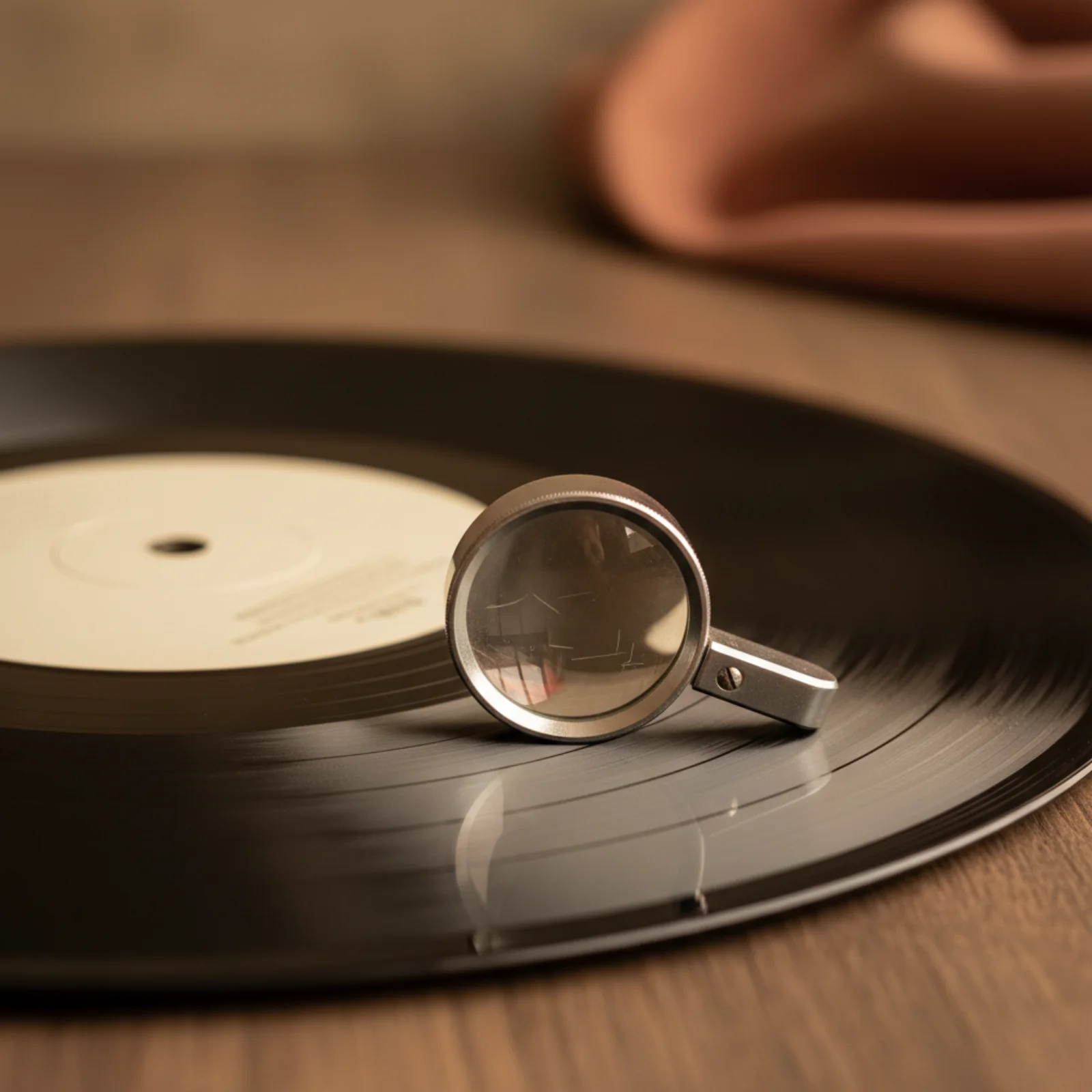
Properly identifying valuable vinyl requires detective work examining multiple elements of the record and its packaging. Matrix numbers, stamped or etched into the dead wax area near the label, provide crucial information about pressing plants, mastering engineers, and production sequences. First pressings typically have lower matrix numbers or specific letter codes that changed with subsequent pressings. For example, UK first pressings of Pink Floyd's "The Dark Side of the Moon" (Harvest SHVL 804) are stamped SHVL 804 A-2 and SHVL 804 B-2 in the dead wax, while later issues carry higher numbers such as A-3 and B-3.
Tools like VinylAI can help you quickly scan and identify specific pressings by barcode, but understanding the physical markers remains essential for records predating barcodes (pre-1980s). Label design variations are equally important—Capitol's black label with a rainbow color band was introduced in July 1958 and ran through the 1960s; by 1970 Capitol had moved to a green label, and the rainbow design returned only on 1980s reissues. Columbia's "6-eye" label (1955-1962) indicates early pressings worth significantly more than later "2-eye" versions. In the UK, Atlantic's red-and-plum label, used on 1971 first pressings such as Led Zeppelin IV (2401012), commands a premium over the green-and-orange label that replaced it from 1972.
Additional identification markers include cover variations, insert differences, and manufacturing details. Gatefold versus single covers, laminated versus non-laminated jackets, and the presence or absence of promotional stamps all affect value. Our comprehensive guide on how to identify rare vinyl covers these elements in detail, including how to use online databases like Discogs and Popsike to verify specific pressings and track auction results.
| Identification Element | What to Look For | Value Impact |
|---|---|---|
| Matrix Numbers | Lowest numbers, specific engineer stamps (e.g., RL for Robert Ludwig) | Can raise value sharply when a cut is known to sound better |
| Label Design | Original label colors, logo variations, address changes | First pressings often worth many times later pressings |
| Cover Details | Lamination, gatefold construction, insert presence | Complete packages sell for clearly more than incomplete ones |
| Promotional Markings | "Promo" stamps, gold stamps, white labels | Varies: some promos worth more, others less |
| Country of Origin | UK vs US pressings, Japanese audiophile editions | For British bands, UK originals usually lead the US issues |
This systematic approach to identification separates valuable first pressings from common reissues that may look similar to untrained eyes but differ dramatically in market value.
Rock and Psychedelic Rarities: Private Pressings and Regional Releases
Beyond mainstream releases, the world of private pressings and regional rock contains some of the most valuable and obscure records. These are albums pressed in tiny quantities, often self-financed by bands, distributed only locally, and unknown outside collector circles for decades. The Velvet Underground's "The Velvet Underground & Nico" acetate, the unique disc cut for Norman Dolph in April 1966 and found at a New York street sale for 75 cents in 2002, resold for $25,200 in 2006 after a $155,401 eBay bid fell through, preserving one of the earliest versions of this groundbreaking album.
Psychedelic rock from the late 1960s includes numerous valuable rarities. The Misunderstood's "Children of the Sun" single on Fontana (TF 998), issued in the UK in February 1969, typically sells for $2,000-$3,000. Twink's "Think Pink" (1970), a psychedelic cult album issued in the UK by Polydor (2343 032) and in the US by Sire, typically brings $1,500-$2,500 for original UK Polydor pressings. These records were commercial failures upon release but have become highly sought-after by collectors decades later.
Private pressings from unknown bands can be surprisingly valuable. The Plastic Cloud's self-titled album (Allied, Ontario, 1968), reportedly pressed in only 500 copies, is a four-figure record: a clean copy sold for close to $1,400 in 2019 (Canuckistan Music). Wee's "You Can Fly on My Aeroplane" (Owl, 1977), a private-press soul album from Columbus, Ohio pressed in about 1,000 copies, shows the same pattern outside rock: originals are scarce enough that it took a Numero Group reissue for most listeners to hear it. These records were typically sold at concerts or local shops, with most copies lost to time. Discovering such rarities requires extensive research, networking with specialized dealers, and sometimes pure luck at estate sales and thrift stores.
Building a Valuable Collection: Investment Strategies and Preservation
Collecting valuable vinyl as an investment requires a different approach than casual collecting for enjoyment. Condition preservation is paramount—records stored improperly can lose 50-75% of their value within years due to warping, seam splits, ring wear, or mold. Investment-grade records should be stored vertically in climate-controlled environments (65-70°F, 45-50% humidity), in protective outer sleeves, away from direct sunlight and heat sources. Original inner sleeves should be preserved, and records should be handled only by the edges.
Strategic acquisition focuses on first pressings of historically significant albums in the best possible condition. Rather than buying 100 common records, serious investors focus on 10-20 key pieces with documented provenance and grading from reputable sources. Buying graded records from established dealers or auction houses provides authentication and condition verification, though prices are higher than private sales. For those just starting, our guide to starting a vinyl collection offers foundational advice applicable to both casual and investment collecting.
Market research is essential before making significant purchases. Popsike.com tracks auction results from eBay and other platforms, showing actual sale prices for specific pressings over time. Discogs marketplace provides real-time pricing data across thousands of sellers worldwide, with detailed pressing information and seller ratings. Comparing multiple sources helps establish fair market value and identify trends—certain genres or artists may be appreciating while others plateau or decline. Diversification across genres, eras, and price points reduces risk while allowing participation in different market segments.
Finally, understand that liquidity varies significantly in the vinyl market. Common valuable records like Beatles first pressings or classic Blue Note jazz albums sell quickly at fair prices, while obscure rarities may take months or years to find the right buyer willing to pay premium prices. Building relationships with reputable dealers, joining collector forums, and attending record fairs creates networks that facilitate both buying and selling when the time comes.