
Understanding Vinyl Record Pricing Before You Buy
Before purchasing any vinyl record, you need to understand the fundamental pricing factors that determine value in today's market. The three primary variables are pressing information (original vs. reissue), condition grade (from Poor to Mint), and market demand (popularity, rarity, and cultural significance). A first pressing of The Beatles' "White Album" in Near Mint condition can fetch $800-1,200 on Discogs, while a 1980s reissue of the same album in VG+ condition might sell for $15-25. Understanding these distinctions prevents overpaying and helps you identify genuine bargains when they appear.
The most reliable pricing resource is Discogs, which aggregates actual sale data from millions of transactions. When researching how to price vinyl using Discogs, focus on the median price rather than the highest or lowest listings, as outliers often represent either unrealistic seller expectations or damaged copies. Popsike serves as a complementary resource, archiving eBay auction results dating back to 2003 and providing historical price trends for rare records. For example, original mono pressings of Pink Floyd's "The Piper at the Gates of Dawn" have appreciated from $200-300 in 2010 to $600-900 in 2024, according to Popsike data.
New vinyl pressings follow different pricing structures than used records. Standard new releases from major labels typically retail for $24.99-$34.99, while audiophile labels like Music Matters Jazz, Analogue Productions, and Mobile Fidelity charge $35-$60 for their premium 180g or 200g pressings. Limited edition colored vinyl variants often carry $5-10 premiums over standard black vinyl. Record Store Day exclusives can range from $25 for single LPs to $150+ for deluxe box sets, with secondary market prices sometimes reaching 200-400% of retail within hours of release.
Where to Buy Vinyl Records Online: Marketplace Comparison
The online vinyl marketplace has expanded dramatically, with each platform offering distinct advantages for different buyer types. Discogs remains the gold standard for serious collectors, hosting over 15 million items for sale at any given time from 50,000+ sellers worldwide. The platform's detailed release database allows you to identify exact pressings by matrix numbers, label variations, and country of origin. Seller ratings and detailed grading standards provide buyer protection, though you should always request additional photos for purchases over $100. Discogs charges buyers no fees, with sellers paying 8% on transactions, meaning prices often reflect true market value without markup inflation.
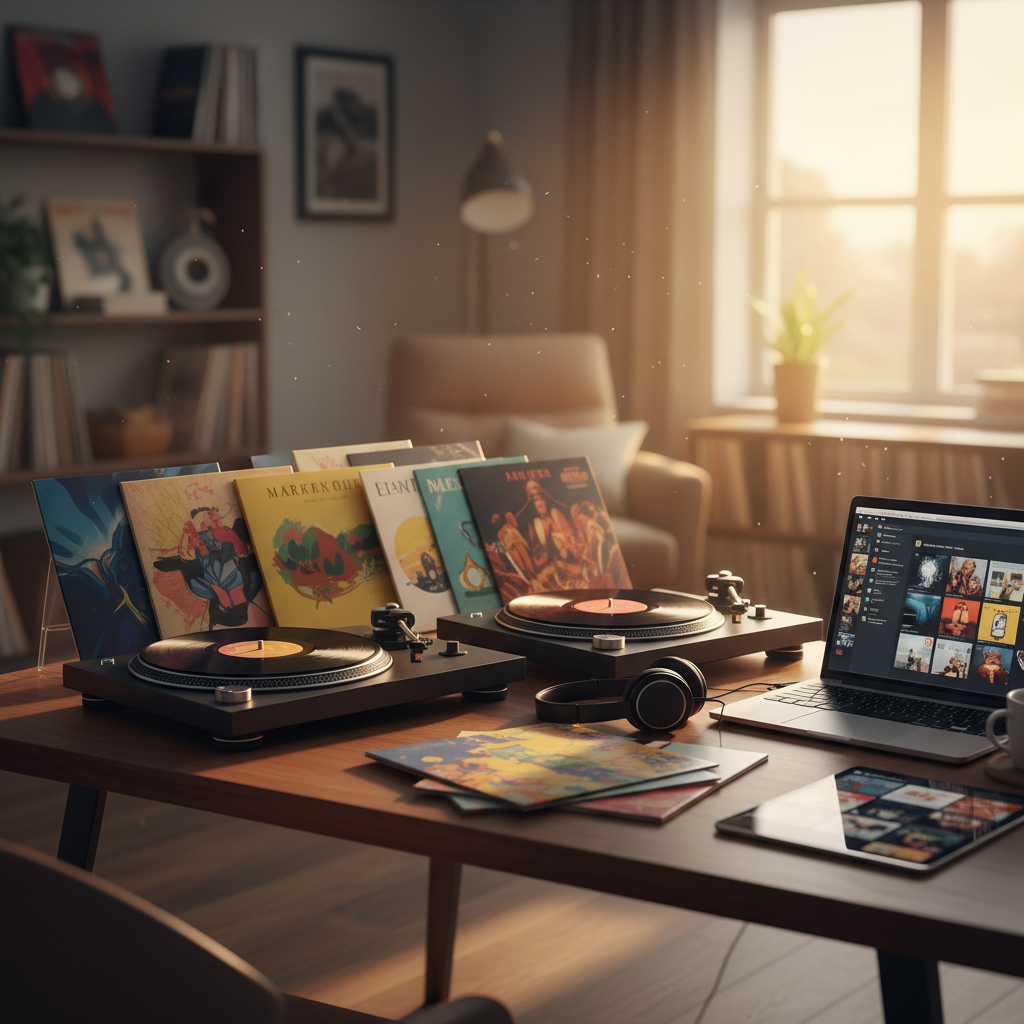
eBay offers broader selection and frequent auction opportunities where patient buyers can score deals 20-40% below Discogs median prices. However, eBay's less stringent grading standards mean greater risk of condition misrepresentation. Always verify seller feedback specifically for vinyl sales, examine all photos carefully, and understand that "Very Good" on eBay often equates to VG- or even Good+ in proper Goldmine grading standards. For rare records, eBay's completed listings provide valuable price history, though Popsike offers more comprehensive auction archives for research purposes.
Specialized vinyl shops online like Amoeba Music, Acoustic Sounds, and Turntable Lab curate inventory with professional grading and customer service that general marketplaces cannot match. Acoustic Sounds specializes in audiophile pressings, offering new releases from Analogue Productions ($39.99-$59.99) and Mobile Fidelity ($44.99-$69.99) with guaranteed quality. Amoeba's online store features both new and used inventory with video grading for used records over $50, while Turntable Lab focuses on contemporary releases, hip-hop, and electronic music with new vinyl priced at $22.99-$34.99. These specialty retailers charge premium prices but eliminate the guesswork and risk associated with individual sellers.
Emerging platforms like Reverb LP and Merchbar have gained traction among younger collectors. Reverb LP, an extension of the musical instrument marketplace, attracts seller inventory from musicians and industry professionals, often yielding unique finds. Merchbar aggregates inventory from multiple retailers, functioning as a price comparison engine for new vinyl with prices ranging from $19.99 to $49.99 for standard releases. Tools like VinylAI can help you track prices across multiple platforms simultaneously, ensuring you never overpay when building your collection.
Buying from Local Record Stores: What to Know
Local record stores remain essential to vinyl collecting culture, offering tactile inspection that online purchasing cannot replicate. Independent shops like Grimey's in Nashville, Amoeba Music in Los Angeles, and Rough Trade in New York maintain curated selections with knowledgeable staff who can guide purchasing decisions based on your musical preferences and budget. New vinyl at these stores typically retails at MSRP ($24.99-$34.99), though many shops offer loyalty programs providing 10-15% discounts after accumulating points. Used record pricing varies dramatically by store policy, with some using Discogs as a baseline and others pricing intuitively based on local demand.
The primary advantage of in-person buying is condition verification. You can visually inspect records for scratches, warps, and pressing defects before purchase, eliminating the disappointment of receiving misgraded online orders. Examine records under good lighting, checking for surface marks, edge wear, and label damage. Play-grade copies in Good condition might sell for $3-8 in dollar bins, while VG+ copies of the same titles command $12-20, and Near Mint examples reach $25-40. Understanding vinyl grading standards helps you negotiate prices and identify when store pricing doesn't align with actual condition.
Many record stores host regular sales events where savvy buyers can acquire records at 30-50% below typical pricing. Half-price sales, dollar days, and clearance sections offer opportunities to build collections inexpensively, particularly for common classic rock and pop titles. However, rare and collectible records rarely appear in sale sections—stores know their value and price accordingly. Building relationships with store owners and staff can yield insider information about incoming collections and first access to desirable inventory before it reaches display bins.
Evaluating Condition and Avoiding Overpaying
Condition assessment represents the most critical skill for vinyl buyers, as a single grade difference can mean 50-100% price variation. The Goldmine Grading Standard establishes the industry framework: Mint (M) for unplayed sealed records, Near Mint (NM) for virtually perfect played copies, Very Good Plus (VG+) for clean records with minimal wear, Very Good (VG) for played copies with audible surface noise, and Good (G) for heavily worn records suitable only for play-grading. A Near Mint copy of Fleetwood Mac's "Rumours" might sell for $35-45, while a VG copy of the same pressing should cost $8-12, and a Good copy belongs in the $3-5 range.
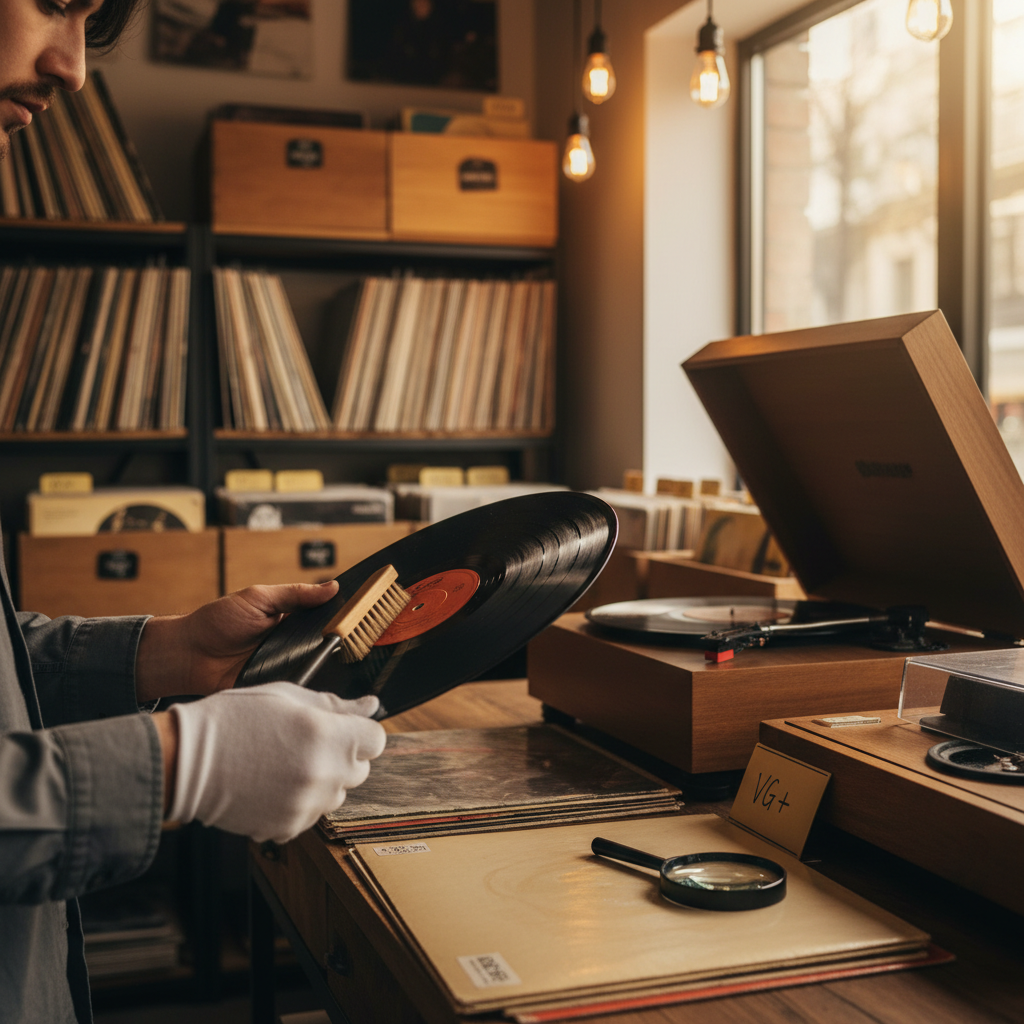
Online sellers sometimes inflate condition grades to justify higher prices, a practice called "grade inflation." When buying vinyl records online, request detailed photos of both the record surface and labels under direct lighting. Hairline scratches invisible in poor photos can cause clicks and pops during playback. For purchases over $75, consider asking sellers to provide audio samples of problematic sections or to use a professional grading service. Some Discogs sellers with 99%+ ratings have built reputations on conservative grading, actually delivering NM records when listing as VG++, making them worth premium prices for guaranteed quality.
Sleeve and jacket condition affects value almost as much as the vinyl itself. Original inner sleeves, intact shrink wrap, and promotional materials like posters or inserts can add 25-50% to record values for collectible titles. A sealed original pressing of a desirable album commands 150-200% premiums over opened Near Mint copies. However, be cautious of resealed records passed off as original sealed copies—examine shrink wrap for modern heat-sealing patterns versus vintage wrapping techniques, and verify hype stickers match the era of release. Our used vinyl records guide provides detailed inspection techniques for evaluating both media and packaging condition.
New Vinyl vs. Used Vinyl: Price and Quality Considerations
The decision between buying new or used vinyl depends on your priorities regarding sound quality, collectibility, and budget. New vinyl pressings offer guaranteed unplayed condition with modern manufacturing quality control, though pressing plant capacity constraints since 2020 have led to inconsistent quality from certain facilities. Major pressing plants like Optimal Media in Germany, Pallas in Germany, and RTI (Record Technology Inc.) in California maintain rigorous quality standards, while some newer plants struggle with off-center holes, non-fill, and excessive surface noise. Audiophile labels typically disclose pressing plant information, with RTI and Pallas pressings commanding premium prices ($40-60) due to their reputation for sonic excellence.
Used vinyl from the 1960s-1980s often provides superior sound quality compared to modern pressings of the same material, particularly for jazz, classical, and rock titles originally recorded to analog tape. An original 1959 Blue Note pressing of John Coltrane's "Giant Steps" in VG+ condition ($300-500) will sonically outperform a 2024 reissue ($29.99) despite surface wear, because the original was cut from first-generation master tapes before generational degradation. However, this advantage diminishes for heavily played copies graded VG or below, where surface noise overwhelms any mastering superiority. For common titles available in both formats, used VG+ copies at $10-15 often represent better value than new reissues at $28-32.
Price comparison reveals significant savings opportunities in the used market for patient buyers. Common classic albums like Pink Floyd's "Dark Side of the Moon," Fleetwood Mac's "Rumours," and Michael Jackson's "Thriller" sold millions of copies and remain readily available used at $5-12 for VG+ copies, while new reissues retail for $24.99-$29.99. Conversely, contemporary releases and limited pressings require buying new, as used copies either don't exist or sell at premiums above retail due to scarcity. Limited colored vinyl variants of popular indie releases often appreciate immediately, with $30 retail pressings selling for $60-100 in secondary markets within months of release.
When starting a vinyl collection, a hybrid approach maximizes value: buy common classic titles used in VG+ or better condition, purchase new releases and audiophile reissues new to ensure quality, and hunt for collectible originals only after developing grading expertise and price knowledge. This strategy builds a 100-record collection for $1,000-1,500 rather than $2,500-3,000 if buying everything new at retail prices.
Alternative Buying Channels: Estate Sales, Thrift Stores, and Garage Sales
Beyond traditional retail channels, alternative sources offer opportunities to acquire vinyl at 10-30% of typical market prices, though success requires time investment and realistic expectations. Estate sales represent the most promising alternative channel, particularly in neighborhoods with older demographics where original vinyl collectors are downsizing or deceased. Arriving early on the first day provides access to the best selections before pickers and dealers clear out valuable titles. Complete collections often sell at bulk rates of $1-3 per record, meaning a $200 investment might yield 75-100 records including several worth $20-50 individually. However, estate sale pricing has become more sophisticated as organizers use Discogs to research valuable titles, so truly underpriced rarities appear less frequently than a decade ago.
Thrift stores like Goodwill, Salvation Army, and local charity shops maintain vinyl sections with wildly inconsistent pricing and quality. Most inventory consists of common records in VG or worse condition, with typical pricing at $1-3 per LP. Digging through hundreds of damaged copies of Herb Alpert, Barbra Streisand, and Christmas compilations might yield one or two desirable titles per visit. Successful thrift store hunting requires understanding where to buy cheap vinyl in your specific geographic area, visiting frequently (ideally weekly), and developing relationships with staff who can alert you to incoming donations. Urban areas with active music scenes and college towns tend to produce better thrift store finds than suburban or rural locations.
Garage sales and yard sales offer the lowest prices but the most time-intensive hunting. Records at garage sales typically sell for $0.50-2.00 each, with sellers often negotiating bulk deals like "fill a box for $20." The quality spectrum ranges from water-damaged unplayable copies to pristine collections from meticulous owners who upgraded to digital formats. Successful garage sale hunting requires weekend dedication, mapping sales via Craigslist or Facebook Marketplace, and arriving early before other collectors. The hit rate is low—perhaps 1 in 20 sales yields worthwhile vinyl—but a single score of 50 quality records for $50 justifies the time investment for budget-conscious collectors.
Online classified platforms like Craigslist, Facebook Marketplace, and OfferUp increasingly host vinyl listings from private sellers liquidating collections. These platforms enable negotiation and local pickup, avoiding shipping costs and delays. Prices typically fall 20-40% below Discogs for common titles, though sellers with rare items often research values and price accordingly. Exercise caution with high-value transactions, meeting in public locations and carefully inspecting condition before payment. Scams exist, particularly for in-demand titles where sellers might substitute different pressings or misrepresent condition to inflate prices.
Buying Rare and Collectible Vinyl: Advanced Strategies
Acquiring genuinely rare vinyl requires specialized knowledge beyond casual collecting. First pressings, promotional copies, test pressings, and limited regional releases command premium prices based on scarcity and historical significance. For example, an original 1963 UK mono pressing of The Beatles' "Please Please Me" with black and gold Parlophone labels sells for $1,500-3,000 in Near Mint condition, while later 1970s pressings of the same album fetch $30-60. Identifying authentic first pressings requires examining matrix numbers etched in the runout groove, label variations, and catalog numbers—details documented in Discogs' release database but requiring hands-on verification for high-value purchases.
Auction houses like Heritage Auctions and Recordmecca specialize in rare vinyl, offering authenticated items with provenance documentation. Their quarterly vinyl auctions feature records ranging from $500 to $50,000+, including ultra-rare items like acetates, radio station copies, and artist-owned pressings. Auction premiums (buyer's fees) typically add 20-25% to hammer prices, and condition reports are generally reliable, though in-person preview inspection is advisable for five-figure purchases. Popsike's auction archives reveal price trends for specific rare records, showing whether values are appreciating, stable, or declining—critical information for investment-grade purchases.
Private dealers and specialist sellers offer curated rare inventory with expert authentication. Dealers like Rockaway Records, Princeton Record Exchange, and international specialists maintain relationships with serious collectors, often acquiring entire collections when major collectors exit the hobby. Their prices typically exceed Discogs median by 15-30%, but this premium buys guaranteed authenticity, professional grading, and return privileges. For records valued over $1,000, this security justifies the cost premium over risking counterfeits or misgraded copies from unknown sellers.
Understanding format variations is essential when buying collectible vinyl. Mono vs. stereo pressings, different label designs across countries, and promotional white label copies all affect value. Original mono pressings of 1960s albums often command 200-400% premiums over stereo versions for the same release year, as mono mixes were typically the primary artistic vision. Our guide explaining LP vs EP vs single formats helps collectors understand how format affects both playback and collectibility. Test pressings—pre-production copies used for quality control—exist in quantities of 5-25 copies and can sell for 500-1000% of commercial pressing values, though authentication requires expert verification.
Smart Buying Strategies: Building Value While Staying on Budget
Strategic vinyl buying balances immediate gratification with long-term collection value and budget constraints. Establishing a monthly vinyl budget prevents overspending while maintaining collecting momentum—$50-100 monthly budgets allow acquiring 2-5 quality used records or 1-2 new releases, building a 25-50 record annual collection growth. Prioritize quality over quantity, as five VG+ records provide more listening enjoyment and resale value than fifteen Good-condition copies at the same total cost. Track purchases in a spreadsheet or collection management app, recording purchase price, condition, and current market value to understand your collection's appreciation and identify smart buying patterns.
Timing purchases around sales events and promotional periods yields significant savings. Record Store Day (third Saturday in April) offers exclusive releases but also prompts many stores to run sales on regular inventory to drive traffic. Black Friday record sales at major retailers like Amazon, Barnes & Noble, and Target discount new vinyl by 30-50%, with popular titles dropping from $29.99 to $14.99-19.99. End-of-year clearance sales at independent shops clear slow-moving inventory at 40-60% discounts. Cyber Monday increasingly features vinyl deals, particularly from online retailers like Acoustic Sounds and Music Direct offering 20-25% sitewide discounts.
Developing expertise in specific genres or eras creates competitive advantages when buying. Specializing in 1970s jazz, 1980s punk, or 1990s hip-hop builds knowledge that helps you identify underpriced gems that generalist sellers miss. Genre specialists recognize valuable label variations, rare pressings, and collectible items that appear mundane to casual observers. This expertise also informs smarter buying decisions, understanding which reissues rival original pressings in quality (like Music Matters Jazz's Blue Note reissues) versus which originals are essential (like first-pressing Impulse! jazz records).
Consider future resale value even when buying for personal enjoyment. Records purchased at or below median Discogs prices maintain liquidity, allowing you to recoup investment if musical tastes change or financial needs arise. Our guide on how to sell vinyl records explains how buying smart makes eventual selling easier and more profitable. Avoid overpaying for common records in mediocre condition, as these prove nearly impossible to resell at breakeven prices. Conversely, rare records in exceptional condition appreciate over time, with many collectible titles showing 5-15% annual appreciation over the past decade according to Popsike historical data.
Final Buying Tips: Making Informed Purchasing Decisions
Successful vinyl buying combines research, patience, and disciplined decision-making. Before purchasing any record over $30, spend 10-15 minutes researching on Discogs to verify pressing information, review sold prices, and read seller ratings. For records over $100, cross-reference Popsike auction results and check multiple marketplace listings to ensure you're paying fair market value. Impulse purchases lead to buyer's remorse and collections cluttered with overpriced mediocre pressings. Create a want list of specific titles and pressings you're seeking, then wait for appropriately priced copies in acceptable condition rather than settling for the first available listing.
Build relationships with trusted sellers across multiple platforms. Discogs sellers with 99%+ ratings over 1,000+ transactions have proven track records of accurate grading and reliable service. Favoriting these sellers and checking their new inventory weekly often yields better opportunities than browsing general marketplace listings. Similarly, developing rapport with local record store staff can result in first notification when desirable inventory arrives or access to collections before they reach public sales floors. The vinyl community rewards loyalty and fair dealing with insider access and preferential pricing.
Understand shipping costs and factor them into total purchase price when buying online. Domestic U.S. shipping for 1-2 records typically costs $4-6 via Media Mail, while international shipping ranges from $15-30. Buying multiple records from a single seller amortizes shipping costs more efficiently than making multiple single-record purchases. However, avoid buying mediocre records just to justify shipping costs—it's better to pay $5 shipping on one $20 record you truly want than $8 shipping on three $10 records you'll rarely play.
Finally, remember that vinyl collecting should enhance musical enjoyment rather than become purely acquisitive. The best purchases are records you'll actually play and appreciate, regardless of market value or collectibility. A $5 used copy of an album you love provides more value than a $50 collectible pressing of music you don't enjoy. Balance investment thinking with genuine musical passion, and your collection will grow in both monetary worth and personal significance. Tools and resources like VinylAI help manage collections efficiently, but the ultimate measure of successful buying is the joy your records bring through repeated listening.