
What Makes Colored Vinyl Different: Manufacturing and Materials
The fundamental difference between colored vinyl and traditional black records lies in the PVC compound formulation used during the pressing process. Standard black vinyl incorporates carbon black—a fine powder that provides the characteristic dark color while also offering beneficial acoustic properties and UV protection. Colored vinyl replaces or supplements carbon black with various pigments, dyes, and additives to achieve the desired hue. According to pressing plant specifications from major facilities like Record Industry in the Netherlands and Optimal Media in Germany, colored vinyl compounds require precise temperature calibration, typically running 5-10 degrees Fahrenheit hotter than black vinyl to ensure proper flow and fill.
The vinyl pressing process for colored records follows the same basic steps as black vinyl—heating the PVC biscuit, pressing between stampers, cooling, and trimming—but demands greater attention to detail. Each color requires its own dedicated compound mixing, and pressing plants must thoroughly clean extruders between color runs to prevent contamination. Modern facilities like United Record Pressing in Nashville and GZ Media in Czech Republic have developed proprietary color formulations that maintain the structural integrity and playback characteristics essential for high-quality pressings. The cost difference is significant: colored vinyl typically adds $0.50-$1.50 per unit to manufacturing costs, which translates to retail prices ranging from $25-$45 compared to $20-$30 for standard black pressings.
Types of Colored Vinyl Formats and Pressing Techniques
The colored vinyl landscape encompasses numerous distinct formats, each requiring specific manufacturing techniques. Solid color variants are the most straightforward, using a single pigmented compound throughout the pressing. Popular colors include transparent clear, opaque white, red, blue, green, and yellow, with transparent variants generally considered higher quality due to the purity of the PVC compound. Splatter vinyl creates random color patterns by introducing secondary color pellets or liquid into the primary compound during the pressing cycle, resulting in unique patterns on every disc. This technique gained popularity in the punk and indie rock scenes of the 1990s and remains highly collectible today.
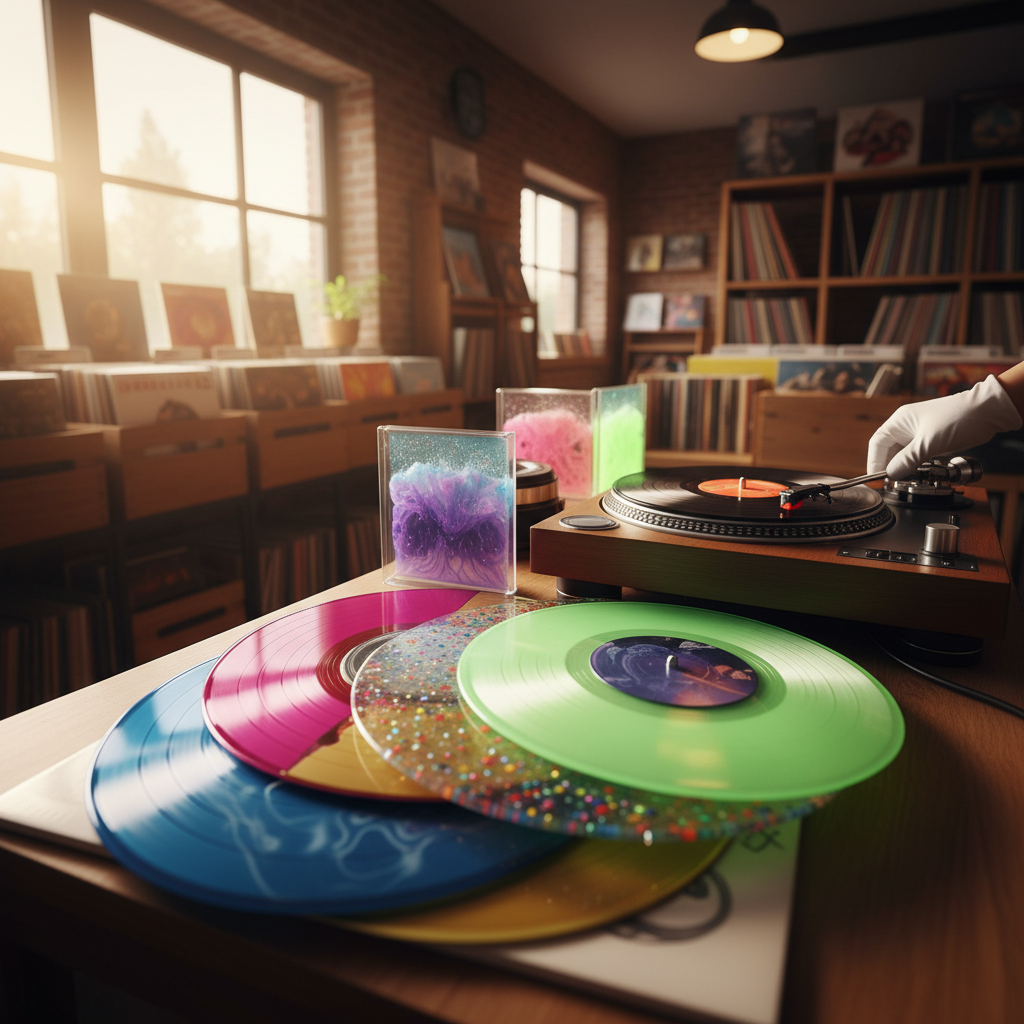
Picture discs represent a completely different manufacturing approach, sandwiching a printed image between two thin layers of clear PVC. While visually striking, picture discs have historically suffered from inferior sound quality due to the thinner playing surface and the presence of the paper or plastic image layer. Modern picture disc technology has improved significantly, with companies like Precision Record Pressing achieving better results through advanced lamination techniques. Zoetrope vinyl takes the concept further by incorporating animated images designed to create motion when the record spins, combining visual art with playback functionality. Other specialized formats include marble (swirled two-color patterns), galaxy (multiple colors with white speckling), and split color (different colors on each side of the disc).
According to Discogs marketplace data from 2023, splatter vinyl variants account for approximately 18% of all colored pressings listed, while solid colors represent 65%, picture discs 12%, and specialty formats like zoetrope and glow-in-the-dark comprise the remaining 5%. Collectors should note that vinyl sizes and formats can affect how colors appear, with 7-inch singles often showcasing more vibrant hues due to their smaller surface area and thicker vinyl composition.
Sound Quality: Colored Vinyl vs. Black Vinyl Performance
The debate over sound quality differences between colored and black vinyl has persisted for decades, with audiophiles, engineers, and casual listeners offering varying perspectives. The scientific reality is that properly formulated and pressed colored vinyl performs virtually identically to black vinyl in terms of frequency response, dynamic range, and signal-to-noise ratio. Independent testing conducted by Audio Engineering Society members in 2019 found no measurable difference in playback quality between high-grade colored pressings and black vinyl when both were manufactured to identical specifications at the same facility. The key phrase here is "properly formulated"—substandard colored vinyl compounds can indeed produce inferior results.
The theoretical advantage of black vinyl stems from carbon black's properties: it provides structural reinforcement to the PVC matrix, offers superior UV resistance, and may contribute to reduced surface noise due to its fine particle size and electrical conductivity. Some mastering engineers, including Bernie Grundman and Kevin Gray, have stated preferences for black vinyl for audiophile releases, citing marginally lower noise floors in their experience. However, modern colored vinyl formulations from reputable pressing plants incorporate alternative additives that compensate for the absence of carbon black. Plants like Quality Record Pressings (QRP) in Kansas use proprietary virgin vinyl compounds for their colored releases that rival or exceed the performance of standard black vinyl.
Practical listening tests reveal that factors like vinyl weight and thickness, stamper quality, pressing temperature, and post-production quality control have far greater impact on sound quality than color alone. A poorly pressed black record will always sound worse than a well-pressed colored record. Collectors should prioritize pressing plant reputation, mastering credits, and vinyl weight specifications over color when sound quality is the primary concern. That said, picture discs remain the exception—even the best picture disc pressings typically exhibit higher surface noise and reduced fidelity compared to standard vinyl due to their inherent construction limitations.
Collectibility and Market Value of Colored Records
Colored vinyl has become a significant driver of collectibility in the modern vinyl market, with limited edition variants commanding substantial premiums over standard black pressings. Market analysis from Popsike auction data shows that rare colored variants can sell for 200-500% more than their black counterparts, particularly for sought-after artists and extremely limited runs. For example, a standard black pressing of Taylor Swift's "Midnights" retails for approximately $30, while exclusive colored variants sold through specific retailers have reached $75-$150 on the secondary market within months of release. The scarcity model drives much of this value—when a colored variant is limited to 500-2,000 copies compared to unlimited black pressings, collector demand intensifies.

Several factors influence the collectibility and value of colored records: press run quantity, exclusivity (store exclusives vs. general releases), color uniqueness, artist popularity, and condition. Store exclusive variants from retailers like Urban Outfitters, Newbury Comics, and independent record stores often appreciate faster due to regional scarcity. According to Discogs sales data, the most valuable colored variants typically feature unusual color combinations (neon colors, glow-in-the-dark, metallic finishes) or tie directly to album artwork themes. The 2015 pressing of Run the Jewels' "RTJ2" on gold and pink splatter vinyl, limited to 1,000 copies, originally sold for $25 and now regularly fetches $80-$120 in near-mint condition.
Tools like VinylAI can help collectors track colored variants, identify pressing details through barcode scanning, and monitor market values across different color editions. When starting a vinyl collection, new collectors should understand that colored vinyl appreciation potential depends heavily on maintaining excellent condition. The vinyl grading standards apply equally to colored records, but visual appeal makes condition even more critical—a scratch or scuff that might be barely visible on black vinyl becomes glaringly obvious on transparent blue or white vinyl.
Pressing Quality Considerations Across Different Colors
Not all colors are created equal when it comes to pressing quality and consistency. Transparent and semi-transparent colors—particularly clear, smoke, and light blue—generally represent the highest quality colored vinyl because they require the purest PVC compounds with minimal additives. These formulations closely resemble virgin black vinyl in molecular structure, just without the carbon black pigmentation. Pressing plants report that transparent variants flow smoothly through extruders, fill stamper grooves completely, and cool evenly, resulting in quiet surfaces and accurate groove reproduction. Major audiophile reissue labels like Music on Vinyl and Analogue Productions occasionally use transparent or lightly colored vinyl for releases when they want to offer a colored option without compromising sound quality.
Opaque colors present more variables in pressing quality. White vinyl, while popular for its visual contrast, requires substantial titanium dioxide or similar opacifiers, which can affect compound viscosity and pressing behavior. Red and orange pigments historically caused problems with surface noise, though modern formulations have largely resolved these issues at quality pressing plants. According to pressing engineers at Independent Record Pressing in New Jersey, darker opaque colors (navy blue, forest green, burgundy) typically press more consistently than lighter pastels, which require higher pigment concentrations to achieve the desired hue. Black splatter on colored backgrounds tends to be more forgiving than light-colored splatters, which can create density variations in the vinyl.
Collectors should be aware of specific quality indicators when examining colored pressings: fill quality (ensuring grooves are completely formed, especially on inner tracks), surface consistency (no bubbles, dimples, or color streaking), and centering accuracy (properly centered label and playing surface). Records pressed at 180 grams or heavier generally exhibit better quality across all colors due to increased material volume and pressing pressure. Multi-color variants like galaxy or marble patterns require exceptional operator skill to achieve consistent results—poorly executed examples may have uneven color distribution that correlates with uneven vinyl density and potential playback issues.
Special Edition Formats: Picture Discs and Zoetrope Vinyl
Picture discs occupy a unique niche in colored vinyl collecting, prioritizing visual impact over sonic performance. The manufacturing process involves printing artwork on paper or plastic film, then encasing it between two thin layers of clear or lightly tinted PVC during pressing. This construction inherently compromises sound quality because the playing surface is thinner (typically 80-100 grams total weight versus 120-180 grams for standard vinyl) and the image layer introduces an additional interface that can generate surface noise and reduce groove depth. Despite these limitations, picture discs remain highly collectible, with classic examples like Iron Maiden's "The Number of the Beast" picture disc (1982) and The Beatles' "Sgt. Pepper's" picture disc commanding $50-$200 depending on condition and pressing.
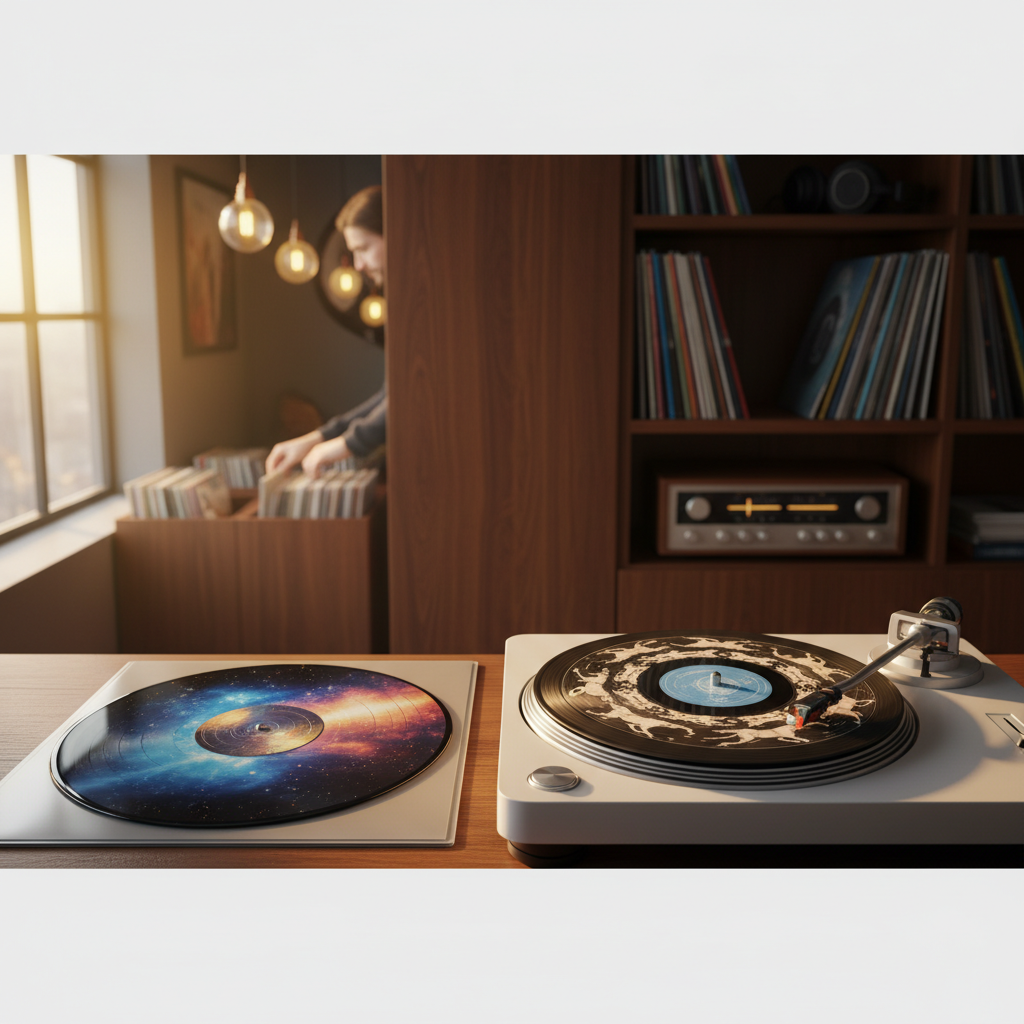
Modern picture disc technology has improved substantially since the format's 1970s heyday. Contemporary pressing plants use higher-quality image substrates, more precise lamination techniques, and better quality control to minimize the sound quality gap. Some collectors report that recent picture discs from plants like Optimal Media approach the playback quality of standard colored vinyl, though they still don't match the fidelity of premium black or transparent pressings. The visual appeal remains the primary draw—picture discs are often displayed rather than played, making them ideal for wall mounting and decorative purposes. Limited edition picture discs with elaborate artwork or unusual shapes (die-cut records) can appreciate significantly, particularly for popular artists.
Zoetrope vinyl represents the cutting edge of visual vinyl formats, incorporating animated imagery that creates the illusion of motion when played at the correct speed. These records feature sequential animation frames printed or etched on the vinyl surface, designed to be viewed with a strobe light or camera shutter synchronized to the record's rotation. Jack White's Third Man Records pioneered modern zoetrope vinyl with releases featuring playable grooves on the outer edge and animation in the center area. Understanding rotation speeds is crucial for zoetrope records, as the animation is calibrated for specific RPMs. While primarily novelties, zoetrope records demonstrate the ongoing innovation in vinyl formats and typically sell for $30-$60, with limited editions appreciating to $100+ on the secondary market.
Care and Maintenance of Colored Vinyl Records
Colored vinyl requires the same fundamental care as black vinyl but demands additional attention to preservation due to visibility factors and potential material differences. Surface contamination and wear patterns that might go unnoticed on black vinyl become immediately apparent on white, clear, or light-colored records, making meticulous cleaning and handling essential. Invest in high-quality anti-static inner sleeves—either polyethylene-lined paper sleeves or audiophile-grade MOFI or Sleeve City options—to prevent paper debris and static buildup. Colored vinyl, particularly transparent variants, shows paper scuffing more readily than black vinyl, so the upgrade to premium sleeves provides both protection and visual benefits.
Cleaning colored records requires the same techniques used for black vinyl: carbon fiber brushes for dry cleaning before each play, and wet cleaning with dedicated record cleaning solutions for deeper maintenance. Avoid alcohol-based cleaners on colored vinyl, as some pigments may be more susceptible to chemical reactions, though this is rare with modern formulations. Ultrasonic record cleaning machines from brands like Degritter or Audio Desk Systeme work excellently on colored vinyl, removing deep-seated contaminants without risk of pigment damage. For manual cleaning, use distilled water with a dedicated vinyl cleaning solution like TTVJ or Disc Doctor, applied with microfiber cloths in the direction of the grooves.
Storage conditions matter significantly for colored vinyl longevity. While all vinyl should be stored vertically in temperature-controlled environments (65-70°F, 45-50% humidity), colored records benefit from additional protection from direct sunlight and UV exposure. Some pigments, particularly reds and purples, can fade over time with prolonged light exposure, though this typically requires years of direct sunlight. Store valuable colored variants in outer protective sleeves and avoid stacking records horizontally, which can cause warping—a problem more visually obvious on colored vinyl. When organizing your collection, consider that colored variants often represent limited editions worth more careful handling than unlimited black pressings, making proper storage an investment in maintaining value.
Buying Guide: Evaluating Colored Vinyl Purchases
When purchasing colored vinyl, whether new releases or vintage pressings, several evaluation criteria help ensure you're getting quality products at fair prices. For new releases, research the pressing plant before buying—records from reputable facilities like RTI, Pallas, QRP, or Optimal Media generally deliver superior quality regardless of color. Check the product details for vinyl weight specifications; 180-gram colored pressings typically indicate higher quality manufacturing standards than lightweight variants. Examine retailer descriptions for press run information—limited editions of 500-1,000 copies often appreciate better than runs of 5,000+, though availability becomes more challenging.
For secondary market purchases through Discogs, eBay, or local record stores, visual inspection becomes paramount with colored vinyl. Request detailed photos showing the vinyl surface under good lighting, looking for scratches, scuffs, surface noise indicators, and color consistency. Transparent and light-colored records reveal condition issues more readily than black vinyl, which can work to a buyer's advantage—what you see is what you get. Verify pressing details against Discogs database entries to confirm you're purchasing the specific variant advertised, as some albums have dozens of different colored editions with varying values. A clear vinyl pressing might be worth $30 while a limited splatter variant of the same album commands $80.
Price evaluation requires market research across multiple platforms. Compare current Discogs listings with recently sold items (Popsike provides historical auction data) to understand realistic market values. Be cautious of artificial scarcity—some modern releases produce numerous "limited" colored variants that flood the market, depressing long-term value. Classic collectible colored vinyl from the 1960s-1980s (original colored pressings, not modern reissues) requires authentication expertise, as reproductions and counterfeits exist for valuable titles. When building a collection focused on colored vinyl, balance aesthetic appeal with playback quality, pressing reputation, and investment potential. Whether you're interested in full-length albums or shorter formats, colored variants exist across all record types, offering collecting opportunities at every price point from $20 budget releases to $200+ audiophile limited editions.