
What Makes First Pressing Vinyl Records So Valuable
The value proposition of first pressing vinyl extends far beyond collector prestige. When an album is first released, the stampers used to press the records are in pristine condition, having experienced minimal wear from the pressing process. This results in superior groove definition, better frequency response, and reduced surface noise compared to records pressed from worn stampers months or years later. Audiophiles consistently report that first pressings of classic albums like Pink Floyd's "The Dark Side of the Moon" or Miles Davis's "Kind of Blue" offer noticeably warmer bass response and clearer high-frequency detail than subsequent reissues.
From an investment perspective, first pressings represent finite commodities that appreciate over time as copies are lost, damaged, or removed from circulation. According to Discogs marketplace data from 2023, first UK pressings of Led Zeppelin's self-titled debut album with the original turquoise Atlantic label routinely sell for $800-$1,500 in VG+ condition, while 1970s reissues of the same album fetch only $25-$50. This 3,000% price differential demonstrates the tangible premium collectors place on original pressings. Tools like VinylAI can help you quickly identify whether that thrift store find is a valuable first pressing or a common reissue by scanning barcodes and cross-referencing pressing details.
The historical significance of first pressings cannot be overstated. These records represent cultural artifacts from specific moments in music history, often featuring unique cover art, inserts, or packaging that were modified in later releases due to censorship, legal issues, or design changes. The first pressing of The Beatles' "Yesterday and Today" with the controversial "butcher cover" sold for $125,000 in 2016, while standard later pressings sell for under $20. Understanding these nuances is crucial for anyone serious about building a collection of valuable vintage records.
How to Identify First Pressing Vinyl Using Matrix Numbers
Matrix numbers, also called runout groove inscriptions or dead wax etchings, are alphanumeric codes hand-etched or machine-stamped into the smooth area between the label and the grooved playing surface. These codes serve as the definitive fingerprint for identifying pressing plants, production dates, and most importantly, whether you're holding a first pressing or later reissue. On a first pressing, you'll typically find lower sequential numbers, specific engineer initials, and catalog numbers that match the original release documentation found in discographies like those maintained by Discogs or specialized collector resources.

To properly examine matrix numbers, hold the record at an angle under bright light to make the etched characters visible. First pressings often feature hand-etched matrix codes with irregular spacing and character sizes, indicating they were inscribed by mastering engineers like Robert Ludwig (often signed "RL"), George Piros ("GP"), or Chris Bellman ("CB"). For example, original 1969 first pressings of The Beatles' "Abbey Road" on Apple Records feature matrix codes beginning with "YEX" followed by sequential numbers, with the lowest numbers (YEX 749-1 and YEX 750-1) indicating the earliest stampers. Later pressings show higher sequential numbers or completely different matrix code formats.
Here are the key matrix number elements to examine when determining first pressing status:
- Stamper codes: Look for -1A, -1B, or -1 suffixes indicating first-generation stampers from the original lacquer masters
- Lacquer cutting dates: Some engineers etched dates; earlier dates within the album's release year suggest first pressings
- Engineer signatures: Specific mastering engineer initials can indicate which pressing plant and time period
- Side identifiers: Original matrix codes for Side A and Side B should match documented first pressing examples in databases
The complexity of matrix number interpretation varies by record label and era. Columbia Records used a different system than Capitol Records, and European pressings follow different conventions than American ones. Researching your specific album's pressing history on Popsike auction archives or Discogs release pages provides the comparative data needed to authenticate first pressings with confidence.
Label Variations and Catalog Numbers on Original Pressings
Record labels underwent numerous design changes throughout their histories, making label appearance one of the most accessible methods for narrowing down pressing dates. First pressings feature the label design that was current when the album was originally released, and these designs often changed every few years as companies rebranded or updated their visual identity. For instance, Capitol Records used a rainbow-colored label from 1958-1968, then switched to a lime green label in 1969, followed by an orange label in 1973. If you're examining a Beatles album released in 1964, a genuine first pressing must have the rainbow Capitol label, not the later green or orange versions.
Beyond label colors, examine the fine print details that distinguish original pressings from reissues. First pressings typically include specific copyright dates, publishing information, and manufacturing location details that match the original release year. Atlantic Records first pressings from the 1960s feature addresses like "1841 Broadway" or "157 W 57th Street" in New York, while later pressings show different addresses as the company relocated. Blue Note Records first pressings from the 1950s and early 1960s display the famous "West 63rd Street" address and feature deep groove edges on the labels, a characteristic eliminated in later pressings to reduce manufacturing costs.
Catalog numbers provide another crucial authentication point. Original pressings use the catalog number assigned at the album's initial release, which sometimes differs from reissue catalog numbers. The Rolling Stones' "Let It Bleed" was originally released on London Records in the US with catalog number NPS-4, while later pressings might show different catalog number formats or completely different labels after the band switched distributors. Cross-referencing the catalog number with documented release information helps confirm first pressing status. Resources for authenticating rare pressings often emphasize catalog number verification as a primary authentication step.
Pressing Plant Indicators and Geographic Origins
The geographic origin and specific pressing plant of a vinyl record significantly impact both its value and its status as a first pressing. Many legendary albums were simultaneously released in multiple countries, with each territory receiving its own first pressing manufactured at local plants. British first pressings of albums by The Beatles, The Rolling Stones, or Led Zeppelin typically command higher prices than American first pressings because UK plants pressed directly from the master tapes, while US plants often worked from tape copies sent across the Atlantic. A UK first pressing of The Beatles' "Sgt. Pepper's Lonely Hearts Club Band" on Parlophone Records sells for $800-$2,500, while a US Capitol first pressing of the same album fetches $150-$400.
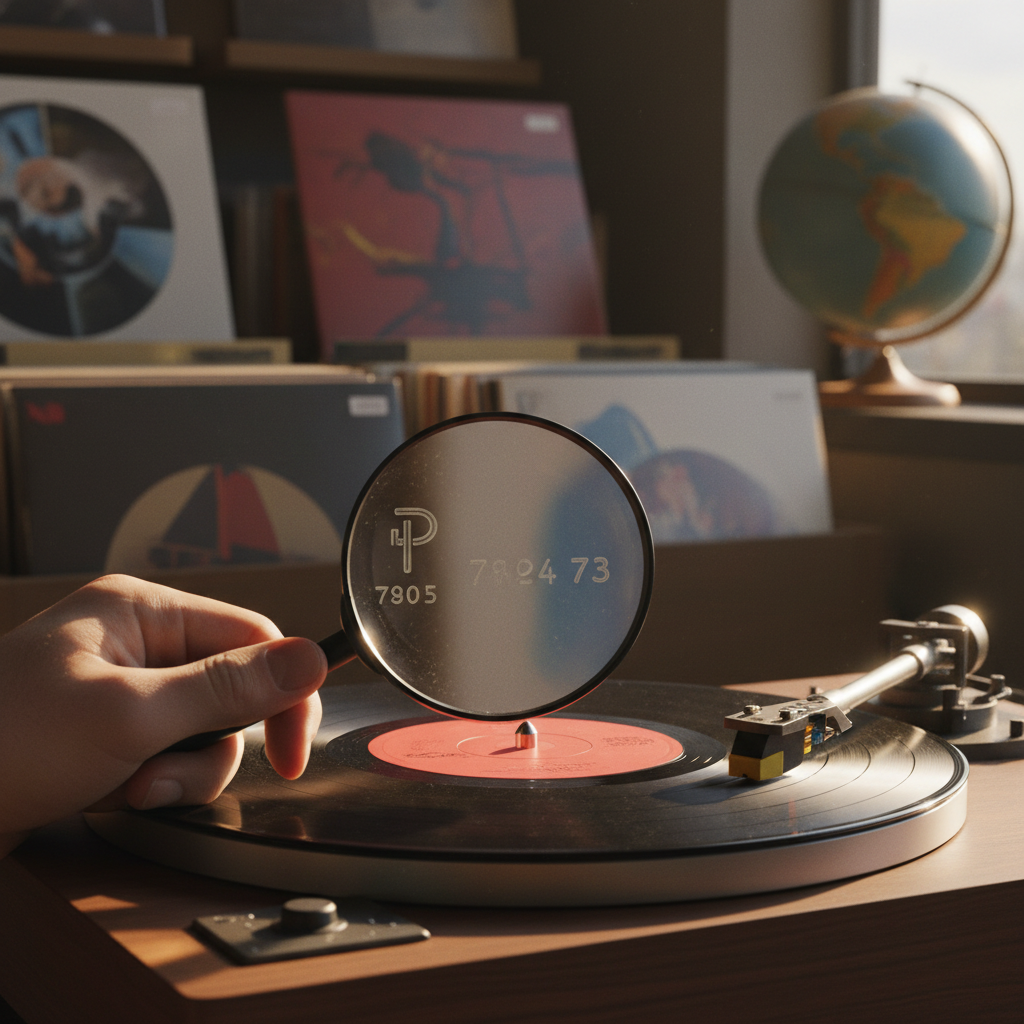
Identifying the pressing plant requires examining multiple indicators including matrix numbers, label text, and sometimes the vinyl compound itself. Major US pressing plants included Columbia's Pitman and Terre Haute facilities, Capitol's Scranton and Jacksonville plants, and independent contractors like Monarch Records and Specialty Records Corporation (SRC). These plants often used identifying codes in the matrix area: Monarch used a small triangle symbol or "MR" stamp, while Specialty Records used "SP" or "SRC" identifiers. European plants similarly marked their products, with EMI's Hayes facility in the UK using specific matrix number formats beginning with "YEX" or "ASD" depending on the label and era.
German pressings deserve special mention for their exceptional audio quality. Many audiophiles specifically seek first German pressings manufactured at plants like Teldec or Polygram's Hanover facility, which were renowned for using high-quality vinyl compounds and precision pressing equipment. First German pressings of jazz albums on labels like ECM or classical recordings on Deutsche Grammophon often surpass even the original country pressings in sound quality. When researching pressing plant origins, specialized forums like the Steve Hoffman Music Forums and the Discogs database provide detailed pressing plant information for thousands of releases.
Famous First Pressing Examples and Their Auction Values
The record auction market has produced spectacular results for rare first pressings, establishing benchmarks that guide collector valuations. The most expensive vinyl record ever sold is a first pressing acetate of The Velvet Underground & Nico's debut album, which fetched $25,200 in 2006. However, the most valuable standard commercial first pressing is The Beatles' "White Album" numbered 0000001, which Ringo Starr sold at auction for $790,000 in 2015. While most collectors won't encounter single-digit serial numbers, even White Album copies numbered below 10,000 command premiums of $1,000-$5,000 compared to later pressings worth $30-$100. Our detailed White Album valuation guide breaks down pricing by serial number ranges and condition.
Other first pressing auction highlights demonstrate the market's appetite for original pressings across genres. A first UK pressing of David Bowie's "The Man Who Sold The World" with the original "dress" cover sold for $6,826 in 2020, while US first pressings with the different cartoon cover sell for $200-$400. First pressings of Bob Dylan's "The Freewheelin' Bob Dylan" containing the four withdrawn tracks (later replaced due to contractual issues) have sold for over $35,000, making them among the most valuable records in existence. A mono first pressing of The Beatles' "Please Please Me" with the black and gold Parlophone label sold for $5,200 in 2021, compared to $50-$150 for later stereo reissues.
Here's a comparison of first pressing values versus later reissues for landmark albums:
| Album | First Pressing Value (VG+) | Later Pressing Value (VG+) | Value Multiplier |
|---|---|---|---|
| Pink Floyd - The Piper at the Gates of Dawn (UK mono) | $1,200-$2,000 | $40-$80 | 30x |
| Led Zeppelin - Led Zeppelin (UK turquoise label) | $800-$1,500 | $25-$50 | 32x |
| Nirvana - Bleach (original Sub Pop pressing) | $2,000-$4,000 | $15-$30 | 133x |
| Miles Davis - Kind of Blue (6-eye Columbia) | $500-$1,200 | $20-$40 | 25x |
| Elvis Presley - Elvis Presley (RCA mono) | $1,500-$3,000 | $30-$60 | 50x |
These valuations come from completed sales data on Popsike, Heritage Auctions, and Discogs marketplace transactions from 2020-2024. Condition dramatically affects values, with Near Mint first pressings commanding 200-300% premiums over VG+ copies. Understanding proper grading standards is essential when buying or selling valuable first pressings.
Cover and Insert Variations on First Pressings
Album artwork and packaging often underwent changes between first pressings and subsequent reissues, creating visual markers that help authenticate original releases. First pressings may feature gatefold covers that were later simplified to single sleeves, textured or embossed covers that proved too expensive to maintain, or inserts and posters that were discontinued after initial runs. The Rolling Stones' "Sticky Fingers" first pressing includes a working zipper on the cover designed by Andy Warhol, and original pressings came with a perforated postcard insert that's often missing from used copies. Complete first pressings with intact inserts sell for $200-$400, while later pressings without the zipper feature fetch $15-$30.
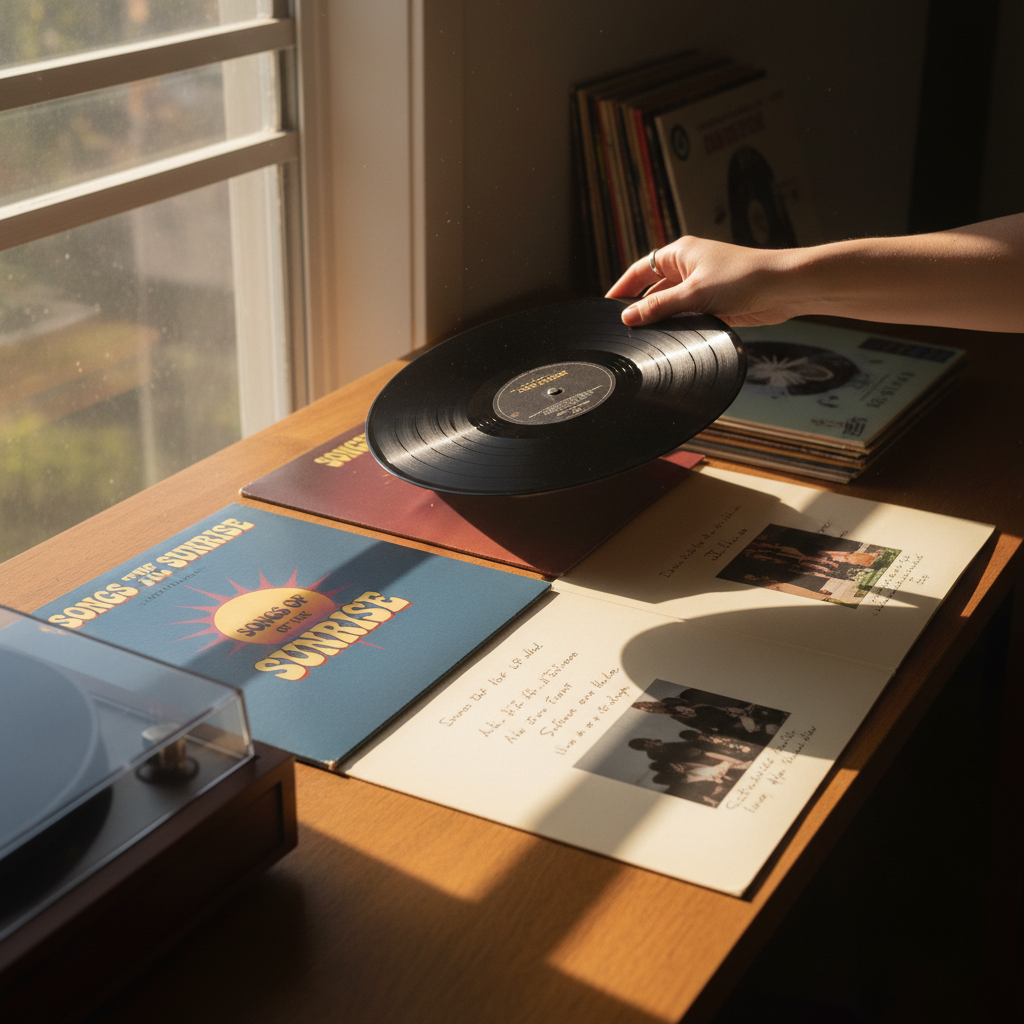
Print quality and paper stock provide subtle but important authentication clues. First pressings typically used higher-quality printing processes and heavier cardboard stock, particularly for prestigious releases on labels like Blue Note or Verve. The legendary Blue Note jazz pressings from the 1950s and 1960s feature thick, glossy covers with rich color saturation and precise registration, while 1970s and later reissues used thinner stock and less sophisticated printing. Examining the cover under magnification reveals halftone dot patterns; original pressings show finer dot screens compared to coarser patterns on later reproductions.
Specific cover variations mark certain first pressings as particularly valuable. The first pressing of Prince's "Black Album" was officially withdrawn before release, making the few copies that escaped into circulation worth $15,000-$27,500. The Jimi Hendrix Experience's "Electric Ladyland" had different covers for UK and US first pressings, with the UK version featuring a controversial nude photograph that was changed for subsequent pressings, making it worth $400-$800 compared to $50-$100 for later versions. When evaluating cover variations, consult detailed discographies and visual comparison guides available through collector resources and auction house archives.
Mono Versus Stereo First Pressings
The mono versus stereo distinction adds another layer of complexity to first pressing identification and valuation. During the transition period from mono to stereo recording in the late 1950s through late 1960s, many albums were released simultaneously in both formats, with the mono version often mixed and mastered separately rather than being a simple fold-down of the stereo mix. Audiophiles and collectors often prefer mono first pressings of 1960s rock and pop albums because artists and producers supervised the mono mix more carefully, as that's what most consumers would hear on their equipment at the time. The Beatles' entire catalog through "Sgt. Pepper's" was mixed primarily in mono, with stereo versions created almost as an afterthought.
Mono first pressings of classic albums typically command significant premiums over stereo versions. A first pressing mono copy of The Beach Boys' "Pet Sounds" on Capitol Records sells for $800-$1,500, while the stereo first pressing fetches $200-$400. Bob Dylan's mid-1960s albums on Columbia Records follow similar patterns, with mono first pressings of "Highway 61 Revisited" or "Blonde on Blonde" selling for 2-3 times the price of stereo counterparts. The sound quality differences are substantial; the mono mix of The Beatles' "Revolver" features different vocal takes, effects, and balances compared to the stereo version, making it a fundamentally different listening experience.
Identifying mono versus stereo pressings requires checking multiple indicators. The catalog number often differs, with mono versions using one number and stereo versions using another (though not universally). The label should state "MONO" or "MONAURAL" explicitly, and the runout groove matrix numbers will differ between the two formats. Some albums were only released in stereo after a certain date; The Beatles stopped releasing mono versions in the US after "Sgt. Pepper's," so any mono pressing of "The White Album" or "Abbey Road" would be a later specialty pressing rather than an original. For collectors just beginning to explore this area, understanding collection fundamentals helps establish a knowledge foundation for making informed purchasing decisions.
Authenticating First Pressings: Advanced Tips and Common Pitfalls
Authenticating first pressings requires combining multiple verification methods because no single indicator provides absolute certainty. Counterfeiters and unauthorized reissue manufacturers have become increasingly sophisticated, sometimes reproducing matrix numbers, label designs, and even cover details with remarkable accuracy. The most reliable authentication approach examines matrix numbers, label details, catalog numbers, cover variations, and vinyl weight/quality simultaneously, looking for consistency across all factors. Discrepancies in any area warrant deeper investigation and comparison with documented examples from trusted sources like the Goldmine Record Album Price Guide or specialized collector forums.
Common pitfalls include assuming that older-looking records are automatically first pressings, or that all records with original label designs are first pressings. Record labels often continued using the same label design for years, so a 1970 album on a label design from 1968 doesn't necessarily indicate a first pressing. Similarly, some reissue companies intentionally reproduce vintage label designs to create period-accurate reissues, which can fool inexperienced collectors. The 2008-2009 Beatles mono reissue campaign created high-quality reproductions with period-appropriate label designs, but these can be distinguished from original 1960s pressings through matrix numbers, vinyl weight (the reissues use modern 180-gram vinyl), and subtle label text differences.
Beware of records that have been "upgraded" through label swaps or cover replacements. Unscrupulous sellers occasionally place a valuable first pressing label on a later pressing's vinyl, or house a common pressing in a first pressing cover to deceive buyers. This is why matrix number verification is crucial; the matrix numbers are etched directly into the vinyl and cannot be easily altered. When purchasing expensive first pressings, request detailed photographs of the matrix area, labels, and any unique cover features. For purchases over $500, consider using escrow services or purchasing through established auction houses that offer authenticity guarantees. Professional grading services like Professional Vinyl Grading (PVG) also authenticate pressings as part of their grading process, providing additional peace of mind for high-value transactions.
Understanding the relationship between different formats also prevents confusion. An original pressing might exist as both a standard LP and as a limited audiophile edition, or in different configurations like single LPs versus double LP sets. Learning the distinctions between various vinyl formats helps you understand which version you're examining and whether it represents a true first pressing or a simultaneous alternative release.