
What Makes a Vinyl Record Rare and Valuable
The rarity of a vinyl record stems from a complex intersection of scarcity, demand, historical significance, and condition. Unlike other collectibles where age automatically implies value, vinyl records from the 1950s can be worthless while certain 1990s pressings command thousands of dollars. True rarity occurs when limited quantities were produced, many copies were destroyed or lost, and sustained collector demand exists for the specific pressing. A record pressed in quantities of 500 copies isn't necessarily rare if only 50 collectors want it, while a pressing of 5,000 copies can be extremely rare if 50,000 collectors are hunting for it.
The concept of a first pressing is central to vinyl rarity and value. First pressings are the initial production run from the original master tapes, often featuring superior sound quality and specific label characteristics that changed in subsequent reissues. For example, original 1963 UK pressings of The Beatles' Please Please Me on the black and gold Parlophone label with "Dick James Mus. Co. Ltd." publishing credits sell for $3,000-$7,000, while 1970s reissues of the identical album might fetch only $20-$40. Collectors prize first pressings because they represent the artist's original vision and often the best available sound quality before master tapes degraded through repeated use.
Scarcity alone doesn't create value—desirability is equally crucial. This explains why a promotional-only 7-inch single by a forgotten 1960s garage band might sell for $5,000 if only 50 copies were pressed for radio stations, while millions of copies of Michael Jackson's Thriller make common pressings nearly worthless despite the album's cultural significance. The most valuable vinyl records combine limited availability with enduring popularity, creating competition among collectors with deep pockets. Tools like VinylAI help collectors quickly identify potentially rare pressings by scanning barcodes and cross-referencing against comprehensive databases of known valuable variants.
Understanding Matrix Numbers and Dead Wax Identifiers
Matrix numbers, also called runout groove inscriptions or dead wax etchings, are alphanumeric codes hand-etched or machine-stamped in the smooth area between the record's label and the grooved playing surface. These codes serve as the DNA of vinyl records, revealing crucial information about the pressing plant, lacquer cutting engineer, production sequence, and authenticity. On a typical record, you'll find matrix numbers on both sides, often appearing as combinations like "XEX-123-1" or "STERLING-A1-47382" along with engineer initials, mastering studio codes, and sometimes cryptic messages or drawings left by cutting engineers.
Learning to read matrix numbers is essential for identifying rare pressings because reissues often use different codes even when labels and cover art appear identical. For instance, original 1969 UK pressings of Led Zeppelin's debut album feature matrix numbers beginning with "A-1/B-1" (indicating first lacquer cuts) and were pressed at several plants including Porky's (identifiable by George Peckham's signature "Porky" or "Pecko Duck" etchings). Later pressings show higher matrix numbers like "A-3/B-4" indicating they were cut from later-generation lacquers. On Discogs and Popsike, the same album title can have dozens of entries differentiated primarily by matrix numbers, with values ranging from $30 to $3,000 depending on the specific pressing.
Different pressing plants left distinctive matrix signatures that help collectors authenticate rare records. Capitol Records' Scranton, Pennsylvania plant used a triangle symbol, while their Jacksonville plant used "IAM" codes. Atlantic Records' pressings from the 1950s-1960s show distinctive matrix formats like "AT-1234-A" for mono and "SD-1234-A" for stereo. UK Decca pressings feature codes beginning with "ARL" or "ZAL" depending on the era. Serious collectors maintain reference guides correlating matrix formats to specific plants and time periods, as certain plants are known for superior sound quality—Specialty Records Corporation (SRC) and Monarch pressings are particularly prized by audiophiles, often commanding 20-50% premiums over identical releases from other plants.
The Beatles: A Case Study in Vinyl Rarity
Beatles records provide the perfect laboratory for understanding vinyl rarity because their immense popularity created numerous pressings, yet specific variants remain extraordinarily valuable. The most famous rare Beatles record is the "Butcher Cover" version of Yesterday and Today, originally released in June 1966 showing the band in butcher smocks surrounded by raw meat and dismembered doll parts. Capitol Records quickly recalled the controversial cover, pasting new artwork over approximately 750,000 copies and destroying others. Today, original "first state" Butcher Covers (never pasted over) sell for $15,000-$125,000 depending on condition, while "second state" copies (paste-over removed) fetch $1,000-$5,000, and "third state" copies (still sealed with paste-over intact) can reach $10,000-$25,000.
The Beatles White Album offers another fascinating rarity study because each copy was originally numbered, leading many collectors to assume lower numbers mean higher values. While this is partially true—Ringo Starr's personal copy #0000001 sold for $790,000 in 2015—the numbering alone doesn't create significant value for most copies. A standard White Album numbered in the millions might sell for $20-$40, while one numbered below 1000 might fetch $200-$1,000, and only single or double-digit numbers reach five-figure territory. What matters more for typical copies is whether it's a first pressing (identified by matrix numbers ending in -1, specific label text, and the inclusion of poster and photos), pressing plant (Los Angeles Monarch pressings are most desired), and of course condition.
Other rare Beatles pressings include the withdrawn "Love Me Do" single with "P.S. I Love You" credited to McCartney-Lennon instead of Lennon-McCartney (worth $8,000-$15,000), original 1963 UK Please Please Me with black and gold labels ($3,000-$7,000), and promotional copies of Sgt. Pepper's with alternate mixes ($2,000-$5,000). The key lesson from Beatles collecting is that catalog numbers and titles alone mean nothing—two copies of Abbey Road might look identical but differ by $2,970 in value based solely on matrix numbers, label variations, and pressing plant identifiers that only experts can spot.
Legendary Rare Records Across Genres
Beyond The Beatles, numerous records across all genres have achieved legendary status among collectors. In blues, original 1930s 78rpm recordings by Robert Johnson on Vocalion Records are the ultimate holy grail, with his complete discography of 29 songs spread across just 11 released 78s. A near-mint copy of "Terraplane Blues" / "Last Fair Deal Gone Down" (Vocalion 03416) sold for $37,100 in 2013, while other Johnson 78s regularly fetch $5,000-$15,000. In rock and roll, Elvis Presley's 1954 debut single "That's All Right" / "Blue Moon of Kentucky" on Sun Records (Sun 209) sells for $10,000-$25,000 for original pressings, with the rare acetate test pressing potentially worth over $100,000.

Punk and new wave collectors hunt for original pressings of seminal releases like The Sex Pistols' "God Save the Queen" on A&M Records, which was recalled and destroyed within days of release in 1977. Only 9-25 copies are believed to exist, with one selling for £13,000 ($16,400) in 2006 and another fetching £8,000 in 2016. The Velvet Underground & Nico's 1967 debut with the peelable banana cover designed by Andy Warhol commands $3,000-$5,000 for stereo first pressings and $8,000-$15,000 for rare mono versions. Northern Soul collectors pay astronomical prices for obscure 1960s-70s soul singles, with Frank Wilson's "Do I Love You (Indeed I Do)" on Soul Records selling for £25,742 ($39,294) in 2009—only two copies are known to exist from a promotional pressing that was destroyed before commercial release.
Jazz collectors pursue original Blue Note pressings from the 1950s-60s, identifiable by deep groove labels, RVG (Rudy Van Gelder) stamps in the dead wax, and specific address labels (47 West 63rd Street for earliest pressings). A mint original pressing of John Coltrane's Blue Train (Blue Note 1577) sells for $3,000-$8,000, while Thelonious Monk's Genius of Modern Music Volume 1 (Blue Note 1510) can reach $5,000-$12,000. The top 100 most valuable vinyl records spans all genres, proving that rarity and desirability transcend musical style—what matters is the intersection of scarcity, condition, and passionate collector demand.
How to Identify First Pressings and Rare Variants
Identifying first pressings requires detective work combining multiple clues from labels, matrix numbers, cover details, and manufacturing characteristics. Start by examining the label design and text—record labels frequently changed designs, addresses, and copyright information over the years. For Columbia Records, original 1950s-60s pressings feature "360 Sound" labels with six white "eyes" around the perimeter, while 1970s pressings switched to orange or tan labels. Capitol Records' rainbow-colored labels indicate 1960s-early 1970s pressings, while purple labels suggest late 1970s. Atlantic Records moved from black labels to green and blue labels to red and plum labels across different eras, with each transition marking different pressing periods.
Matrix numbers provide the most definitive evidence of pressing sequence. First pressings typically show matrix numbers ending in "-1" or "A-1/B-1" indicating the first lacquer cut from the master tape. Subsequent pressings show higher numbers like "-2," "-3," or "A-4/B-3" as new lacquers were cut when earlier ones wore out. However, this isn't universal—some labels restarted numbering systems or used different conventions. Research the specific label and era using resources like Discogs, which contains detailed matrix information for millions of pressings. For example, original 1973 UK pressings of Pink Floyd's The Dark Side of the Moon show solid blue triangle labels and matrix numbers including "SHVL 804 A-2U/B-2U" with Porky etchings, distinguishing them from countless reissues.
Additional authentication factors include cover printing quality and details. First pressings often feature heavier cardboard stock, specific printing techniques (like tip-on gatefold construction where the printed image is glued to cardboard rather than printed directly), and details that changed in later pressings. The inclusion of inserts, posters, or stickers mentioned in original catalog listings helps confirm first pressings. Vinyl weight and color can also indicate era—most 1950s-70s pressings used standard weight vinyl (120-140 grams), while modern audiophile reissues typically use 180-gram vinyl. Understanding vinyl grading standards is crucial because even rare first pressings lose most of their value if condition drops below Very Good Plus (VG+), making authentication worthwhile only for well-preserved copies.
Price Guides and Real Auction Results
Determining the value of rare vinyl requires consulting multiple sources because prices fluctuate based on condition, demand, and market trends. The three most reliable resources are Discogs (showing both asking prices and actual sales history), Popsike (aggregating eBay auction results since 2003), and Goldmine Price Guide (published reference with expert valuations). Discogs is particularly valuable because it shows the complete sales history for specific pressings, allowing you to see that a particular pressing sold for $450 six months ago, $380 two months ago, and has current listings at $525, giving you realistic market value rather than wishful asking prices.

Real auction results often surprise both sellers and buyers. In 2015, a sealed mono copy of The Beatles' Sgt. Pepper's Lonely Hearts Club Band signed by all four Beatles sold for $290,500 at Heritage Auctions. A rare acetate of The Velvet Underground's first recording session fetched $25,200 in 2006. Bob Dylan's original 1963 pressing of The Freewheelin' Bob Dylan with four tracks that were removed and replaced before commercial release (only 5-10 copies known) sold for $35,000 in 2016. Prince's withdrawn The Black Album from 1987, recalled before release with only promotional copies surviving, regularly sells for $2,000-$8,000 depending on format and condition. These results demonstrate that provenance and rarity can push values far beyond standard price guide estimates.
| Record | Year | Estimated Copies | Recent Sale Price |
|---|---|---|---|
| The Beatles - Yesterday & Today (Butcher Cover, First State) | 1966 | ~50-100 | $125,000 (NM) |
| Sex Pistols - God Save the Queen (A&M) | 1977 | 9-25 | £13,000 ($16,400) |
| Frank Wilson - Do I Love You | 1965 | 2 | £25,742 ($39,294) |
| The Beatles - White Album #0000001 | 1968 | 1 | $790,000 |
| Elvis Presley - That's All Right (Sun 209) | 1954 | Unknown | $10,000-$25,000 |
| Bob Dylan - Freewheelin' (withdrawn tracks) | 1963 | 5-10 | $35,000 |
These figures represent exceptional examples in Near Mint or better condition. The same pressings in Very Good condition might sell for 20-50% of these amounts, emphasizing why condition assessment using proper grading standards is essential before estimating value. Market timing also matters—prices for certain genres and artists fluctuate with cultural trends, anniversary reissues, and artist deaths often creating temporary spikes in demand.
Common Misconceptions About Rare Vinyl
Many record owners overestimate their collection's value based on widespread misconceptions about vinyl rarity. The most common fallacy is that age equals value—while some old records are valuable, the vast majority of records from the 1950s-1980s are worth $1-$5 regardless of age. Production numbers were often in the hundreds of thousands or millions for popular releases, and many people carefully stored their records, meaning supply often exceeds demand for common titles. A 1960s Beatles album in average condition might sell for $15-$30, disappointing owners who assumed anything Beatles-related from that era would be worth hundreds.
Another misconception is that colored vinyl or picture discs are automatically rare. While some colored vinyl pressings are indeed limited and valuable, many modern releases are pressed in colored vinyl specifically for marketing purposes, with production runs of 5,000-10,000 copies—not rare enough to command premiums. Similarly, picture discs from the 1970s-80s were mass-produced novelties that typically sell for $10-$30 today unless they're truly limited editions. Conversely, plain black vinyl first pressings of the same albums often command higher prices due to superior sound quality and authenticity among serious collectors.
The belief that promotional copies are always more valuable than commercial releases is partially true but oversimplified. Promotional copies (marked "Promo," "Demo," or "Not for Sale") were sent to radio stations and reviewers, often in smaller quantities than commercial pressings. However, their value depends on the specific release—promos of common albums might sell for only 10-20% more than standard copies, while promos of rare albums can command significant premiums. White label promos, test pressings, and acetates (one-off reference discs cut for approval before mass production) are generally more valuable, with acetates of significant albums selling for thousands due to their extreme rarity and historical significance. Understanding these nuances prevents both overvaluation of common items and undervaluation of genuinely rare variants, which is why resources like the guide to LP, EP, and single formats help collectors understand different release types and their relative collectibility.
Building and Protecting a Rare Vinyl Collection
For collectors interested in acquiring rare vinyl, the journey begins with education rather than purchasing. Study the specific artists, labels, or genres that interest you, learning to identify first pressings, understand matrix number conventions, and recognize valuable variants before spending significant money. Join online communities like the Discogs forums, Steve Hoffman Music Forums, and genre-specific Facebook groups where experienced collectors share knowledge. Attend record shows and visit specialized dealers who can teach you to spot details that separate valuable pressings from worthless reissues. The fundamentals of starting a vinyl collection apply doubly to rare record collecting, where mistakes can cost hundreds or thousands of dollars.
When purchasing rare records, condition is paramount—a Near Mint copy is worth 5-20 times more than a Very Good copy of the same rare pressing. Insist on detailed condition descriptions using Goldmine grading standards, and request photos of the actual item including close-ups of labels, matrix numbers, and any visible wear. For expensive purchases, consider using escrow services or PayPal Goods & Services for buyer protection. Verify the seller's reputation through feedback ratings and community references. Be extremely cautious of deals that seem too good to be true—counterfeit rare records exist, particularly for high-value items like Beatles Butcher Covers and rare blues 78s. Examine matrix numbers carefully, as counterfeiters often miss these details, and compare label fonts, paper stock, and printing quality against verified authentic examples.
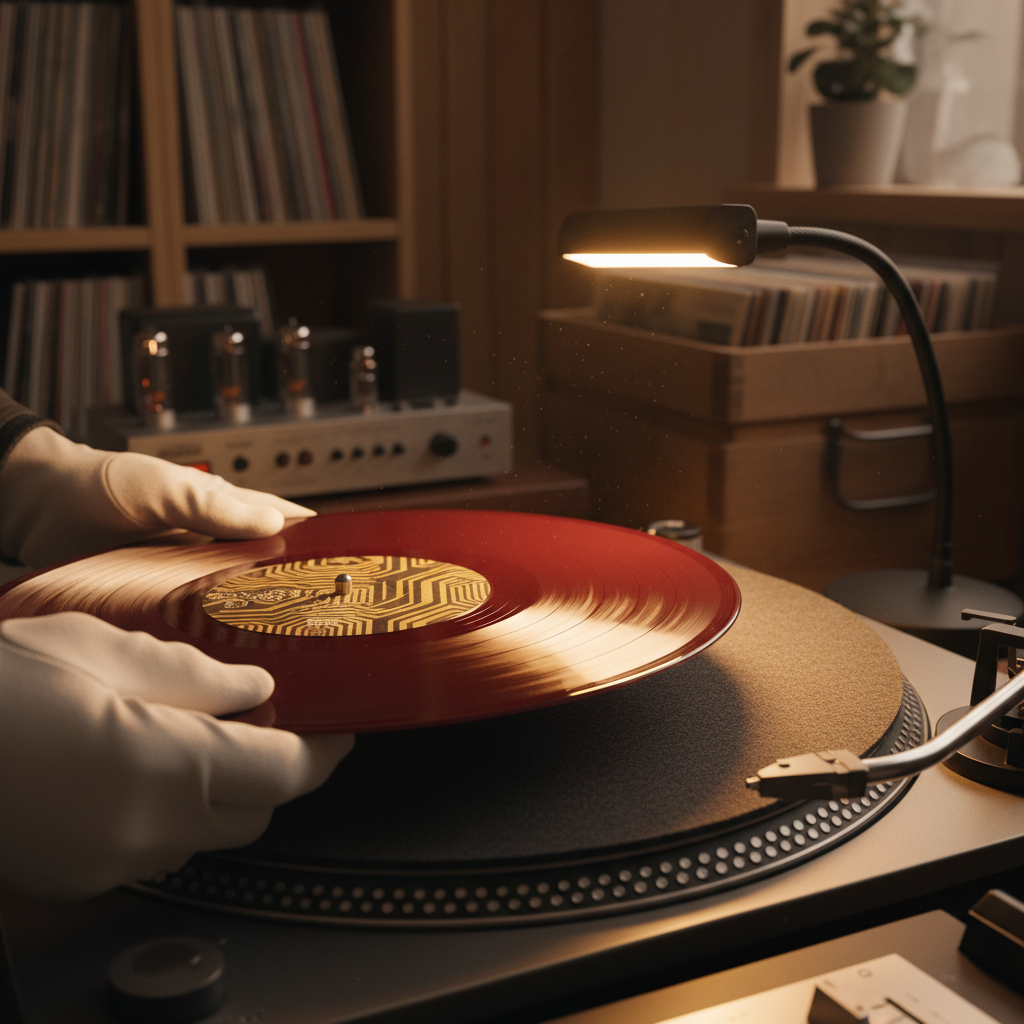
Protecting rare vinyl requires proper storage and handling. Store records vertically (never stacked horizontally) in a climate-controlled environment away from direct sunlight, maintaining temperatures of 65-70°F and relative humidity of 45-50%. Use high-quality inner sleeves (preferably anti-static polyethylene or rice paper) and outer sleeves (polyethylene or polypropylene) to protect both the vinyl and the cover. Handle records only by edges and label, never touching the playing surface. Clean records with proper equipment (vacuum record cleaning machines or quality manual cleaning systems) using appropriate solutions—never household cleaners. For extremely valuable records, consider insurance riders specifically covering collectibles, as standard homeowner's policies often have inadequate coverage limits for rare vinyl. Document your collection with photographs, detailed condition notes, and purchase receipts to support insurance claims and establish provenance for future sales.