
Why Start Collecting Vinyl Records in 2024
The vinyl revival that began in the mid-2010s has evolved into a sustained cultural movement, with vinyl sales reaching $1.2 billion in the United States in 2022 according to the RIAA—outselling CDs for the second consecutive year. For new collectors, this means unprecedented access to both new pressings and vintage records through local stores, online marketplaces like Discogs, and record fairs happening in virtually every major city. The tactile experience of handling a 12-inch record, reading liner notes, and actively engaging with music creates a listening ritual that streaming services simply cannot replicate.
Beyond the sonic and experiential benefits, vinyl records represent tangible assets that can appreciate significantly over time. First pressings of classic albums like The Beatles' "White Album" or Miles Davis' "Kind of Blue" have increased in value by 200-400% over the past decade when in excellent condition. Even contemporary releases can become valuable—limited edition pressings from artists like Taylor Swift or The Weeknd regularly sell for 2-3 times their retail price within months of release. Building a vinyl collection means investing in something you can enjoy daily while potentially building financial value, making it one of the few hobbies where enjoyment and investment align perfectly.
Essential Equipment for Your First Vinyl Collection
Before purchasing your first record, you'll need a proper playback system that won't damage your vinyl. The absolute minimum investment for a beginner-friendly setup ranges from $300-500 and should include a turntable with a counterbalanced tonearm, a phono preamp (sometimes built into the turntable), and powered speakers or a receiver with passive speakers. The Audio-Technica AT-LP120XUSB ($349) and Fluance RT82 ($299) represent excellent entry points, offering adjustable counterweights and replaceable cartridges that protect your records from excessive wear. Avoid all-in-one suitcase players from brands like Crosley Cruiser, as their ceramic cartridges track at 5-6 grams—double the recommended force—and will damage your records over time.
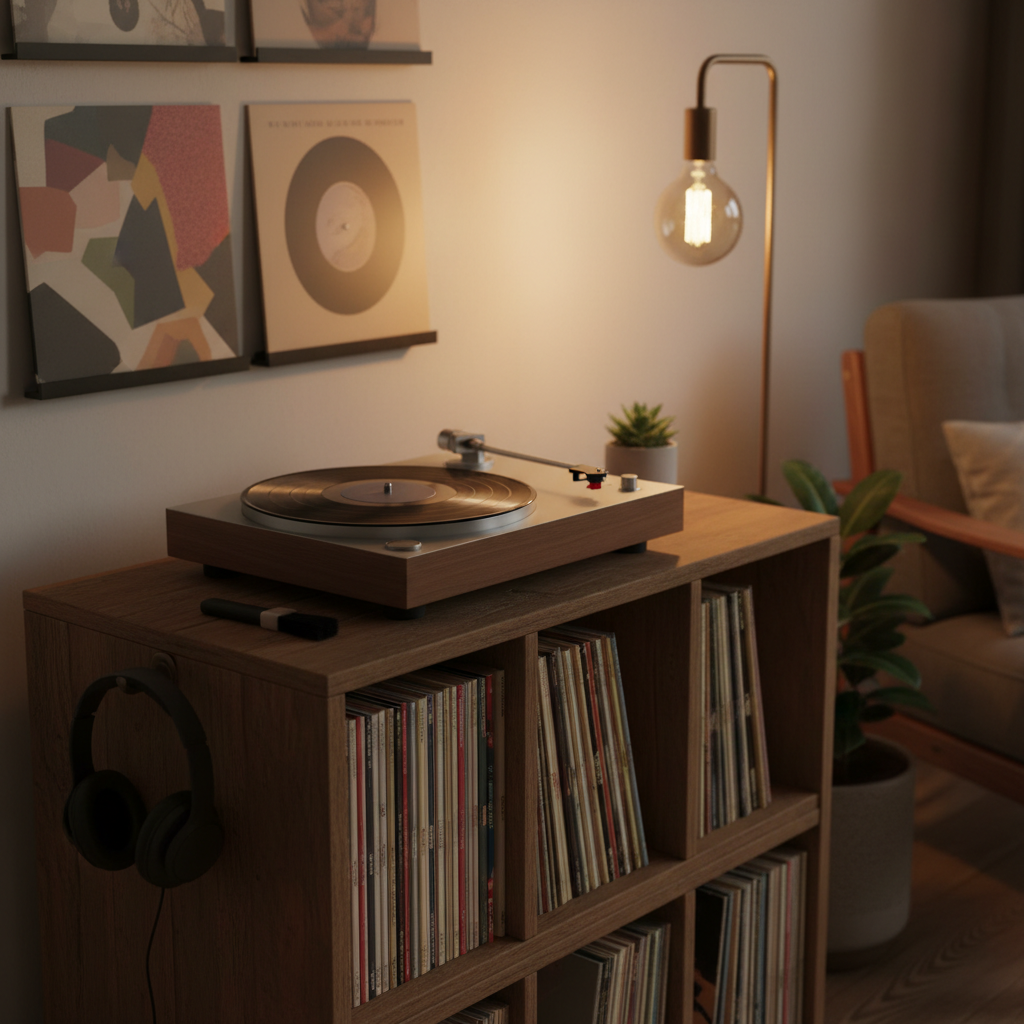
For speakers, powered options like the Edifier R1280T ($99) or Kanto YU2 ($199) eliminate the need for a separate amplifier and provide room-filling sound for small to medium spaces. If you're working with a tighter budget, the Audio-Technica AT-LP60X ($149) paired with affordable powered speakers will get you listening for under $250, though you'll sacrifice some upgradeability. Remember that your turntable is a long-term investment—a quality deck like the Pro-Ject Debut Carbon EVO ($599) will last decades with proper maintenance and can be upgraded with better cartridges as your collection and ears develop. Beyond playback equipment, invest in a carbon fiber brush ($15-20) for pre-play cleaning and a stylus cleaner ($10-15) to maintain your needle, as these simple tools will dramatically extend the life of both your records and your cartridge.
Building Your Collection: Where and How to Buy Vinyl
The modern vinyl collector has access to an unprecedented variety of purchasing channels, each with distinct advantages. Local record stores remain the gold standard for building a collection, offering the ability to inspect records for condition, discover unexpected finds in the used bins, and tap into staff knowledge about pressing quality and rare releases. Stores like Amoeba Music in California, Rough Trade in New York and London, and thousands of independent shops worldwide provide curated selections and community connections that online shopping cannot match. Expect to pay $25-35 for new releases, $8-20 for common used records in good condition, and anywhere from $30-300+ for sought-after vintage pressings depending on rarity and condition.
Online marketplaces have revolutionized vinyl collecting, with Discogs serving as the primary global marketplace where over 50 million records are listed by sellers worldwide. Discogs provides detailed pressing information, condition grading standards, and price history data that helps you make informed purchases and avoid overpaying. eBay remains valuable for auction-style buying where patience can yield deals 20-30% below market value, while Bandcamp allows you to buy directly from artists and labels, often with digital downloads included. For new releases, retailers like Turntable Lab, Vinyl Me, Please, and Sound of Vinyl offer exclusive variants and subscription services. Estate sales, garage sales, and thrift stores can yield incredible finds—many collectors have discovered $100+ records in dollar bins—but require time investment and knowledge to identify valuable pressings among common releases.
When starting to collect vinyl, focus on music you genuinely love rather than chasing investment value. Your first 20-50 records should form the foundation of your listening rotation—albums you'll return to repeatedly. As you develop familiarity with vinyl grading standards and pressing quality, you can begin seeking first pressings, audiophile editions, and limited variants. Many experienced collectors recommend the "one in, one out" rule once you reach 200-300 records, selling or trading pieces that no longer resonate to make room for new acquisitions and prevent unfocused accumulation.
Understanding Vinyl Formats: Building a Diverse Collection
Vinyl records come in several formats, each serving different purposes in a well-rounded collection. The standard 12-inch LP (Long Play) typically contains 35-45 minutes of music across two sides and represents the primary format for full-length albums. However, understanding the differences between LPs, EPs, and singles helps you make strategic purchasing decisions and appreciate the full scope of an artist's output. 7-inch singles, which play at 45 RPM, often feature non-album tracks, alternate versions, or remixes that don't appear elsewhere, making them essential for completist collectors despite their higher per-minute cost.
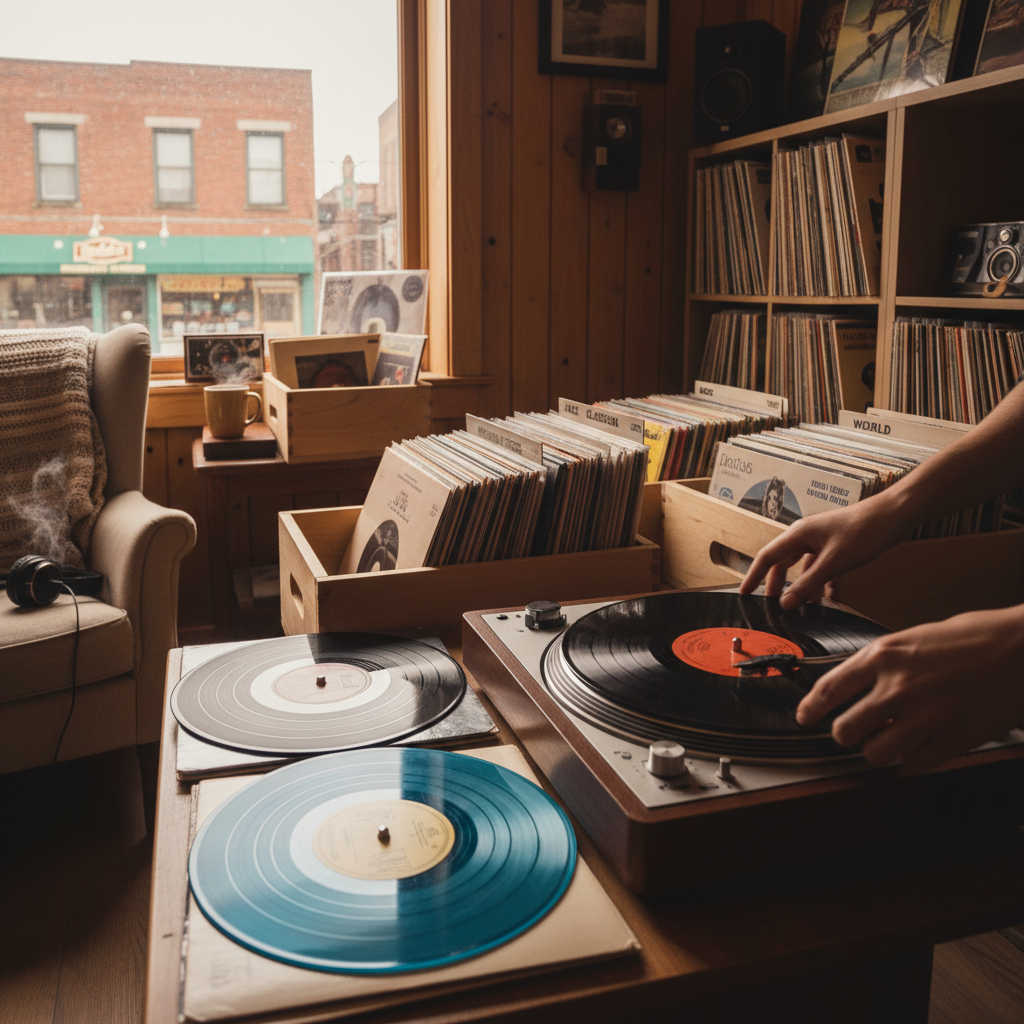
EP releases (Extended Play) occupy the middle ground, typically offering 15-25 minutes of music on a 10-inch or 12-inch record. Many contemporary artists release EPs between full-length albums, and these can become highly collectible—Radiohead's "My Iron Lung" EP or Aphex Twin's various EP releases command premium prices on the secondary market. The 10-inch format, less common but experiencing a renaissance, offers a sweet spot for shorter releases with better sound quality than 7-inch records due to increased groove spacing. Collectors focused on electronic music, punk, or indie rock will find that 7-inch and 10-inch releases often contain some of the most interesting material in these genres.
Pressing weight and quality significantly impact both sound and durability. Standard pressings typically weigh 120-140 grams, while audiophile and premium releases use 180-gram or even 200-gram vinyl that resists warping and provides a more stable platform for the stylus. However, weight alone doesn't guarantee quality—the mastering, plating, and pressing plant matter more than thickness. Releases from pressing plants like Quality Record Pressings (QRP), Pallas in Germany, or Optimal Media consistently deliver superior sound regardless of weight. Half-speed mastered and 45 RPM editions of classic albums offer the ultimate in sound quality, with wider grooves and reduced distortion, though they cost $40-60 compared to $25-30 for standard reissues.
Proper Storage and Preservation for Long-Term Collection Health
Protecting your vinyl investment requires proper storage from day one, as records are simultaneously durable and fragile—capable of playing perfectly after 50 years or becoming unplayable after months of neglect. Every record should be housed in both an inner sleeve and outer sleeve at minimum. Replace the paper inner sleeves that come with most records with anti-static poly-lined sleeves (Mobile Fidelity or Invest in Vinyl brand, $20-25 per 50-pack) or premium options like MoFi Original Master Sleeves ($40 per 50) that prevent static buildup and paper dust from contaminating grooves. Outer sleeves made from 3-mil or 4-mil polypropylene ($15-20 per 100) protect the album jacket from ring wear, corner damage, and spine splits that can reduce resale value by 30-50%.
Records must be stored vertically, never stacked horizontally, as even moderate weight causes warping over time. Shelving units like the IKEA Kallax series ($50-150 depending on size) have become the standard for vinyl storage, with 13x13-inch cubes perfectly sized for 12-inch records. For larger collections, consider dedicated record storage furniture from brands like Line Phono or custom solutions that keep records at a slight angle (85-90 degrees) to prevent leaning and warping. Store your collection in a climate-controlled environment between 65-70°F with 45-50% relative humidity—basements, attics, and garages subject to temperature extremes will warp records and cause jacket damage. Direct sunlight fades album artwork and can warp vinyl through heat exposure, so keep collections away from windows or use UV-filtering shades.
For display purposes, explore creative vinyl storage and display ideas that showcase your favorite albums while maintaining proper storage conditions for the bulk of your collection. Rotation displays like the Crosley Manchester Entertainment Center or wall-mounted now playing stands allow you to feature current favorites without compromising the integrity of your stored records. Many collectors dedicate one shelf or cube to their "now playing" rotation of 20-30 albums, making selection easier while keeping the main collection organized alphabetically or by genre. Clean records before and after playing using a carbon fiber brush ($15-20) for dry cleaning and a wet cleaning system like the Spin-Clean ($79) or vacuum-based systems from brands like Pro-Ject ($499+) for deep cleaning every 10-15 plays or when purchasing used records.
Cataloging and Organizing Your Vinyl Collection
As your collection grows beyond 50-100 records, a cataloging system becomes essential for tracking what you own, preventing duplicate purchases, and monitoring collection value. Digital cataloging tools like VinylAI allow you to scan barcodes and quickly add records to your database with complete pressing information, current market values, and personal notes about condition or acquisition. The Discogs database and app serve as the industry standard, with over 14 million releases documented and a built-in collection management system that tracks median prices and allows you to mark records for sale or trade. Spending 2-3 hours to catalog your existing collection saves countless hours of searching and provides valuable data about your collecting patterns and preferences.
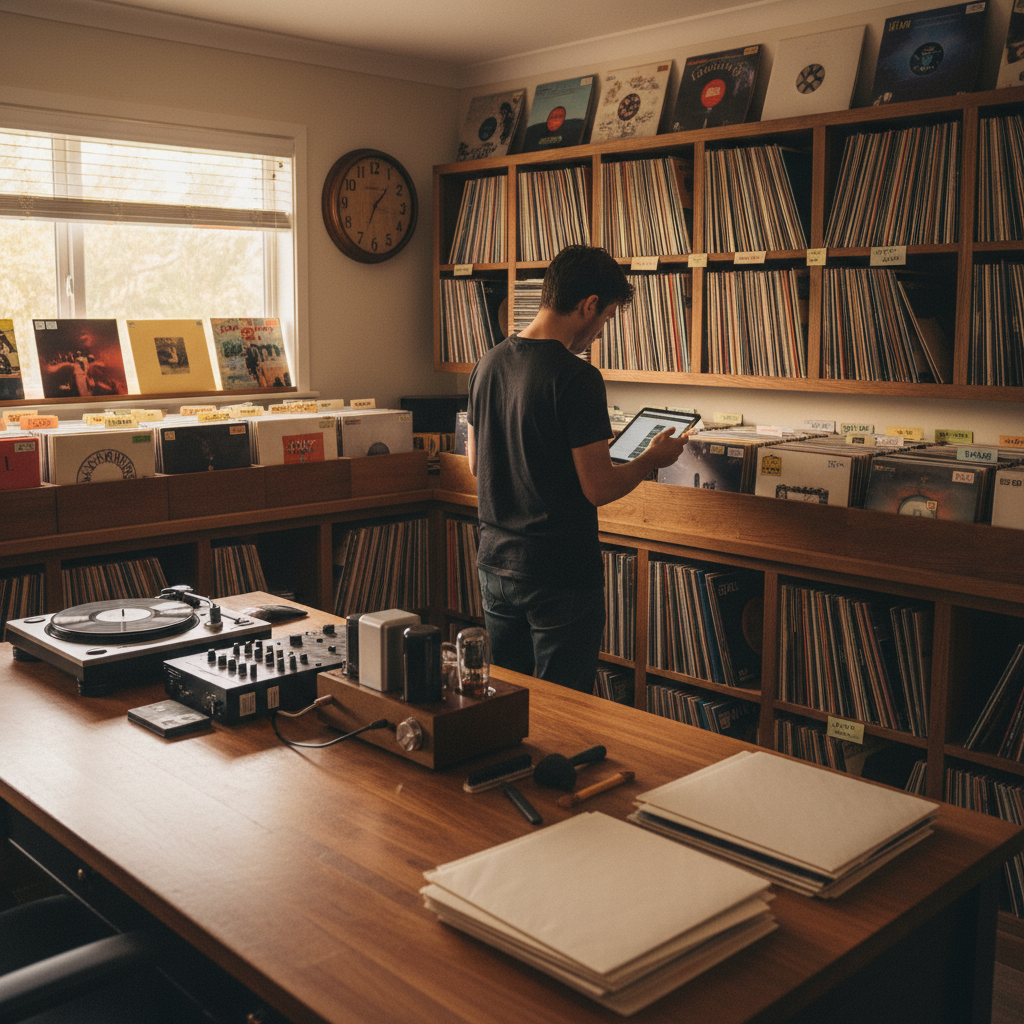
Physical organization methods vary by collector preference and collection size, but the most common systems include alphabetical by artist, chronological by acquisition date, or categorical by genre and subgenre. Many experienced collectors use a hybrid approach—organizing by broad genre categories (rock, jazz, electronic, classical) and then alphabetically within each category. This system makes browsing more intuitive while maintaining the ability to locate specific records quickly. For collections exceeding 500 records, consider using divider cards ($15-25 per set) labeled with genre markers or alphabetical ranges to speed up navigation. Some collectors organize by label, particularly for jazz (Blue Note, Prestige, Impulse!) or electronic music (Warp, Ninja Tune, Kompakt), as label-focused collections often have higher coherence and collectibility.
| Organization Method | Best For | Advantages | Drawbacks |
|---|---|---|---|
| Alphabetical by Artist | Collections 100-1000 records | Universal, easy for guests to navigate | Splits up genre listening sessions |
| Genre-Based | Diverse collections, DJs | Facilitates mood-based selection | Requires subjective categorization |
| Chronological | Smaller collections under 200 | Tracks collection evolution | Difficult to find specific albums |
| Label-Focused | Specialized collections | Highlights label aesthetics and sound | Only works for focused collections |
Whichever system you choose, consistency is crucial—switching organization methods mid-collection creates confusion and wastes time. Document your system in your digital catalog and stick with it, making adjustments only when your collection reaches new size thresholds or your listening habits fundamentally change.
Budget Strategies for Building a Quality Collection
Building an impressive vinyl collection doesn't require unlimited funds, but it does demand strategic purchasing and patience. Set a monthly vinyl budget between $50-150 depending on your financial situation, and stick to it religiously to prevent impulse buying that leads to unfocused collections and buyer's remorse. The most cost-effective approach combines multiple purchasing strategies: buying new releases you're passionate about at retail ($25-35), hunting for used classics in good condition at local shops ($8-20), and waiting for sales events like Record Store Day exclusives in the resale market after initial hype subsides. Many limited releases that sell for $80-100 immediately after release drop to $40-50 within 6-12 months as the market stabilizes.
Used record bins at local shops offer the best value for money, with common classic rock, jazz, and soul records often priced at $5-12 in VG+ to NM condition. Develop relationships with shop owners who can alert you to new arrivals matching your interests and sometimes offer discounts for regular customers. Estate sale purchases and thrift store hunting require more time investment but can yield $50-100 records for $1-5 if you know what to look for—focus on learning to identify valuable labels like Blue Note, Impulse!, Prestige for jazz, or original pressings of classic rock albums by checking matrix numbers and label variations. Bring a smartphone to check Discogs prices on promising finds, as many thrift store employees don't research values carefully.
Avoid the trap of buying colored vinyl or picture discs solely for aesthetic appeal, as these variants typically cost $5-10 more than standard black vinyl while often delivering inferior sound quality due to the additives required for coloring. Reserve premium purchases for records you'll play frequently or that represent significant artistic statements in your collection. Consider buying reissues of classic albums rather than original pressings for listening copies—modern reissues from labels like Analogue Productions, Music Matters Jazz, or Mobile Fidelity often sound better than worn original pressings and cost $30-50 versus $100-300 for clean originals. Save original pressing purchases for your absolute favorite albums or when the mastering on reissues is demonstrably inferior.
Developing a Focused Collection Strategy
The difference between a random accumulation of records and a meaningful collection lies in intentionality and focus. While your first 50-100 records will naturally be eclectic as you explore your tastes, developing one or more collecting focuses as you approach 200+ records creates coherence and often leads to greater appreciation in value. Successful collection focuses include complete discographies of favorite artists, comprehensive coverage of specific labels (Motown, Stax, Factory Records), genre deep-dives (free jazz, Detroit techno, UK post-punk), or era-specific collections (1960s Blue Note jazz, 1990s indie rock). Discogs marketplace data shows that focused collections appreciate 15-20% faster than random accumulations, as they demonstrate expertise and curation that appeals to other collectors.
Consider starting with a completionist approach to 2-3 favorite artists, acquiring all studio albums, live records, and significant EPs. This focused buying teaches you about pressing variations, international releases, and the secondary market for specific artists while building deep knowledge in a narrow area. For example, collecting every official Beatles release—including mono and stereo pressings, international variants, and the various remasters—could take years and thousands of dollars, but provides a comprehensive education in vinyl collecting fundamentals. Alternatively, focus on a specific decade and genre combination, like 1970s progressive rock or 1980s hip-hop, which allows you to understand the evolution of a sound while keeping purchases focused.
Some collectors focus on pressings from specific countries or pressing plants known for superior quality. Japanese pressings of jazz and rock albums from the 1970s-1980s are legendary for their quiet vinyl and meticulous quality control, though they command premium prices ($40-150). German pressings from plants like Pallas or optimal offer exceptional quality for European artists, while original UK pressings of British rock albums typically sound better than US versions due to shorter distribution chains and different mastering. This geographic focus adds a collecting dimension beyond just musical content and often results in superior sound quality. Tools like VinylAI can help you track which pressings you own and identify gaps in your focused collections, making strategic purchasing decisions easier as your collection grows.
Advanced Collecting: Limited Editions and Investment Pieces
As your collection matures and your budget allows, you may want to explore limited edition releases, audiophile pressings, and potential investment pieces that combine listening pleasure with financial appreciation. Limited edition releases from contemporary artists—numbered pressings of 500-2000 copies, often on colored vinyl with special packaging—can appreciate significantly if the artist's popularity grows. For example, early limited pressings from artists like Billie Eilish or Tyler, The Creator have increased 300-500% in value within 2-3 years. However, the modern vinyl market is saturated with "limited" releases, so focus on artists with proven track records and genuine scarcity rather than marketing hype.
Audiophile labels like Mobile Fidelity Sound Lab (MoFi), Analogue Productions, Music Matters Jazz, and Speakers Corner produce premium reissues from original master tapes, often using 180-gram or 200-gram vinyl, superior mastering techniques, and quality control that justifies their $40-60 price points. These releases typically hold their value well and sometimes appreciate, particularly for titles that go out of print. The MoFi One-Step series, limited to 3,000-7,500 numbered copies and using a specialized pressing process, regularly sells out at $125 retail and trades for $150-300 on the secondary market within months. If you're passionate about sound quality and have favorite albums that received audiophile treatment, these represent both listening upgrades and solid investments.
For truly investment-focused collecting, original pressings of landmark albums in excellent condition offer the most reliable appreciation. First UK pressings of Beatles albums in NM condition have appreciated an average of 12-15% annually over the past decade according to Popsike auction data. Blue Note jazz first pressings with the original deep groove labels and Van Gelder stamps command $500-5,000+ depending on title and condition. However, treating vinyl purely as investment vehicles removes the joy of collecting—the best approach combines pieces you genuinely want to hear with occasional strategic purchases of recognized classics in exceptional condition. Remember that condition is paramount for investment pieces; a VG+ copy might sell for 40-50% of what a NM copy commands, making proper storage and handling essential. If you're interested in creating your own pressings of unique recordings, explore our guide to custom vinyl records for special occasions or personal projects.