
What Defines a Limited Edition Vinyl Record
A limited edition vinyl is any pressing intentionally manufactured in restricted quantities, typically announced before or at the time of release. Unlike standard pressings that remain in production based on demand, limited editions have predetermined production runs that won't be repeated with identical specifications. These releases often feature special characteristics such as colored or picture disc vinyl, alternative artwork, bonus tracks, or enhanced packaging that distinguishes them from regular commercial releases. The limitation can apply to specific variants while standard black vinyl remains widely available, or it can represent the only format for particularly exclusive releases.
The vinyl industry lacks standardized definitions for what constitutes "limited," leading to variations in how labels market these releases. Some manufacturers consider anything under 10,000 copies limited, while boutique labels and artists may restrict pressings to just 100-500 copies. Genuine numbered vinyl editions provide the strongest authenticity, with each copy hand-numbered (e.g., "142/500") on the sleeve, label, or accompanying certificate. According to Discogs marketplace data from 2023, numbered pressings under 1,000 copies typically sell for 2-4 times their original retail price within the first year, while unnumbered "limited" releases show more modest appreciation of 20-50% depending on demand.
The most credible limited pressings come from Record Store Day exclusives (with published quantities), direct artist releases through platforms like Bandcamp (with visible inventory counts), and established audiophile labels like Mobile Fidelity Sound Lab, Analogue Productions, and Music On Vinyl that document pressing quantities. Tools like VinylAI can help collectors verify limited edition claims by cross-referencing barcode scans with Discogs database entries that show confirmed pressing quantities and variant details. Understanding these distinctions prevents overpaying for releases marketed as "limited" but actually pressed in quantities of 20,000 or more.
Types of Limited Pressing Vinyl and Their Market Values
Limited edition vinyl releases fall into several distinct categories, each with different market dynamics and value trajectories. Record Store Day (RSD) exclusives represent the most accessible limited pressings, with quantities typically ranging from 1,500 to 15,000 copies distributed globally. Popular RSD releases like Taylor Swift's "The Lakes" (2020, 15,000 copies) originally retailed for $13.98 but sold on secondary markets for $45-$75 within months. More restricted RSD releases such as The Cure's "Torn Down" (2018, 7,500 copies) have appreciated from $22 retail to $80-$120 in near-mint condition according to Popsike auction data.
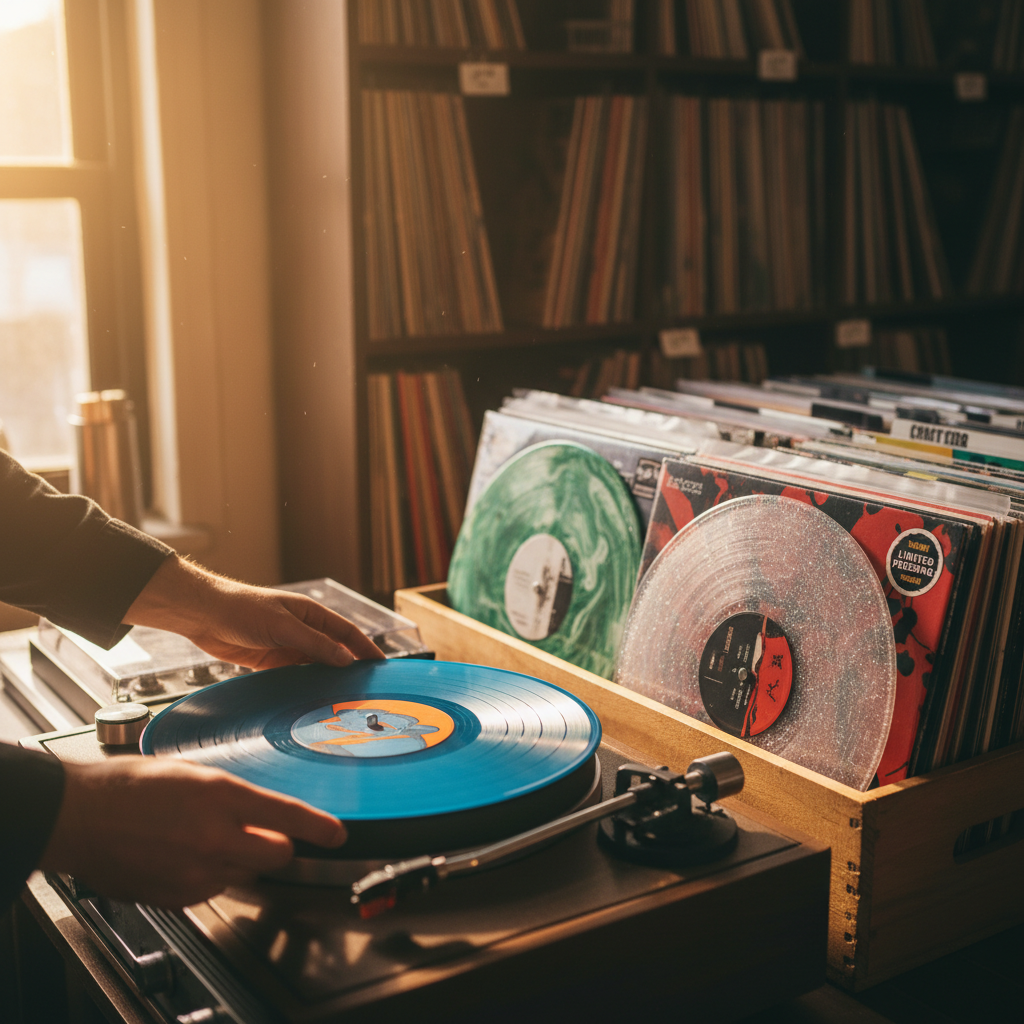
Direct-to-fan artist pressings often feature the lowest quantities and highest appreciation potential. Jack White's Third Man Records pioneered ultra-limited vault packages, with some releases limited to 3,000-5,000 subscribers. The Vault Package #43 featuring The Raconteurs' "Live at Electric Lady" (2019, approximately 4,000 copies) sold for $60 to members but commands $150-$200 on Discogs. Independent artists using platforms like Qrates or Bandcamp frequently press 100-500 copies, with successful campaigns from artists like Vaporwave producer 猫 シ Corp seeing 300-copy pressings (originally $30) selling for $200-$400 due to genre-specific collector demand.
Colored vinyl variants from major and independent labels constitute the largest limited edition category. Modern releases often feature multiple variants: standard black (unlimited), indie store exclusive color (2,000-5,000 copies), and artist webstore exclusive color (500-1,000 copies). Billie Eilish's "Happier Than Ever" (2021) exemplifies this strategy with over 15 different colored variants, each limited to specific retailers or quantities. The "Spotify Fans First" translucent green variant (approximately 5,000 copies) sold out immediately at $32.98 and trades for $60-$90, while the unlimited black pressing sells for $25-$30.
The following table illustrates typical market values across limited pressing categories:
| Category | Typical Quantity | Retail Price Range | Secondary Market (1-2 Years) |
|---|---|---|---|
| Record Store Day Exclusive | 1,500-15,000 | $20-$35 | $40-$150 |
| Artist Direct/Vault Release | 500-5,000 | $30-$75 | $75-$300 |
| Colored Vinyl Variant | 1,000-5,000 | $25-$40 | $35-$100 |
| Indie Store Exclusive | 2,000-8,000 | $25-$35 | $40-$80 |
| Ultra-Limited (Under 500) | 100-500 | $25-$60 | $100-$500+ |
These values assume near-mint condition and popular artists; niche genres and lesser-known artists show significantly lower appreciation regardless of pressing quantities.
How to Identify Authentic Limited Edition Vinyl
Authenticating limited edition vinyl requires examining multiple indicators, as counterfeit and misleading "limited" claims have proliferated with vinyl's resurgence. The most reliable authentication method involves numbered certificates or hand-numbering directly on the album sleeve, typically found on the back cover or inside gatefold. Genuine numbered editions show slight variations in handwriting or stamp positioning across copies, while counterfeit numbering often appears too uniform or uses identical digital printing. Examine the numbering under magnification—authentic hand-numbering shows ink absorption into paper fibers, while printed numbers sit on the surface.
Hype stickers and official labeling provide secondary authentication when present on original sealed copies. Record Store Day releases feature official RSD stickers with the event year and often the pressing quantity. Third Man Records uses distinctive yellow-and-black vault stickers, while Mobile Fidelity Sound Lab includes numbered stickers on their limited series. However, stickers can be transferred or counterfeited, so they should corroborate other evidence rather than serve as sole authentication. Check that catalog numbers on stickers match the label and spine exactly—counterfeiters often miss these details.
Cross-referencing with Discogs database entries provides crucial verification for identifying rare and limited pressings. Search by barcode or catalog number to find specific pressing details, including matrix/runout codes etched in the vinyl's dead wax. Authentic limited pressings have documented matrix codes that match specific plants and mastering engineers. For example, Sterling Sound masterings show "SS" in the runout, while Optimal Media in Germany uses "OM." Compare your copy's runout etchings with confirmed examples in Discogs submissions—discrepancies indicate potential counterfeits or misidentified pressings.
Physical characteristics offer additional authentication clues. Many limited pressings use 180-gram or 200-gram heavyweight vinyl, noticeably thicker and heavier than standard 120-140 gram pressings. Colored vinyl should show consistent color throughout when examined at the edge, while picture discs have visible printed layers. Packaging quality matters—legitimate limited editions from established labels feature premium materials like thick gatefold covers, spot UV coating, embossing, or specialty printing techniques. Budget pressings marketed as "limited" often use thin cardboard and standard printing. Consult resources on vinyl grading standards to assess whether the overall quality matches claimed limited edition status.
Most Valuable Limited Edition Vinyl Records Ever Sold
The highest echelons of limited edition vinyl values belong to pressings that combine extreme scarcity with cultural significance and artist demand. The White Stripes' "Lafayette Blues" (1998) holds legendary status as one of the world's rarest records, with only 15 copies pressed on red-and-white striped vinyl for a performance at Lafayette Bar in Detroit. One copy sold for $12,700 in 2013 according to Popsike auction records, though none have appeared publicly since. The pressing predates the band's mainstream success, making it a holy grail for White Stripes completists and a prime example of how ultra-limited early pressings from later-famous artists achieve astronomical values.

Prince's "The Black Album" represents perhaps the most famous recalled limited pressing in history. Originally scheduled for 1987 release, Prince withdrew the album days before distribution, but approximately 500,000 copies had already been pressed. Warner Bros. recalled and destroyed most copies, though some reached collectors. The original pressing (catalog number 1-25677) sells for $15,000-$27,500 in sealed condition based on Heritage Auctions sales from 2018-2022. This exemplifies how manufacturing errors, recalls, and artist decisions create unintentional limited editions with extraordinary value—similar to other highly valuable vinyl records created through unusual circumstances.
Modern intentional limited pressings have also achieved remarkable values. Wu-Tang Clan's "Once Upon a Time in Shaolin" (2015) represents the ultimate limited edition—a single copy pressed and sold at auction for $2 million to pharmaceutical executive Martin Shkreli, later seized by federal authorities and resold to digital art collective PleasrDAO for $4 million in 2021. While this represents an extreme outlier and art project rather than traditional limited pressing, it demonstrates how scarcity drives value. More conventionally, The Beatles' "Yesterday and Today" butcher cover (1966 first state) wasn't intentionally limited but became so when Capitol Records recalled and replaced the controversial cover. First state stereo copies in near-mint condition sell for $15,000-$25,000, with a sealed copy fetching $125,000 at auction in 2016.
Recent limited pressings showing strong appreciation include My Chemical Romance's "The Black Parade" Hot Topic exclusive (2006, approximately 2,000 copies on red/black vinyl) which sold for $20 originally and now commands $800-$1,200 in near-mint condition. Radiohead's "OK Computer OKNOTOK" deluxe boxset (2017, limited to approximately 30,000 copies worldwide) retailed for $130 and sells for $300-$450 sealed. These examples from the top tier of valuable vinyl demonstrate that modern limited pressings can appreciate significantly within 5-15 years when combining moderate scarcity (under 5,000 copies) with sustained artist popularity and desirable variants.
Collector Edition Vinyl: Special Features and Premium Elements
Collector edition vinyl releases distinguish themselves through enhanced packaging and bonus content that justifies premium pricing and limited availability. Deluxe boxsets represent the pinnacle, often including multiple vinyl variants, extensive booklets, lithographs, and replica memorabilia. The Beatles' "White Album" 50th Anniversary Super Deluxe Edition (2018, limited quantities) retailed for $140 and included six LPs, a 7-inch EP, and a 164-page hardbound book. These editions appeal to completist collectors rather than casual listeners, with sealed copies now selling for $200-$280 on Discogs. Understanding the various Beatles White Album pressings helps collectors distinguish between standard reissues and genuine limited editions.
Audiophile pressings from labels like Mobile Fidelity Sound Lab (MoFi), Analogue Productions, and Music On Vinyl create limited editions through superior mastering and manufacturing. MoFi's UltraDisc One-Step series limits pressings to 3,000-7,500 numbered copies, using a specialized mastering process that reduces generational loss. Titles like Santana's "Abraxas" One-Step (2019, 7,500 copies) retailed for $125 and sell for $200-$350 depending on condition. These pressings use 180-200 gram virgin vinyl, premium Japanese paper for packaging, and all-analog mastering chains from original master tapes. The limited quantities result from the labor-intensive process rather than artificial scarcity, appealing to audiophiles willing to pay premiums for demonstrably superior sound quality.
Special vinyl formulations and manufacturing techniques add collectibility to limited pressings. Picture discs embed artwork directly into the vinyl, though they typically offer inferior sound quality due to the non-standard material composition. Despite sonic limitations, picture discs from artists like Iron Maiden and Metallica command premiums of $30-$80 over standard pressings when limited to 2,000-5,000 copies. Glow-in-the-dark vinyl, splatter patterns, and multi-color swirls create visual appeal, with each pressing showing unique color distribution. The most elaborate pressings combine multiple elements—for example, Run The Jewels' "RTJ4" included a gold and bronze splatter variant (approximately 1,500 copies) that sold out at $30 and trades for $80-$120.
Limited editions increasingly include exclusive bonus content such as alternate mixes, demos, or unreleased tracks unavailable elsewhere. Taylor Swift's "Folklore" deluxe edition (Target exclusive, limited production run) included the bonus track "The Lakes" exclusively on physical formats, driving collectors to purchase despite owning the standard edition. Similarly, anniversary reissues often feature remastered audio, expanded liner notes with archival photos, and replica inserts from original pressings. These content additions provide substantive value beyond artificial scarcity, making them worthwhile investments for serious collectors building comprehensive artist discographies.
Investment Potential and Market Trends for Limited Pressings
The limited edition vinyl market has experienced explosive growth since 2015, with Discogs marketplace data showing average annual appreciation of 8-12% for confirmed limited pressings under 2,000 copies from popular artists. However, investment potential varies dramatically based on artist trajectory, pressing quality, and market saturation. Early career pressings from artists who later achieve mainstream success offer the highest appreciation potential—for example, Billie Eilish's "Don't Smile At Me" EP (2017, various limited colored variants around 1,000-3,000 copies each) originally sold for $18-$25 and now commands $150-$300 as her popularity exploded. This pattern repeats across genres, with early limited pressings from Tyler, The Creator, Lorde, and Tame Impala showing 400-800% appreciation.
Conversely, the market has become oversaturated with artificially limited pressings from established artists, diminishing investment returns. Major labels now routinely press 10-15 colored variants for single releases, each "limited" to 2,000-5,000 copies but collectively totaling 30,000-50,000 copies across all variants. This strategy maximizes initial sales to completist collectors but suppresses secondary market values since total availability remains high. Data from Popsike shows that albums with more than eight variants rarely appreciate beyond 20-30% above retail, as collectors cherry-pick preferred colors rather than purchasing every variant. The most sound investments focus on single limited variants or releases with total production under 5,000 copies across all formats.
Genre-specific limited pressings show remarkably different appreciation patterns. Hip-hop and electronic music limited editions from independent labels like Vinyl Digital, Get On Down, and Enjoy The Ride typically appreciate 100-300% within 2-3 years due to strong collector demand and lower initial pressing quantities (500-2,000 copies). Vaporwave and future funk releases pressed through labels like My Pet Flamingo or Neoncity Records in quantities of 300-500 copies routinely sell for $100-$250 despite $25-$35 retail prices. Jazz and classical audiophile pressings appreciate more slowly but steadily, with Analogue Productions' limited jazz titles showing consistent 40-60% appreciation over 5-7 years.
Market timing significantly impacts investment returns on limited vinyl. Immediate flipping (reselling within days of release) yields 50-150% returns on highly anticipated releases but requires quick execution and market knowledge. Medium-term holding (1-3 years) allows appreciation as pressings sell out and initial supply exhausts, typically yielding 100-300% returns on successful picks. Long-term holding (5+ years) benefits from artist career development and format scarcity, with potential 400-1000% returns on early pressings from artists who achieve lasting popularity. However, vinyl collecting should prioritize personal enjoyment over pure investment—market corrections, format shifts, and changing tastes introduce substantial risk to speculative buying.
Where to Buy and Sell Limited Edition Vinyl Records
Acquiring limited edition vinyl at retail requires strategic planning and multiple purchasing channels. Artist and label websites offer first access to direct releases, often with the lowest quantities and highest appreciation potential. Subscribe to email lists from labels like Third Man Records, Polyvinyl Record Co., and Sacred Bones Records to receive advance notice of limited pressings, typically announced 1-4 weeks before release. Many labels now use lottery systems or timed releases to manage demand—Jack White's Third Man Vault subscriptions, for instance, guarantee limited editions to subscribers while preventing bot purchases that plague open sales.
Independent record stores receive exclusive variants from distributors, with chains like Rough Trade, Amoeba Music, and Bull Moose creating store-exclusive colored pressings limited to 1,000-3,000 copies. Building relationships with local store staff provides advance notice of incoming limited stock and occasional hold privileges for regular customers. Record Store Day events (held annually in April and November) require in-person attendance at participating stores, with limited quantities distributed based on store size and sales volume. Arrive 1-2 hours before opening for popular releases, as quantities for individual stores may be as low as 1-5 copies for the most limited titles.
For secondary market purchases, Discogs marketplace provides the most comprehensive selection with detailed pressing information and seller ratings. Filter searches by specific pressing variants using catalog numbers and matrix codes to ensure you're purchasing the correct limited edition. Compare prices across multiple sellers and check "Statistics" tabs showing historical sales data—avoid listings priced more than 20-30% above recent sales unless condition or included extras justify the premium. eBay auctions occasionally yield bargains when sellers misidentify pressings or list during low-traffic periods, though competition for known rare items drives prices to market rates. Set saved searches with notifications for specific catalog numbers to catch new listings immediately.
Selling limited editions requires strategic platform selection based on value and urgency. Discogs suits most sales, with 8% seller fees (plus payment processing) but access to targeted collectors actively searching for specific pressings. Price competitively based on recent sales data and condition, using the standardized Goldmine grading system to accurately describe condition. For high-value items over $500, consider Heritage Auctions or Recordmecca which specialize in rare vinyl and attract serious collectors willing to pay premium prices, though seller fees reach 15-20%. Local sales through record store consignment or collector meetups avoid shipping risks and fees but limit your buyer pool to local collectors, typically yielding 10-20% lower prices than online sales for rare items.
Building a Limited Edition Vinyl Collection: Expert Strategies
Starting a focused limited edition collection requires defining clear parameters to avoid the financial trap of chasing every limited release. Successful collectors typically specialize by artist, genre, label, or era, allowing deep knowledge development and strategic purchasing. For example, collecting all Record Store Day releases proves financially impossible (300+ titles annually at $20-$40 each), but focusing on RSD jazz reissues or specific labels like Light In The Attic creates an achievable goal. New collectors should review our guide on starting a vinyl collection before specializing in limited editions, as understanding broader collecting principles prevents costly mistakes.
Budget allocation prevents overspending in the excitement of limited releases. Experienced collectors recommend the 80/20 rule: allocate 80% of your budget to retail purchases of new limited releases and 20% to secondary market acquisitions of past releases you missed. This ratio allows participation in current releases while gradually filling collection gaps without paying extreme secondary market premiums across your entire collection. Set monthly spending limits ($100-$300 for most hobbyists) and track purchases in spreadsheets or apps—tools like VinylAI help manage collections by scanning barcodes and tracking current values against purchase prices, revealing which limited editions appreciate and which stagnate.
Develop relationships within the collector community through forums like Steve Hoffman Music Forums, Reddit's r/VinylCollectors, and Facebook groups dedicated to specific genres or labels. These communities share release information, trade duplicate variants, and occasionally offer below-market prices to fellow enthusiasts rather than maximizing profit through public sales. Participate genuinely by sharing knowledge and reasonable trades—collectors who only take without contributing find themselves excluded from the best opportunities. Attend local record shows and shop events to meet collectors in person, as face-to-face relationships often lead to first refusal on collections being sold or traded.
Storage and preservation become critical when collecting valuable limited editions. Invest in quality inner and outer sleeves—Mobile Fidelity Sound Lab anti-static inner sleeves ($0.75-$1 each) prevent groove wear and static buildup, while 3-mil polyethylene outer sleeves ($0.25-$0.40 each) protect cover artwork from ring wear and edge damage. Store records vertically in climate-controlled environments (65-70°F, 45-50% humidity) away from direct sunlight, as heat and UV exposure cause vinyl warping and cover fading that devastate resale values. For particularly valuable limited editions over $200, consider archival-quality storage boxes and keeping sealed copies sealed—opened pressings typically sell for 30-50% less than sealed equivalents for modern limited editions where sealed examples remain available.