
What Is an LP Record? Understanding the Long Play Format
The LP disc emerged in June 1948 when Columbia Records introduced a revolutionary format that could play for 21-22 minutes per side at 33⅓ revolutions per minute. Before this innovation, listeners had to flip or change 78 RPM shellac records every 3-5 minutes, making continuous listening of classical symphonies or Broadway shows impractical. Columbia's chief engineer Peter Goldmark led the development team that created microgroove technology, allowing grooves to be spaced at 224-300 per inch compared to the 85-100 grooves per inch on 78s. This technical breakthrough meant a single 12-inch LP could replace a bulky album of five to seven 78 RPM records.
The term "album" itself originated from these earlier collections, which were literally bound in book-like albums similar to photograph collections. When the LP format launched, Columbia initially pressed classical music titles, believing the format's extended playtime would appeal to serious music listeners. The first LP ever manufactured was Mendelssohn's Violin Concerto in E Minor performed by Nathan Milstein with the New York Philharmonic, catalog number ML-4001. Within two years, RCA Victor responded with the 7-inch 45 RPM single format, creating the "War of the Speeds" that ultimately resulted in both formats coexisting—45s for singles and LPs for albums—a standard that persisted until the compact disc era.
Today, understanding what is an LP extends beyond just the physical specifications. Collectors recognize that LPs represent a specific era of music production, mastering techniques, and cultural significance. Original pressings from the 1950s-1970s often feature analog tape masters and cutting techniques that many audiophiles consider superior to later digital remasters. According to Discogs marketplace data from 2023, first pressing LPs from iconic albums can sell for 10-50 times the price of later reissues, with Beatles' "White Album" numbered first pressings reaching $10,000-$15,000 in near-mint condition.
LP vs EP vs Single: Decoding Vinyl Format Differences
The distinction between EP vs LP formats confuses many new collectors, but the differences are straightforward once you understand the technical specifications. An LP (Long Play) typically contains 8-12 tracks across two sides with 35-45 minutes of total playtime, while an EP (Extended Play) usually features 4-6 tracks with 15-25 minutes total. Singles contain 1-2 tracks per side with 3-8 minutes of music. These aren't just arbitrary classifications—the playtime directly affects groove spacing, which impacts sound quality and volume levels during the mastering process.
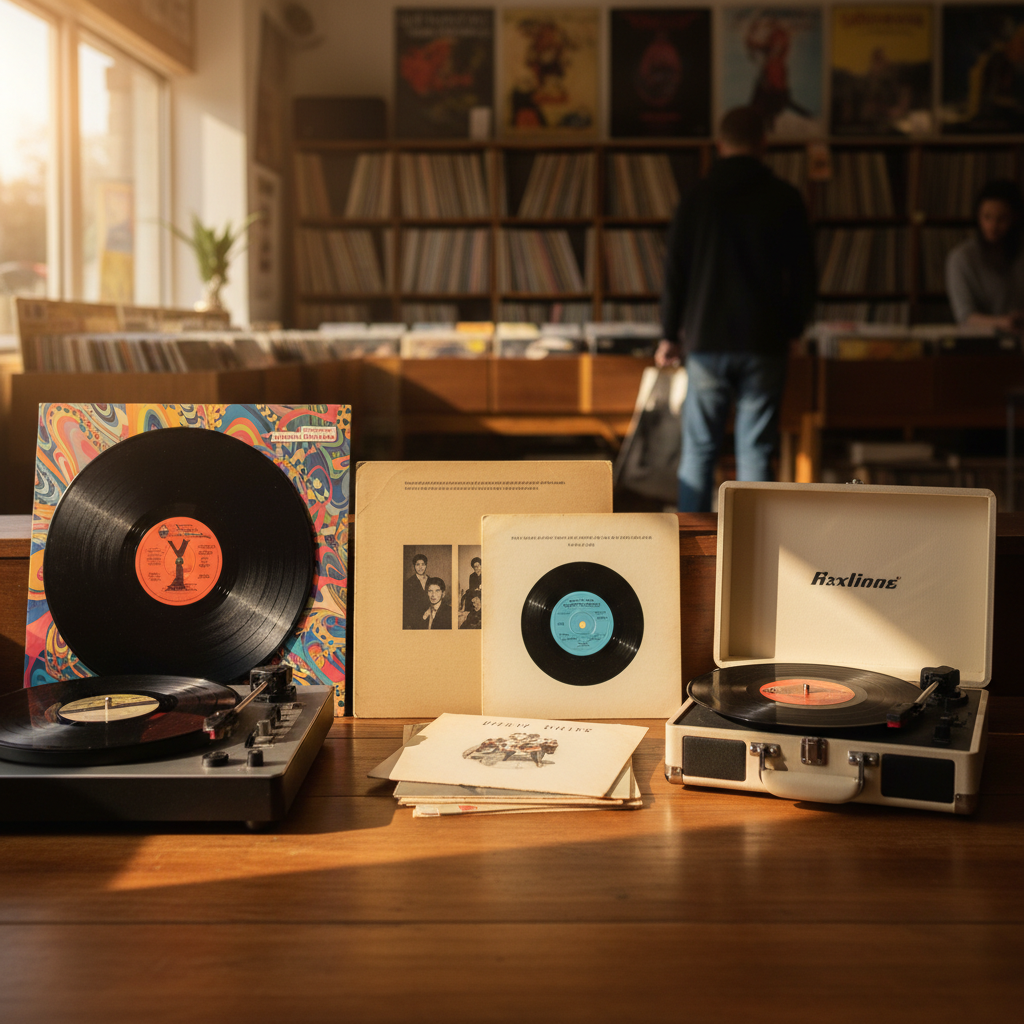
Format distinctions also correlate with physical size, though exceptions exist. Standard configurations include:
- 12-inch LP: 33⅓ RPM, 40-50 minutes total, album-length releases
- 12-inch EP/Single: 45 RPM, 15-25 minutes, often used for dance music and audiophile singles with wider groove spacing
- 10-inch LP: 33⅓ RPM, 25-35 minutes, popular in the 1950s and for modern indie releases
- 7-inch Single: 45 RPM, 6-10 minutes, standard single format with A-side and B-side
- 7-inch EP: 33⅓ RPM, 10-15 minutes, compact extended play format
The complete guide to vinyl record sizes reveals how diameter and RPM speed work together to determine capacity. A 12-inch disc spinning at 45 RPM produces louder, more dynamic sound than the same disc at 33⅓ RPM because the faster speed allows wider groove spacing. This is why many audiophile reissues and electronic dance music singles use the 12-inch 45 RPM format despite containing only 15-20 minutes of music. Labels like Mobile Fidelity Sound Lab and Analogue Productions frequently use this configuration for maximum fidelity, with retail prices typically ranging from $35-$50 compared to $25-$35 for standard 33⅓ RPM LPs.
Vinyl Weight Specifications: 120g, 140g, 180g, and Beyond
Vinyl weight has become a significant marketing point and quality indicator in modern record production, though the relationship between weight and sound quality is more nuanced than many collectors realize. Standard LPs pressed between 1948 and 1990 typically weighed 120-140 grams, with some budget pressings dipping as low as 80-100 grams during the 1970s oil crisis when petroleum-based vinyl became expensive. The 180g vinyl standard emerged in the 1990s as audiophile labels sought to differentiate premium reissues from standard pressings, with weights ranging from 180g to 200g for single LPs.
The theoretical advantages of heavier vinyl include increased rigidity (reducing vibration and resonance), better resistance to warping during storage and shipping, and improved groove definition during the pressing process. Quality Record Pressings in Salina, Kansas—widely regarded as producing some of the finest vinyl in North America—uses virgin vinyl compounds and precise temperature controls that benefit from the thermal mass of 180-200g pressings. However, weight alone doesn't guarantee quality. A poorly mastered 180g pressing from recycled vinyl will sound inferior to a well-mastered 140g pressing using virgin vinyl and proper quality control.
Our detailed examination in understanding 180-gram vinyl pressings reveals that compound quality, pressing plant expertise, and mastering techniques matter more than raw weight. Optimal Media Production (formerly Pallas) in Germany produces 140-160g records that consistently receive praise from audiophiles, while some 180g pressings from overwhelmed plants during the 2010s vinyl boom suffered from non-fill (incomplete groove formation), off-center holes, and excessive surface noise. When evaluating LPs, examine the pressing plant information in the runout groove matrix—plants like RTI (Record Technology Inc.), Pallas, and QRP command premium prices because their quality control justifies the cost. Expect to pay $28-$45 for audiophile 180g pressings compared to $18-$25 for standard weight new releases.
Beyond 180g, some specialty releases push into 200g territory or even heavier. Mobile Fidelity's UltraDisc One-Step series uses 180g for single LPs and their SuperVinyl compound, while Classic Records produced some 200g pressings in the 2000s. These ultra-premium releases typically retail for $50-$125 and target collectors willing to invest in theoretically optimal playback quality. The practical difference between 180g and 200g remains debatable among audiophiles, with many arguing that mastering quality and pressing precision matter far more than the additional 20 grams of vinyl.
LP Record Dimensions and Technical Specifications
Standard LP dimensions follow precise specifications established in the late 1940s and maintained across the industry for compatibility with turntable designs. A 12-inch LP measures 12 inches (30.48 cm) in diameter with a center hole of 0.286 inches (7.24 mm), though slight variations exist between American and European pressings. The playable area typically extends from approximately 4.75 inches (120 mm) from the center to 5.75 inches (146 mm) from the center, with the outer edge and inner label area remaining ungrooved. Groove depth averages 0.001 inches (25 micrometers) with widths varying from 0.0016 to 0.0024 inches (40-60 micrometers) depending on the audio content's dynamics and frequency range.
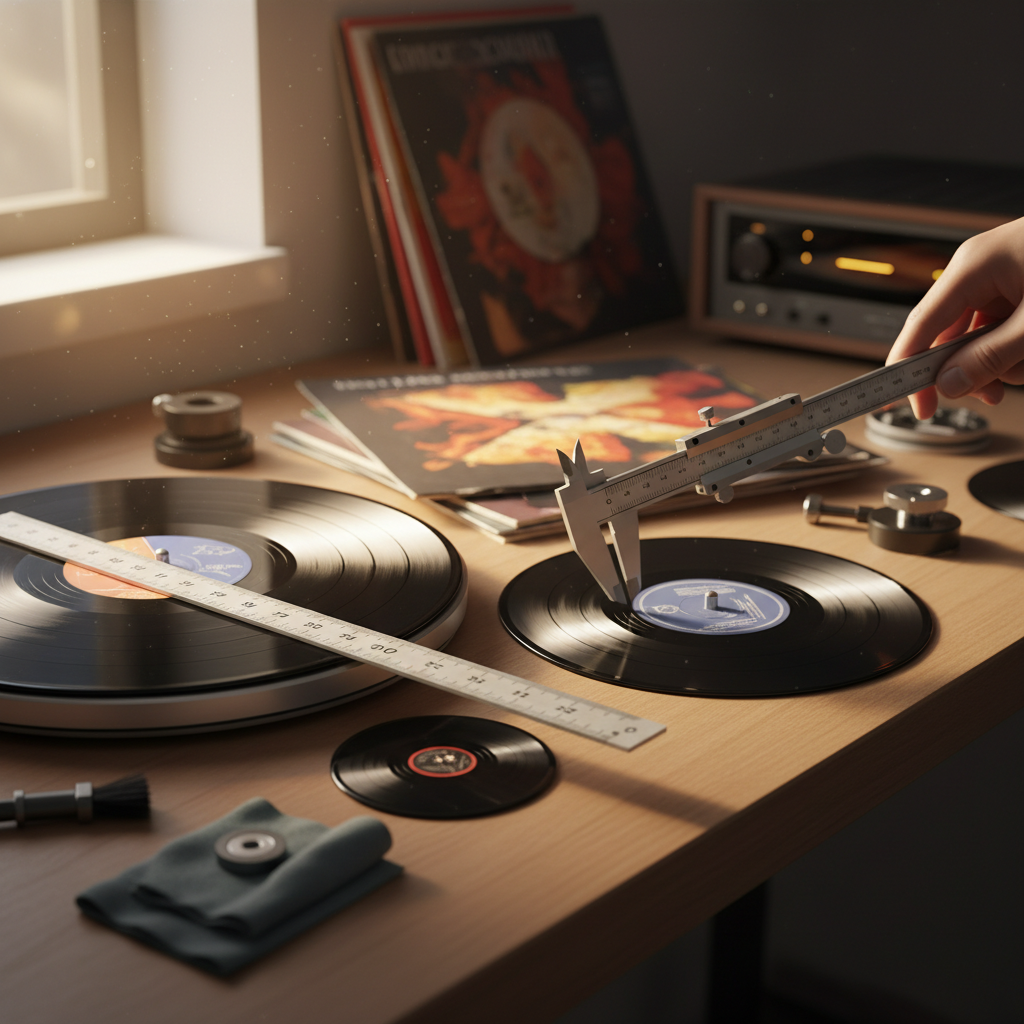
The LP disc thickness varies based on weight, with standard 120-140g records measuring approximately 1.2-1.5mm thick and 180g pressings reaching 1.8-2.0mm. This increased thickness provides structural benefits but requires proper turntable setup—some vintage turntables with fixed tonearm heights may experience tracking angle errors with significantly thicker records. The vinyl compound itself consists of polyvinyl chloride (PVC) mixed with various stabilizers, lubricants, and in some cases, recycled vinyl from previous pressings. Virgin vinyl pressings use 100% new PVC and typically produce quieter surfaces with less ticks and pops, while recycled vinyl can introduce contaminants that manifest as surface noise.
Groove modulation on LPs follows the RIAA (Recording Industry Association of America) equalization curve, established in 1954 to standardize playback across all equipment. During cutting, bass frequencies are reduced and treble frequencies are boosted; during playback, phono preamps reverse this equalization to restore flat frequency response. This technical standard means that properly mastered LPs should sound consistent across different playback systems, though variations in cutting equipment, lacquer quality, and mastering engineer decisions create the sonic signatures that collectors prize. Understanding these specifications helps when using tools like VinylAI to catalog your collection, as identifying pressing variations often requires examining technical details in the runout groove matrix.
Pressing Quality: How Manufacturing Affects LP Sound and Value
Pressing quality represents perhaps the most critical factor determining an LP's sound quality and collectible value, yet it remains one of the least understood aspects among casual collectors. The process detailed in our guide on how vinyl records are manufactured involves multiple stages where quality can be compromised or optimized. It begins with the lacquer master, cut by a mastering engineer using a lathe that inscribes the audio signal into a soft acetate disc coated with nitrocellulose. This lacquer then undergoes electroplating to create a metal master, from which stampers are produced—the negative metal plates that actually press the grooves into vinyl.
Premium pressing plants distinguish themselves through several quality factors:
- Stamper life management: Top plants like Pallas retire stampers after 500-1,000 pressings, while budget facilities may use stampers for 2,000+ cycles, resulting in degraded groove definition
- Vinyl compound quality: Virgin vinyl versus recycled content, with virgin producing surface noise floors 6-10 dB quieter according to Audio Engineering Society measurements
- Temperature and pressure precision: Optimal pressing requires exact temperature control (±2°C) and pressure calibration to ensure complete groove formation without stress
- Cooling time: Rushed cooling causes warping and stress; quality plants allow 30-60 seconds of controlled cooling versus 10-15 seconds at high-volume facilities
- Centering accuracy: Off-center holes cause pitch wavering (wow) and uneven groove spacing; precision plants maintain tolerances within 0.1mm
Collectors can identify pressing quality through careful visual and auditory inspection. Hold the record at an angle under light to examine the groove walls—they should appear smooth and uniform without visible ripples, which indicate non-fill or contamination. The surface should be glossy and free from dimples, pockmarks, or dull patches. First pressings from original stampers typically exhibit superior definition compared to later pressings from worn stampers, explaining why a 1969 first pressing of Led Zeppelin II on Atlantic can sell for $150-$300 while a 1977 reissue might fetch only $15-$25, even in similar condition grades.
Geographic pressing location also correlates with quality perceptions and market value. Japanese pressings from the 1970s-1980s, particularly those marked "Made by Toshiba-EMI" or "Pressed at JVC," command premiums of 50-200% over equivalent US or UK pressings due to Japan's reputation for meticulous quality control and virgin vinyl usage. German pressings from plants like Pallas and Optimal similarly earn collector respect. Conversely, some Eastern European pressings from the 1980s-1990s and certain overwhelmed plants during the 2010s vinyl resurgence developed reputations for quality issues, with Discogs reviews frequently mentioning warping, surface noise, and non-fill problems from specific pressing plants.
CD vs LP: Understanding the Analog-Digital Divide
The comparison between CD LP formats extends beyond simple technical specifications into philosophical debates about audio fidelity, listening experience, and music consumption habits. Compact discs, introduced in 1982, store audio as 16-bit digital data sampled at 44.1 kHz, theoretically capturing frequencies from 20 Hz to 22.05 kHz with a dynamic range of 96 dB. LPs, by contrast, use continuous analog grooves that theoretically have no sampling limitations, though practical dynamic range typically measures 55-70 dB due to surface noise, and frequency response extends from approximately 20 Hz to 20 kHz (sometimes higher on well-cut records played on high-end equipment).
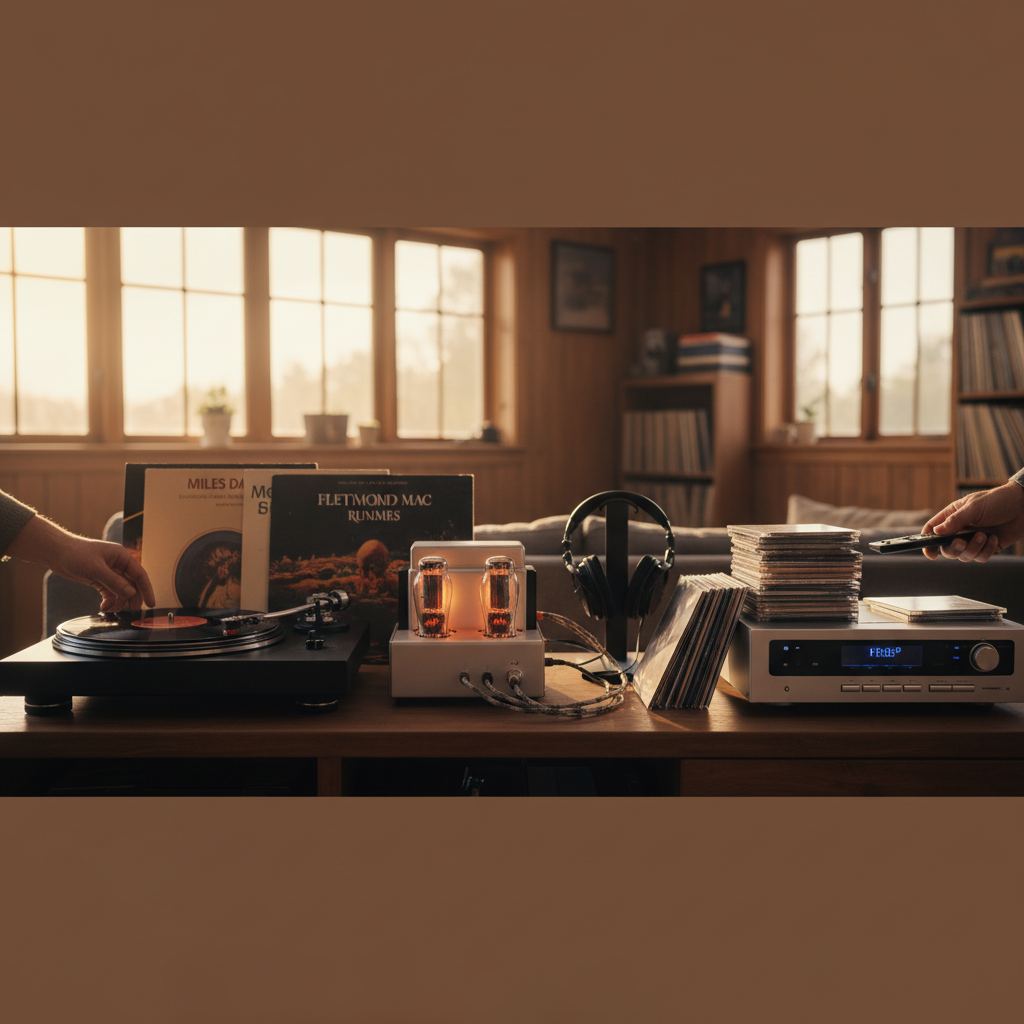
From a purely technical standpoint, CDs offer superior specifications: no surface noise, no degradation from repeated plays, perfect channel separation, and consistent playback regardless of equipment quality (within reason). However, the LP listening experience includes factors that measurements don't capture. The mastering process for vinyl often involves different decisions than digital formats—engineers may use less dynamic range compression, resulting in more natural dynamics even if the noise floor is higher. The phenomenon called "vinyl warmth" likely results from several factors: harmonic distortion from the playback system adding even-order harmonics that listeners find pleasing, slight high-frequency rolloff reducing harshness, and the RIAA equalization curve's interaction with specific recordings.
Market data reveals that LPs and CDs serve different purposes for modern collectors. According to the Recording Industry Association of America (RIAA), vinyl revenues surpassed CD revenues in 2022 for the first time since 1987, reaching $1.2 billion versus $483 million for CDs. However, streaming dominates actual listening habits, suggesting that LP purchases represent intentional collecting behavior rather than primary playback format. Collectors prize original LP pressings for their historical authenticity, artwork presentation (12-inch covers versus CD booklets), and the ritual of physical interaction. A first pressing of Miles Davis's "Kind of Blue" on Columbia 6-eye label sells for $300-$1,500 depending on condition, while the CD remaster costs $12-$18—the value proposition clearly extends beyond audio fidelity alone.
Identifying and Evaluating LP Pressings for Collectors
Successfully building a valuable LP collection requires developing skills in identifying specific pressings, evaluating condition, and understanding market values. The runout groove area—the smooth space between the end of the music and the label—contains critical information etched or stamped into the vinyl. Matrix numbers, stamper codes, mastering engineer initials, and pressing plant identifiers appear here, often requiring strong light and magnification to read. For example, a matrix reading "ST-A-711123-A1-PR" might indicate Side A, first stamper generation (A1), pressed at a specific plant (PR code). Learning to decode these markings separates serious collectors from casual buyers.
Label variations provide equally important identification clues. Columbia Records alone used dozens of label designs between 1948 and 2000, including the coveted "6-eye" label (1948-1954), "Guaranteed High Fidelity" (1955-1962), "360 Sound" (1963-1970), and various later designs. A Columbia 6-eye pressing of a jazz title might sell for 5-10 times the price of a 1970s reissue with identical audio content. The comprehensive vinyl condition grading standards help collectors assess whether premium prices are justified—a $500 record in VG+ (Very Good Plus) condition might be worth only $150 in VG (Very Good) condition due to increased surface noise and visible wear.
Pressing identification resources have become increasingly sophisticated. Discogs maintains a database with over 14 million releases, including detailed pressing variations with matrix numbers, label scans, and specific identifiers. Popsike archives auction results dating back to 2003, showing actual sale prices for rare pressings. Goldmine magazine's price guides, while sometimes lagging current market values, provide baseline references for thousands of titles. When starting your journey detailed in our beginner's guide to vinyl collecting, invest time learning to identify valuable pressings before spending significant money—the difference between a $20 common pressing and a $200 first pressing often comes down to subtle label details or matrix codes that take seconds to check once you know what to look for.
Authentication challenges have increased as vinyl values have risen. Counterfeit pressings of valuable titles like The Beatles' "Yesterday and Today" butcher cover or original Blue Note jazz pressings appear regularly on online marketplaces. Authentic Blue Note first pressings from 1955-1967 feature specific characteristics: deep groove edges on labels, ear marks in the runout groove area (small triangular marks), specific address information on labels (West 63rd Street, Lexington Avenue), and Van Gelder or RVG stamps indicating mastering by legendary engineer Rudy Van Gelder. A genuine Blue Note first pressing of John Coltrane's "Blue Train" sells for $800-$2,500, while later reissues cost $25-$40—making authentication skills worth developing.
Modern LP Production and the Vinyl Renaissance
The vinyl revival that began in the mid-2000s and accelerated through the 2010s has transformed LP production from a nearly extinct format to a thriving industry with unique challenges and innovations. Annual vinyl sales in the United States grew from 1.3 million units in 2007 to over 41 million units in 2022, according to RIAA data. This explosive growth overwhelmed existing pressing capacity—many plants that survived the CD era were running vintage 1960s-1970s equipment that requires specialized maintenance and expertise to operate. The resulting capacity shortage led to pressing delays of 6-12 months for new releases and quality control issues at some facilities rushing to meet demand.
New pressing plants have emerged to address capacity constraints, with varying results. Third Man Pressing in Detroit, founded by Jack White in 2017, invested in both vintage equipment and quality control systems, producing well-regarded pressings while also experimenting with colored vinyl and novelty formats. Independent Record Pressing in New Jersey and Citizen Vinyl in North Carolina represent other recent additions to North American pressing infrastructure. However, not all new plants achieved consistent quality during their startup phases, with some releases suffering from warping, surface noise, and non-fill issues that damaged both customer satisfaction and artist reputations.
Modern mastering for vinyl has evolved significantly from the format's original era. Many contemporary releases originate from digital sources—sometimes high-resolution 24-bit/96kHz or 192kHz files, other times from standard 16-bit/44.1kHz CD masters. The mastering engineer must translate these digital sources to analog cutting specifications, making decisions about frequency balance, dynamic range, and groove spacing. All-analog chain (AAA) releases, cut from analog tape masters through analog mixing and mastering equipment, command premium prices and collector interest. Mobile Fidelity's UltraDisc One-Step series and Analogue Productions' Prestige Mono series exemplify modern audiophile production, with retail prices of $100-$125 reflecting the costs of licensing, all-analog mastering, premium pressing, and limited production runs of 5,000-10,000 copies.
The future of LP production faces both opportunities and challenges. Vinyl compound supply chains remain vulnerable—most PVC production occurs overseas, and the specialized compounds required for quiet, high-quality pressings come from limited sources. Environmental concerns about PVC production and the format's carbon footprint compared to streaming have prompted some artists and labels to explore bio-based alternatives and carbon offset programs. Despite these challenges, LP production continues expanding, with major labels like Sony and Universal investing in pressing capacity and catalog reissue programs. For collectors, this means unprecedented access to both new releases and reissues of classic albums, though careful evaluation of pressing quality remains essential when building a collection worth preserving.