
What Makes Record Fairs Different from Record Stores
Record fairs operate on a fundamentally different model than traditional brick-and-mortar stores. While a typical record shop might stock 3,000-10,000 titles from one owner's inventory, a mid-sized vinyl fair brings together 50-100 independent dealers, each with their own specialties and inventory, creating a temporary marketplace of 150,000-500,000 records under one roof. This concentration of inventory means you can explore jazz, punk, classical, and hip-hop collections without traveling across town to visit multiple specialized shops.
The competitive atmosphere at record shows also drives better pricing than you'll typically find in retail environments. Dealers at the same fair often carry similar titles, creating natural price competition that benefits buyers. A first pressing of Fleetwood Mac's "Rumours" might be priced at $35 in a record store, but at a fair with multiple copies available, dealers often price more aggressively at $22-28 to move inventory. Additionally, unlike stores with fixed overhead costs, fair vendors pay only for table space ($75-300 per event), allowing them to operate with lower margins and pass savings to customers.
Record fairs also attract private sellers and collectors liquidating personal collections, individuals who rarely operate retail businesses. These one-time sellers often price records based on what they paid decades ago rather than current market values, creating opportunities to find underpriced gems. At the Brooklyn Record Fair, I once purchased a mint original pressing of Madlib's "Shades of Blue" for $40 from a seller who bought it new in 2003, unaware it now commands $120-180 on Discogs. This type of discovery simply doesn't happen in curated retail environments where professional buyers price everything to current market rates.
Major International Record Fairs and Vinyl Markets Worth Traveling For
The Utrecht Record Fair in the Netherlands stands as the world's largest vinyl event, held twice annually (April and November) at the Jaarbeurs convention center. With 350+ dealers from across Europe, Japan, and the United States, Utrecht offers an unmatched selection spanning every genre and era. The November 2024 edition drew 22,000 attendees over two days, with early bird tickets ($25) selling out within minutes. Dealers report bringing inventories of 5,000-15,000 records each, with some specializing exclusively in rare jazz, others in punk and hardcore, and several focusing on audiophile pressings and sealed original editions.
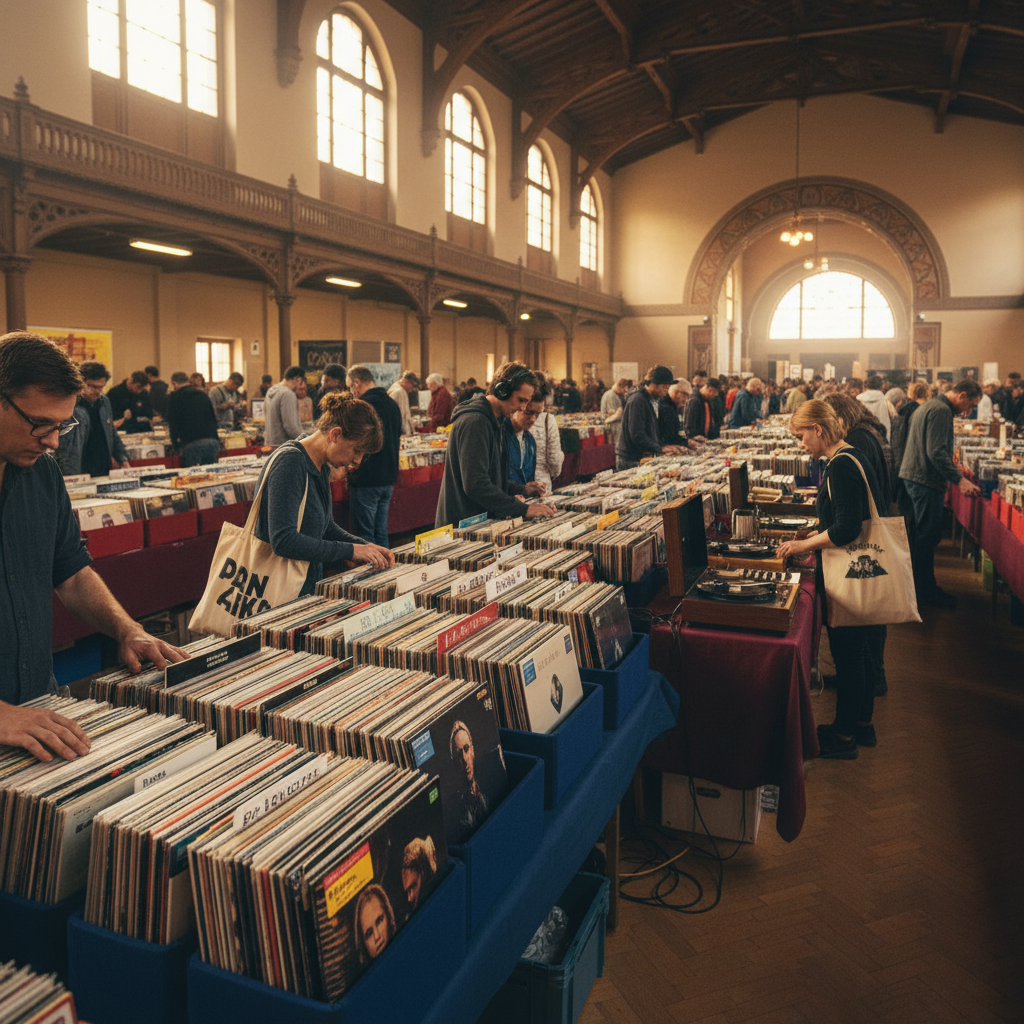
In the United States, the Vinyl Me, Please Record Fair has emerged as a premier event since launching in 2019, rotating between major cities including Denver, Los Angeles, and Brooklyn. The 2024 Denver edition featured 120+ vendors, live DJ sets, and exclusive VMP pressings available only at the fair. Attendance typically reaches 8,000-10,000 collectors over a weekend, with general admission priced at $10-15 and VIP early entry at $50. The VMP fair attracts a younger demographic than traditional record shows, with approximately 45% of attendees under 35 years old, compared to 20-25% at most regional fairs.
Japan's Disk Union Record Fair in Tokyo occurs quarterly at various venues including Shibuya and Shinjuku, bringing together 80-100 dealers specializing in Japanese pressings, rare imports, and audiophile editions. The April 2024 fair featured particularly strong selections of city pop, jazz fusion, and 1970s rock with obi strips intact. Prices at Japanese fairs run 15-30% higher than US equivalents due to collector demand for pristine condition, but the selection of domestic Japanese pressings unavailable elsewhere justifies the premium. Tools like VinylAI can help you research pricing before attending international fairs to ensure you're paying fair market rates.
The London Record Fair at King's Cross runs monthly, making it one of the most accessible regular events for European collectors. With 50-70 dealers and admission of just £5 ($6.50), the monthly schedule allows dealers to refresh inventory between events, ensuring new finds at each fair. The November edition traditionally features the strongest turnout and inventory as dealers prepare for holiday shopping season. Regional UK fairs in Manchester, Bristol, and Edinburgh also operate quarterly, creating a robust circuit for serious collectors willing to travel.
Finding Local and Regional Record Shows Near You
Most major metropolitan areas host monthly or quarterly record fairs, though they often fly under the radar without the marketing budgets of commercial events. The best resources for finding local vinyl markets include Goldmine Magazine's fair calendar, which lists 200+ annual events across North America, and regional Facebook groups like "Record Fairs & Vinyl Shows USA" with 45,000+ members sharing upcoming dates and dealer lists. Many cities also have dedicated fair organizers who run regular events: Joe Bussard's Baltimore Record Show runs quarterly, the Chicago Record & CD Show operates monthly at the Plumbers Hall, and the Long Beach Record Swap in California draws 1,500+ attendees monthly.
Local record stores often host or promote smaller in-store fairs, particularly around Record Store Day events and Record Store Day Black Friday. These store-based events typically feature 10-25 vendors in parking lots or adjacent spaces, creating intimate shopping experiences where you can actually have conversations with dealers rather than fighting crowds. The Amoeba Music parking lot fair in Los Angeles runs quarterly with 40+ vendors, while Grimey's in Nashville hosts a twice-yearly event that coincides with Americana music festivals, attracting dealers specializing in country, bluegrass, and roots music.
University towns often support regular record shows organized by student groups or local promoters, with lower table fees ($40-75) attracting younger dealers and more affordable inventory. The Ann Arbor Record Show near the University of Michigan runs six times annually, while the Athens Record Fair in Georgia (home to UGA) occurs quarterly with strong selections of indie rock and college radio favorites from the 1980s-90s. These smaller fairs offer excellent opportunities for newer collectors to learn grading standards and negotiation tactics without the intimidation factor of massive commercial events.
Essential Preparation: What to Bring to a Vinyl Fair
Cash remains king at record fairs, despite increasing adoption of mobile payment systems. Approximately 60-70% of dealers still prefer cash transactions to avoid processing fees, and many offer 5-10% discounts for cash purchases over $50. Plan to bring $200-500 in various denominations ($20s, $10s, and $5s) to facilitate transactions and make offering round numbers easier during negotiations. Some larger fairs now have on-site ATMs, but they typically charge $3-5 fees and may run out of cash during peak hours. Credit card acceptance has improved, with about 40% of dealers now using Square or similar readers, but connection issues in crowded venues can cause transaction delays.
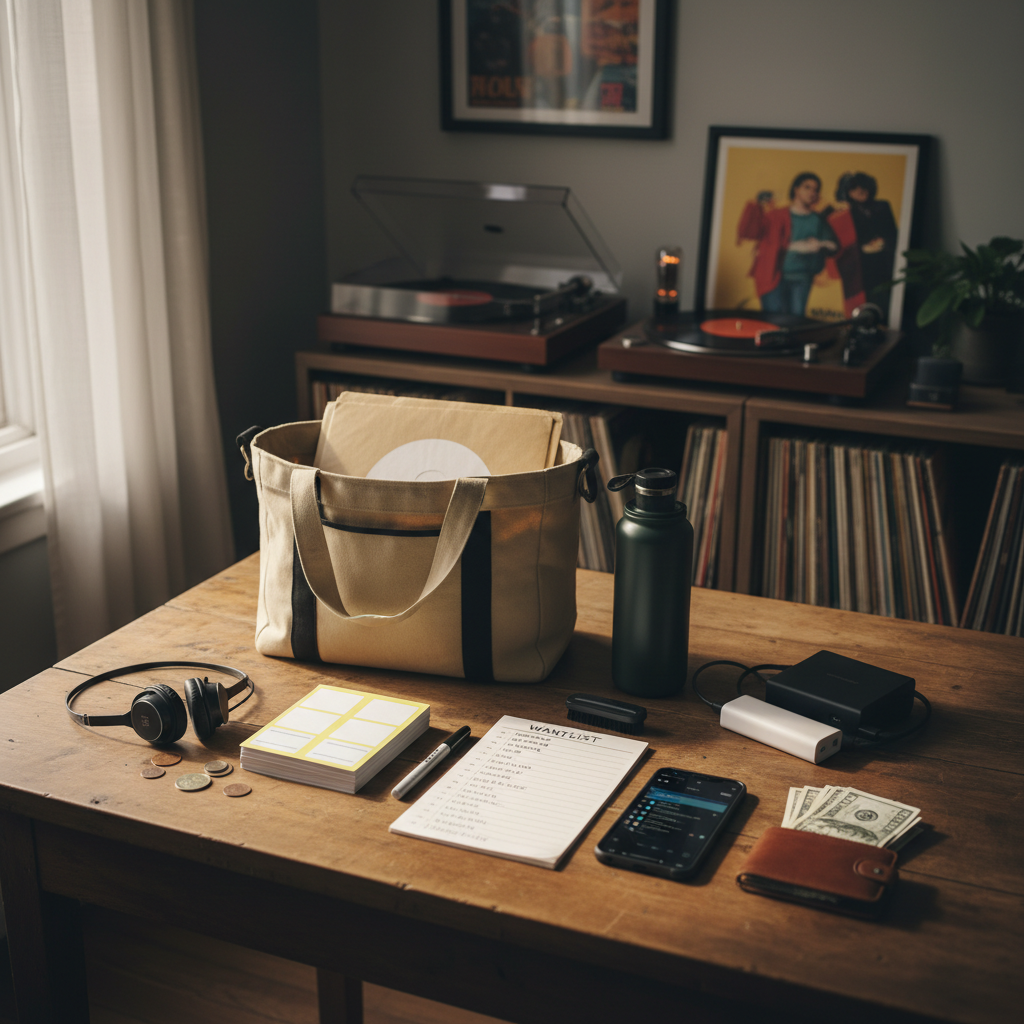
A well-organized want list dramatically improves your efficiency and success rate. Create a prioritized list organized by artist (alphabetically) rather than by album title, since most dealers arrange inventory by artist name. Include specific pressing details when relevant: "Miles Davis - Kind of Blue (1959 6-eye Columbia mono)" is more useful than just "Kind of Blue." Many serious collectors maintain digital want lists in Discogs that sync across devices, allowing real-time updates as you find titles. I recommend limiting your active want list to 50-100 priority titles rather than carrying a comprehensive list of 500+ albums, which becomes overwhelming to reference while browsing.
Bring a sturdy tote bag or record carrying crate to transport purchases safely. Canvas tote bags work for 5-10 records, but serious shoppers invest in plastic milk crates or dedicated record boxes with handles that hold 50-75 LPs securely. Some fairs prohibit backpacks due to theft concerns, so check event rules beforehand. A small LED flashlight or phone flashlight helps inspect vinyl in dimly lit venues, and a jeweler's loupe (10x magnification) allows detailed examination of pressing details and matrix numbers on rare items. Understanding vinyl grading standards before attending ensures you can accurately assess condition and negotiate appropriately.
Comfortable shoes cannot be overstated—you'll walk 2-4 miles during a typical 4-hour fair session. Dress in layers since venues range from overheated hotel ballrooms to drafty warehouses. Bring water and snacks, as food options at fairs are often limited to vending machines or expensive concessions. Finally, charge your phone fully and consider a portable battery pack, as you'll use it constantly to check Discogs prices, photograph interesting finds, and reference your want list.
Record Fair Shopping Strategies: Timing, Browsing, and Negotiation
The eternal debate among collectors centers on optimal arrival time: early bird access for first pick versus late-day shopping for desperate dealers willing to negotiate. Data from dealer surveys suggests both strategies have merit depending on your goals. Early arrival (first 1-2 hours) gives you first access to fresh inventory, with approximately 60% of genuinely rare items selling in the first hour. VIP early entry tickets ($25-75) at major fairs provide 30-60 minutes of exclusive browsing, which can be worthwhile if you're hunting specific high-value titles. However, dealers price aggressively early in the day, with minimal willingness to negotiate before they've gauged overall traffic and sales.
The final hour strategy works best for bulk buyers and bargain hunters. Dealers facing the prospect of repacking unsold inventory often accept 20-40% below asking prices in the last 60 minutes, particularly on lower-value items ($5-20 range). I've successfully negotiated "everything in this box for $50" deals on collections of 20-30 common titles that would have totaled $150-200 at marked prices. However, premium items rarely see deep discounts even at closing time, as dealers know they can sell them at the next fair or online. The final hour strategy also means picked-over inventory with fewer surprises.
Efficient browsing technique separates experienced collectors from overwhelmed newcomers. Start with a quick walkthrough of the entire fair (15-30 minutes) to identify which dealers carry your genres and price ranges before diving deep. Some collectors photograph dealer table numbers specializing in their interests, then systematically work through those tables. When browsing boxes, use a two-pass system: first pass quickly pulling anything potentially interesting, second pass carefully examining condition and pricing on pulled items. This prevents blocking other shoppers while you deliberate and allows you to comparison shop across multiple dealers carrying the same title.
Negotiation etiquette at record fairs follows unwritten rules that vary by region and dealer personality. Generally, offers of 10-15% below asking price on items over $30 are acceptable, while asking for discounts on $5-10 records marks you as difficult. Bulk purchases earn better negotiation leverage: "I'll take these eight records for $100" (on items totaling $130) usually succeeds. Phrase offers respectfully: "Would you consider $40 for this?" rather than "I'll give you $40." Building rapport through knowledgeable conversation about the music often leads to better deals than aggressive haggling. Some dealers mark prices as firm with asterisks or "net" notations—respect these signals. Those interested in selling at record fairs should observe these dynamics from the buyer's perspective first.
Understanding Record Fair Pricing and Market Values
Record fair pricing typically falls 10-30% below retail store prices but 5-20% above Discogs median values when you factor in the ability to physically inspect condition before purchase. A record listed on Discogs at $45 median (based on 20 recent sales) might be fairly priced at $50-55 at a record fair, with the premium justified by immediate possession, verified condition, and no shipping costs or risks. However, pricing varies wildly between dealers: the same title might be $40 at one table and $75 at another, making comparison shopping essential for expensive purchases over $50.
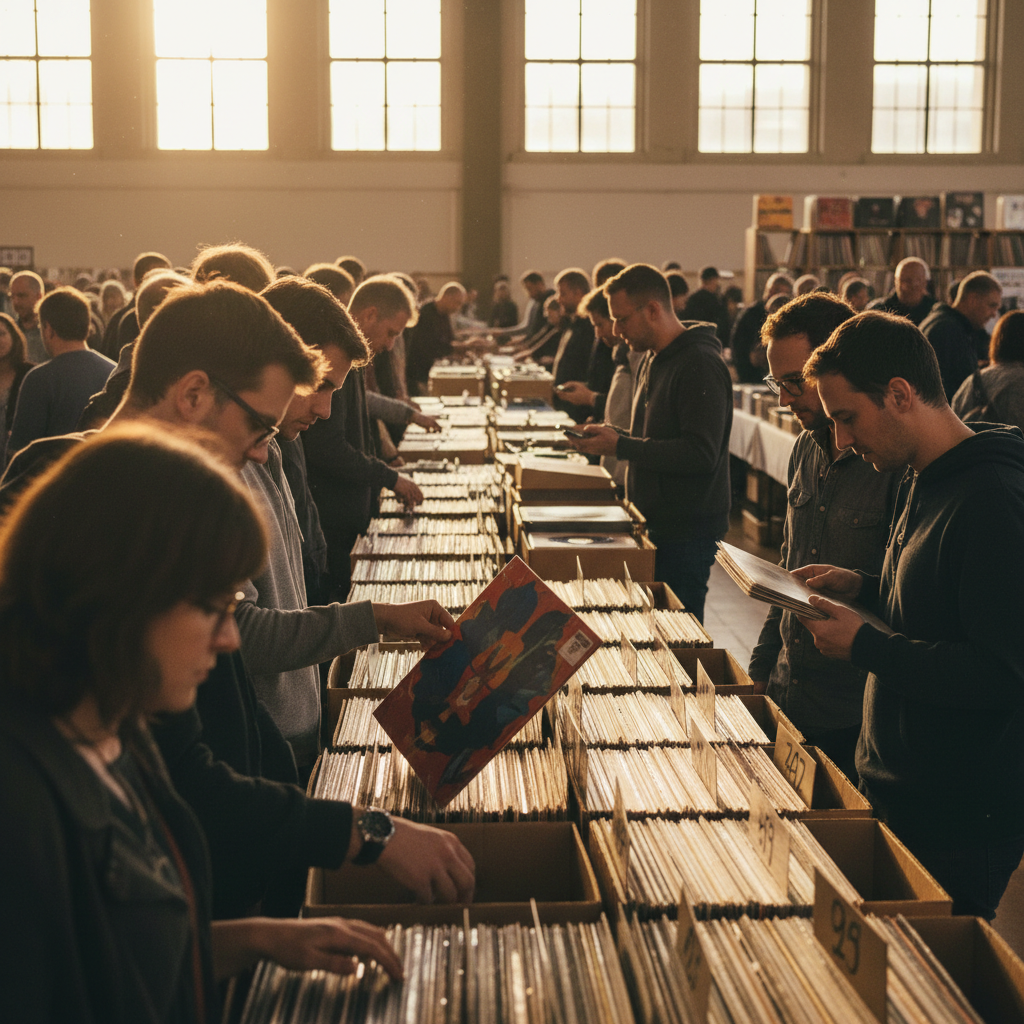
Dealers use various pricing strategies that savvy collectors learn to recognize. Box pricing ("$5 each or 5 for $20") works well for common titles but sometimes includes underpriced gems that dealers haven't individually researched. Condition-based pricing should reflect Goldmine grading standards: a VG+ copy should cost 40-50% of a NM copy, while VG should be 25-35% of NM pricing. Dealers who price VG copies at 80% of NM values either don't understand grading or hope buyers won't notice. Genre specialists typically price their specialty 10-20% higher than generalists because they know the market, but they also stock deeper selections of rare titles that generalists miss.
Use your smartphone to check Discogs pricing on expensive items, but understand that Discogs median prices can be misleading. A title showing $200 median might have one outlier sale at $500 skewing the average, while the actual market rate is $150-175. Look at the full sales history, not just the median. Also consider that Discogs prices include shipping ($5-15), so fair pricing should be $5-10 lower for equivalent condition. Some dealers now use Discogs themselves for pricing, literally looking up titles as you browse, which eliminates negotiation flexibility but ensures market-accurate pricing.
| Pricing Factor | Typical Fair Premium/Discount | When It Applies |
|---|---|---|
| Common titles (pressed 100K+ copies) | 10-20% below retail | Beatles, Zeppelin, Floyd, etc. |
| Rare/collectible titles | 5-15% above Discogs median | First pressings, limited editions |
| Bulk purchases (5+ items) | 15-25% discount possible | When negotiating multiple items |
| Final hour pricing | 20-40% discount on common items | Last 60 minutes of fair |
| Sealed/mint condition | 50-100% premium over VG+ | Collectible titles only |
This pricing framework helps you quickly assess whether a dealer's asking price is fair, high, or a genuine bargain worth immediate purchase.
Building Relationships with Dealers and Regular Fair Attendance
The most successful record collectors treat fairs as relationship-building opportunities rather than one-off shopping trips. Dealers who see you at multiple events remember your interests and actively set aside relevant titles before the fair opens. I've had dealers text me photos of collections they acquired specifically because I mentioned collecting Blue Note jazz at a previous fair. This insider access provides first shot at fresh inventory before it reaches the sales floor, often at preferential pricing since the dealer saves time not having to transport and display those items.
Building dealer relationships starts with respectful, knowledgeable interaction. Ask about their specialties, share what you collect, and follow through on purchases when they source items for you. Dealers invest time and money acquiring inventory, so becoming a reliable customer who actually buys (rather than just browsing) earns you preferred status. Exchange contact information with 3-5 dealers whose inventory aligns with your interests, and follow their social media or email lists for pre-fair previews and private sale opportunities.
Regular attendance at monthly or quarterly local shows creates community connections beyond just dealer relationships. You'll encounter the same collectors repeatedly, leading to trading opportunities, collection sale tips, and shared knowledge about upcoming fairs or estate sales. The Chicago record fair community includes several informal "crews" of 5-10 collectors who share tips via group chats, alert each other to underpriced items they're not personally interested in, and sometimes pool resources to purchase large collections for division. These relationships prove invaluable for collectors serious about building comprehensive collections in specific genres.
Consider expanding your fair circuit beyond your immediate area by planning trips around major events. Collectors in the Northeast often build annual trips around the Baltimore, Philadelphia, and New York fairs occurring within a 4-week span each spring. West Coast collectors might combine the Long Beach and San Francisco fairs with a weekend trip. This circuit approach exposes you to different dealer inventories and regional pricing variations—West Coast dealers often price punk and indie rock 20-30% higher than Midwest dealers, while Midwest dealers command premiums on blues and soul titles.
Record Fair Etiquette and Common Mistakes to Avoid
Understanding unwritten fair etiquette prevents awkward situations and marks you as an experienced collector. Never block dealer tables while browsing—step aside if others need access to the same section. Don't ask dealers to hold items indefinitely while you continue shopping; either commit to purchase or return the record to the bin. Avoid excessive haggling on inexpensive items ($5-10 range), which wastes everyone's time and marks you as difficult. Don't bring drinks or food near vinyl, as dealers rightfully fear spills damaging inventory worth thousands of dollars.
The biggest mistake new collectors make is buying impulsively without inspecting condition. Always remove records from sleeves and examine both sides under good light, checking for scratches, scuffs, and warps. Spin the record on your finger to check for warps (a flat record spins smoothly; warped records wobble visibly). Examine covers for seam splits, ring wear, and writing. Don't rely on dealer grading without verification—standards vary widely, and honest mistakes happen. A record graded VG+ that's actually VG costs you 30-40% in value. For beginners unsure about grading, starting with building a vinyl collection using well-documented standards helps develop the eye for condition assessment.
Avoid "bin diving" behavior where you pull 50+ records and pile them on tables or floors, creating chaos and preventing others from browsing. Pull 10-15 records maximum, make decisions on those, then continue browsing. Don't ask dealers to price check every item—if it's not marked, ask about 2-3 items maximum before purchasing something. Dealers appreciate efficient customers who respect their time. Also resist the urge to lecture dealers about pricing: if you think something is overpriced, simply don't buy it rather than explaining why their $60 asking price should be $40.
Finally, understand return and refund policies before purchasing. Most record fair sales are final, with no returns accepted unless the dealer grossly misrepresented condition (selling a scratched record as "mint"). Some dealers offer 30-day guarantees on playback quality, but this is exceptional rather than standard. This is why thorough inspection before purchase is critical. If you're uncertain about a pressing variation or authenticity, ask the dealer questions before buying—most are happy to share knowledge and would rather educate you than deal with unhappy customers later.
Maximizing Your Record Fair Experience: Advanced Collector Tips
Advanced collectors employ strategic specialization at record fairs rather than browsing randomly. Focus on 2-3 specific genres, labels, or eras where you've developed expertise, allowing you to spot underpriced gems that generalist dealers miss. A collector specializing in 1960s Blue Note jazz can instantly identify a $200 first pressing priced at $60 because the dealer focuses on rock and doesn't know jazz values. This expertise-based approach yields better results than casually browsing across all genres. Understanding distinctions like LP versus EP formats also helps identify unusual items that might be mislabeled or undervalued.
Serious collectors bring reference materials to verify pressing details on rare items. Apps like Discogs mobile allow quick scanning of barcodes and matrix numbers to confirm you're looking at a first pressing versus a reissue. For valuable titles over $100, photograph the matrix/runout information and research thoroughly before purchasing. Some collectors bring printed reference guides for their specialties: Blue Note collectors might carry a Michael Cuscuna discography, while Beatles collectors reference Japanese pressing guides. This preparation prevents expensive mistakes like paying first pressing prices for common reissues.
Consider coordinating with collecting partners to cover more ground efficiently. Two collectors can split up, each covering half the fair and texting photos of items relevant to the other's interests. This doubles your coverage and prevents missing dealers in crowded multi-room venues. Some collecting groups assign genres: one person focuses on jazz tables, another on soul/funk, another on rock, then they reconvene to share finds. This collaborative approach works particularly well at massive fairs like Utrecht where comprehensive coverage by one person is physically impossible.
Finally, document your fair purchases for collection management and future reference. Photograph receipts and make notes about which dealers sold you specific items. Apps like VinylAI help you catalog purchases immediately, recording purchase price, condition, and dealer information. This documentation proves invaluable for insurance purposes, helps you track spending patterns, and allows you to remember which dealers consistently stock quality items in your collecting areas. Over time, you'll identify 3-5 "go-to" dealers whose inventory and pricing align perfectly with your interests, making future fairs more efficient and productive.