
Understanding the Used Vinyl Records Market
The market for used records has transformed dramatically over the past two decades, evolving from dusty thrift store bins into a sophisticated global marketplace with standardized grading, transparent pricing data, and millions of active participants. Platforms like Discogs have revolutionized how collectors and dealers interact, providing comprehensive databases with over 14 million releases catalogued and real-time sales data that establishes fair market values. According to industry reports, the global vinyl market exceeded $1.2 billion in 2023, with used and vintage vinyl accounting for approximately 65% of all transactions by volume.
Unlike new vinyl pressings which have fixed retail prices, secondhand vinyl values fluctuate based on rarity, condition, pressing details, and collector demand. A common title like Fleetwood Mac's "Rumours" might sell for $3-8 in average condition at a local shop, while a first pressing in Near Mint condition could command $40-75 on Discogs. Conversely, obscure private press jazz or original punk 7-inches can appreciate dramatically—Popsike auction records show examples of rare records selling for 300-500% above their values from just five years ago. Understanding these market dynamics is essential whether you're starting your first vinyl collection or liquidating an inherited collection.
The used vinyl ecosystem encompasses multiple marketplace tiers, from dollar bins at record stores to high-end dealer catalogs featuring museum-quality rarities. Local record shops typically price used inventory at 30-50% below Discogs median values to account for immediate availability and browsing experience, while online marketplaces offer broader selection with competitive pricing. Tools like VinylAI can help you scan barcodes and instantly check Discogs values while shopping, ensuring you never overpay for used records and can identify underpriced gems instantly.
Grading Used Vinyl: The Foundation of Pricing
Accurate grading represents the single most important factor in determining used vinyl value, yet it remains one of the most subjective aspects of the marketplace. The industry-standard Goldmine Grading Guide establishes seven primary grades: Mint (M), Near Mint (NM or M-), Very Good Plus (VG+), Very Good (VG), Good Plus (G+), Good (G), and Poor (P). Each grade reduction typically corresponds to a 30-50% decrease in value, making the difference between a VG+ and NM copy potentially worth $50-100 or more for desirable titles. Professional dealers often use "plus" and "minus" modifiers (like VG++ or NM-) to further refine assessments and justify pricing.
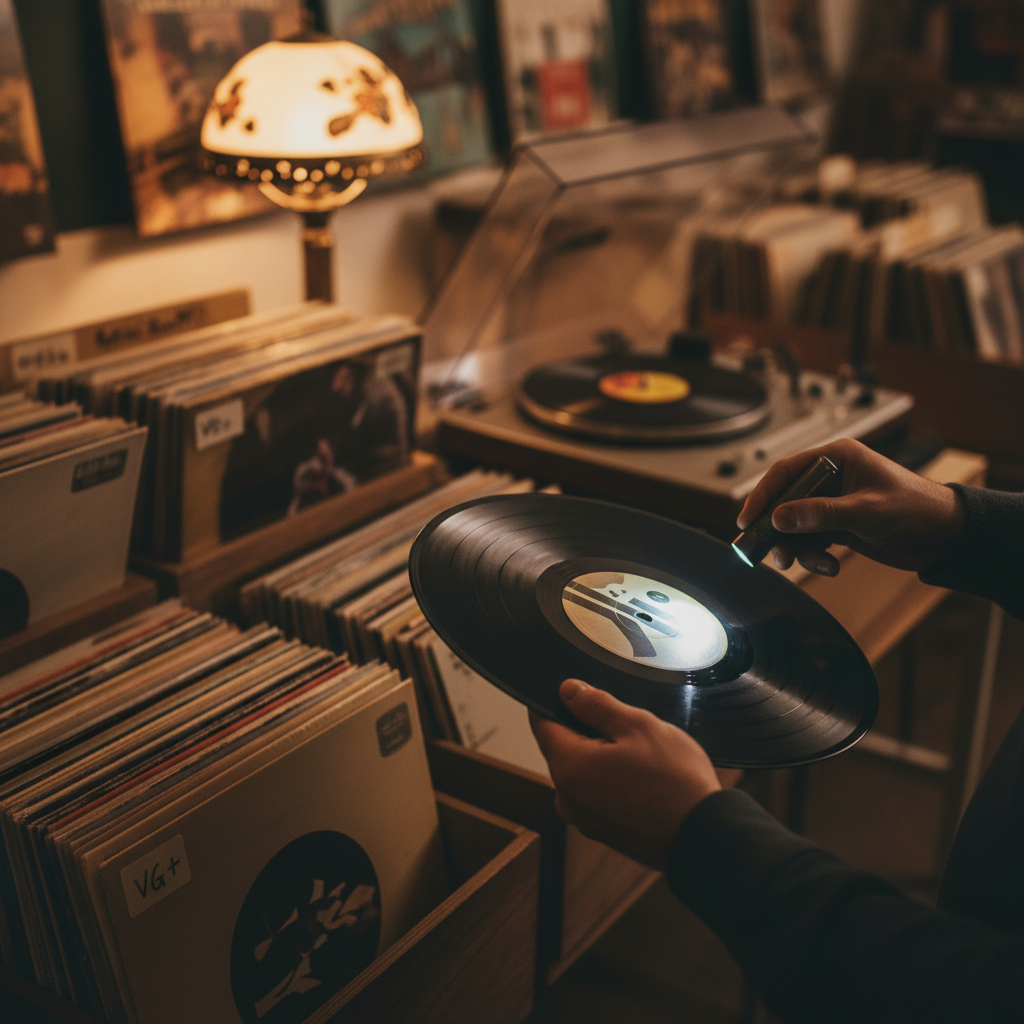
Visual grading examines the record surface for scratches, scuffs, hairlines, and wear patterns under bright light, while play grading involves actually listening to the record to assess surface noise, clicks, pops, and distortion. A record might appear visually VG+ but play closer to VG due to groove wear not visible to the eye, which is why serious collectors prefer dealers who play-grade their inventory. The jacket condition is graded separately using the same scale, with additional considerations for seam splits, ring wear, writing, stickers, and corner damage. A complete grading notation might read "NM/VG+ (vinyl/jacket)" to communicate both elements clearly.
Common grading pitfalls include over-grading (describing condition more favorably than accurate), inconsistent standards between sellers, and failing to note specific defects like scratches or label damage. Conservative grading builds seller reputation and reduces returns—many experienced dealers grade slightly conservatively, describing a solid NM- record as VG++ to exceed buyer expectations. For detailed guidance on assessment standards, consult our comprehensive vinyl grading standards resource. When buying used vinyl online, always read the full condition description beyond just the grade letter, as details about specific defects matter significantly for playback quality and long-term value.
Where to Find the Best Used Vinyl Bargains
Savvy collectors know that the best vintage vinyl bargains rarely appear on major online marketplaces at obvious discount prices—instead, they're discovered through strategic hunting at overlooked sources where sellers may not know current market values. Estate sales and garage sales remain goldmines for underpriced collections, particularly in affluent neighborhoods where original owners purchased quality pressings in the 1960s-80s. Arriving early (often requiring estate sale line-ups 30-60 minutes before opening) and bringing a portable price-checking tool gives you competitive advantage when evaluating large lots quickly. Many estate sale companies now research valuable records, but obscure genres like jazz, classical, and international pressings often slip through at $1-3 per record.
Thrift stores like Goodwill, Salvation Army, and local charity shops receive constant vinyl donations but typically lack expertise to price individually, resulting in flat pricing of $1-2 per LP regardless of value. The key to thrift store success is frequency—visiting the same locations 2-3 times weekly and building relationships with staff who may alert you to fresh donations. Flea markets and swap meets offer negotiation opportunities, especially when buying multiple records from a single vendor, with typical bulk discounts of 20-30% when purchasing 10+ records. Church rummage sales and library book sales occasionally include record sections with remarkable finds at minimal prices.
Online sources for vinyl bargains include eBay auction listings (especially misspelled titles or vague descriptions that reduce bidder visibility), Facebook Marketplace local pickups that avoid shipping costs, and Craigslist bulk collection sales where sellers want quick liquidation. Reddit communities like r/VinylDeals and r/VinylCollectors share time-sensitive deals and marketplace tips. For more strategic buying locations, explore our guide on where to buy cheap vinyl. Remember that "bargain" is relative to condition and pressing—a $5 reissue isn't a deal if the original pressing sells for $8, but a $20 first pressing normally valued at $75 represents genuine value.
Pricing Used Vinyl with Discogs and Popsike
Discogs has become the industry-standard pricing reference for used vinyl records, offering transparent sales history data that shows actual transaction prices rather than asking prices. The platform's marketplace contains over 60 million listings from 20,000+ sellers worldwide, with the database tracking every completed sale to generate median, lowest, and highest price statistics. When researching a record's value, identifying the exact pressing is crucial—the same album title might have dozens of variations (different countries, years, labels, and catalog numbers) with wildly different values. A UK first pressing of The Beatles' "Please Please Me" on black and gold Parlophone sells for $800-2,000 in VG+ condition, while a 1980s reissue might bring only $15-25.
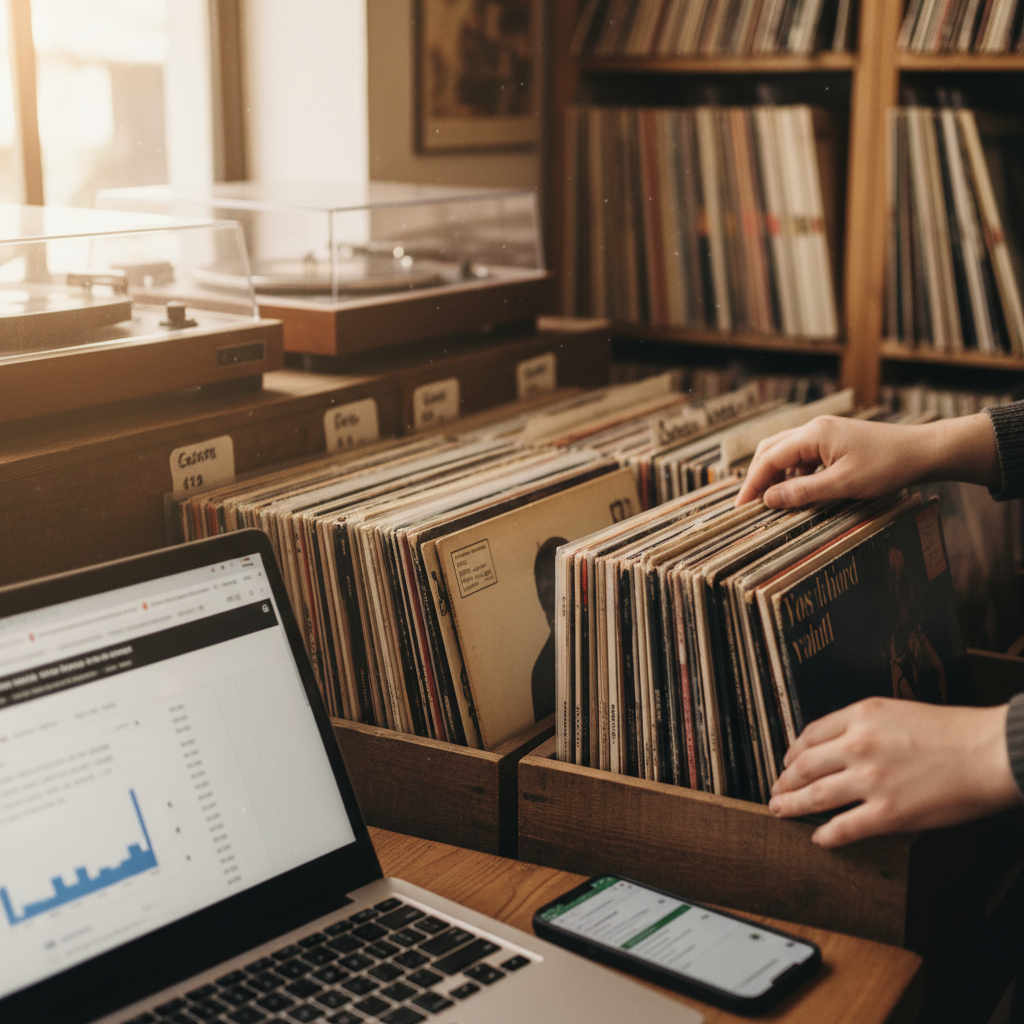
The Discogs pricing interface shows median price (the middle value of all sales, reducing impact of outliers), minimum and maximum sales prices, and a visual graph of price trends over time. For accurate valuation, examine sales from the past 6-12 months in similar condition grades, as older sales data may not reflect current market dynamics. The "Show only items that match" filter ensures you're viewing the exact pressing with correct label, catalog number, and country of origin. Be cautious with records showing only 1-2 sales, as these may not represent true market value—ideally, look for titles with 10+ sales for statistical reliability.
Popsike complements Discogs by archiving eBay auction results since 2003, providing historical perspective on rare and collectible records that may sell infrequently. Popsike's database contains over 7 million auction results, particularly valuable for assessing ultra-rare items that might sell once every few years. For example, searching original blues 78s or rare punk singles often reveals Popsike results showing auction fever driving prices 50-200% above typical market rates. When pricing your own collection, our detailed guide on how to price vinyl using Discogs provides step-by-step instructions for accurate valuation. Cross-referencing both platforms gives the most complete picture—Discogs for current market rates and Popsike for historical context and auction potential.
Marketplace Comparison: Where to Buy and Sell Used Records
Choosing the right marketplace for buying or selling used vinyl significantly impacts both price realized and transaction experience, with each platform offering distinct advantages and drawbacks. The following comparison examines the major venues based on fees, audience, pricing dynamics, and seller/buyer protection:
| Marketplace | Seller Fees | Best For | Price Comparison | |
|---|---|---|---|---|
| Discogs | 8% + payment processing | Catalogued releases, international sales, building seller reputation | Baseline market value (100%) | |
| eBay | 12.9% + payment processing | Rare items, auction format, broad consumer audience | 105-125% for auctions, 95-100% for Buy It Now | |
| Local Record Stores (consignment) | 30-50% commission | Quick local sales, bulk collections, avoiding shipping | 70-85% of online values | |
| Facebook Marketplace | 0% (free) | Local pickup, avoiding fees, casual collectors | 80-95% due to negotiation expectations | |
| Instagram/Direct Sales | Payment processing only (3%) | Building personal brand, high-end collectibles, established following | 100-110% with right audience |
Discogs excels for sellers with properly graded, accurately catalogued records who want to reach serious collectors willing to pay fair market value. The platform's detailed database ensures buyers find exactly what they're seeking, and seller ratings build long-term reputation. However, the 8% commission plus PayPal/Stripe fees (typically 3-4%) means total costs of 11-12%, and competition is intense with multiple sellers offering identical pressings. For buyers, Discogs provides the most reliable grading and comprehensive selection, though prices rarely represent "deals" since sellers and buyers both have access to the same market data.
eBay's auction format can drive prices above market value when multiple bidders compete for rare items, particularly with well-photographed listings and detailed descriptions that attract casual collectors unfamiliar with Discogs pricing. However, eBay's 12.9% final value fee (plus payment processing) makes it expensive for sellers, and buyer expectations often lean toward consumer electronics standards rather than collectible grading nuances. eBay works best for unusual items, complete collections, and records with crossover appeal beyond hardcore collectors. For comprehensive online selling strategies, review our guide on the best places to buy vinyl online, which covers buyer perspectives across platforms.
Identifying Valuable Pressings and Original Issues
The difference between a $5 reissue and a $500 original pressing often comes down to subtle details in the matrix/runout information, label design, and manufacturing characteristics that require careful examination. Original pressings—the first commercial release of a recording—command premium prices because they typically offer superior sound quality from first-generation master tapes and represent the artist's originally intended presentation. For classic rock and jazz titles, first pressings often sell for 300-500% more than later reissues, with examples like original Blue Note jazz LPs (with deep groove labels and RVG stamp in the deadwax) selling for $100-1,000+ while 1980s reissues bring $10-25.
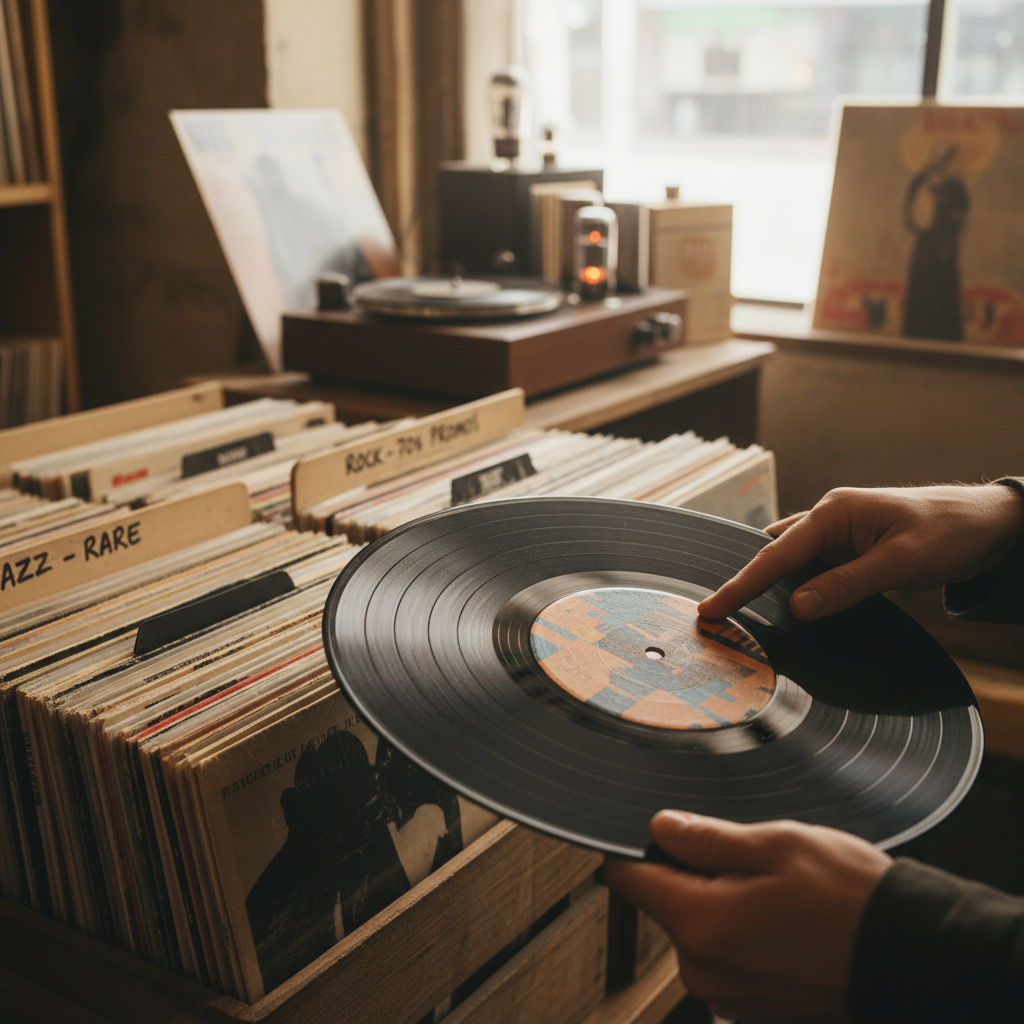
Matrix numbers etched or stamped in the runout groove (the blank area between the label and the music) provide crucial pressing identification. These alphanumeric codes indicate the specific stamper and pressing plant, with collectors seeking specific combinations known for superior sound quality. For instance, early Pink Floyd UK pressings show matrix numbers hand-etched by mastering engineers, while later pressings use machine-stamped codes. Label variations also identify pressing generations—original Columbia "6-eye" labels (1950s-early 1960s), Atlantic yellow/orange labels (1960s), and Apple labels with "Mfd. by Apple" text (original Beatles pressings) all signify valuable first or early pressings. Catalog numbers, while less definitive, provide initial clues, as reissues often receive new catalog numbers.
Country of origin dramatically affects value for many titles, with UK pressings of British artists and US pressings of American artists typically representing original or early issues. However, exceptions abound—German pressings of 1970s Krautrock, Japanese pressings of jazz and rock (prized for quality vinyl and manufacturing), and certain audiophile reissues (Mobile Fidelity, Analogue Productions, Music Matters) can exceed original pressing values. Promotional copies, marked "Promo" or "Demonstration - Not for Sale," often command 20-50% premiums over stock copies due to scarcity and collector appeal. Understanding format differences, covered in our LP vs EP vs single explained guide, also helps identify valuable releases, as some artists' 7-inch singles or EPs are rarer than their full-length albums.
Selling Your Used Vinyl Collection: Strategies for Maximum Return
Selling a used vinyl collection requires strategic planning to maximize financial return while balancing time investment and effort. The first decision involves choosing between selling as a complete collection (bulk sale), breaking into genre or artist lots, or selling individually—each approach offers different price points and time commitments. Bulk collection sales to dealers or collectors typically yield 25-40% of total Discogs value but provide immediate payment and zero individual listing effort. Dealers need profit margin for resale, so their offers reflect wholesale rather than retail pricing. This approach works best for common titles, duplicates, or when time constraints outweigh profit maximization.
Individual listing on Discogs or eBay maximizes return but requires significant time for cataloguing, grading, photographing, listing, and shipping each record. Expect to invest 10-15 minutes per record for proper listing creation, including accurate pressing identification, detailed grading notes, and clear photographs of both vinyl and jacket. For a 200-record collection, this represents 30-50 hours of work, though returns typically reach 70-85% of Discogs median values (after fees) compared to 25-40% for bulk sales. The optimal strategy often involves hybrid approaches: sell high-value items ($30+) individually, group mid-value records ($10-30) into artist or genre lots, and bulk-sell common titles ($5 or less) to local shops.
Timing impacts selling success, with certain periods offering advantages. January-February sees strong buying as collectors spend holiday money and tax refunds, while August-September captures budget before holiday season. Avoid listing during major holidays when buyer activity drops. For auction listings, end times matter—Sunday evenings (7-10 PM in your target timezone) typically generate maximum bidding activity. Detailed condition disclosure prevents returns and negative feedback; conservative grading and noting every defect (scratches, surface marks, seam splits) builds buyer confidence. For comprehensive selling strategies, consult our detailed guide on how to sell vinyl records for step-by-step instructions on photography, description writing, and shipping best practices.
Authentication, Counterfeits, and Bootlegs in the Used Market
The used vinyl market contains legitimate pressings, official reissues, unauthorized bootlegs, and outright counterfeits, making authentication skills essential for both buyers and sellers. Bootlegs—unauthorized releases of live recordings, outtakes, or radio broadcasts—have existed since the 1960s and occupy a grey market, often tolerated by collectors but technically illegal. Classic bootlegs like Bob Dylan's "Great White Wonder" or Beatles' "Kum Back" have become collectibles themselves, with original 1960s-70s boots sometimes worth $50-200+. These typically feature plain labels, generic jackets, and variable sound quality, and should be clearly identified as boots when selling to avoid misrepresentation.
Counterfeits represent deliberate attempts to replicate valuable original pressings and deceive buyers, appearing most commonly with high-value titles where profit potential justifies production costs. Recent years have seen sophisticated counterfeits of rare Beatles, Pink Floyd, and Led Zeppelin albums, some manufactured with period-appropriate materials that challenge even expert authentication. Red flags include suspiciously low prices for rare pressings, sellers with limited feedback offering multiple high-value rarities, and records in improbably perfect condition for their age. Examining label fonts, paper stock texture, vinyl weight and composition, and matrix number details helps identify fakes—original pressings show specific manufacturing characteristics that counterfeits struggle to replicate exactly.
Reissues and reproductions occupy legitimate territory when properly disclosed, with many modern reissues (particularly audiophile labels like Music Matters Jazz, Analogue Productions, and Speakers Corner) offering sound quality matching or exceeding originals. However, undisclosed reissues sold as originals constitute fraud. The Discogs database helps authentication by documenting specific pressing characteristics, matrix variations, and label designs for comparison. When purchasing expensive records ($100+), request detailed photographs of labels, matrix areas, and jacket printing details. Reputable sellers provide this information proactively. If authentication concerns arise, vinyl collecting forums and Facebook groups often include expert members who can analyze photographs and identify questionable pressings. Always use payment methods offering buyer protection (PayPal Goods & Services, credit cards) rather than friends/family payments or wire transfers when buying high-value used vinyl from unfamiliar sellers.