
Understanding the Record Grading Scale: Goldmine Standards Explained
The Goldmine grading standard has become the universal language of vinyl collecting since its introduction in the 1980s. This system uses seven primary grades: Mint (M), Near Mint (NM or M-), Very Good Plus (VG+), Very Good (VG), Good Plus (G+), Good (G), and Poor (P). Each grade represents specific visual and audible characteristics that collectors and dealers use to establish fair market prices. The Goldmine system replaced earlier inconsistent grading methods and brought standardization to an industry where condition is paramount to value.
Professional dealers on platforms like Discogs and eBay rely heavily on this scale, though interpretation can vary between sellers. A mint vinyl record is theoretically perfect—unplayed, unsealed, and without any manufacturing defects—though true Mint examples are exceptionally rare in the vintage market. Near Mint represents the highest grade most collectors will encounter for records from the 1960s-1980s, indicating a record that appears unplayed with only the most minor signs of handling. Understanding these distinctions is crucial when exploring the most valuable vinyl records, where condition often matters more than rarity alone.
The middle grades—VG+ and VG—represent the sweet spot for most collectors seeking playable vintage records at reasonable prices. A VG+ vinyl record shows light surface marks and may have minor label wear, but plays through with minimal surface noise and no skips. VG records display more obvious wear, light scratches visible under light, and noticeable surface noise during quiet passages, but remain fully playable. Records graded G+ through P are generally considered undesirable for serious collectors, though they may have value for sampling, display purposes, or extremely rare titles where any copy is valuable.
How Vinyl Condition Affects Market Value: Real Auction Data
The financial impact of grading becomes immediately apparent when examining actual sales data from auction houses and marketplaces. A 1963 UK pressing of The Beatles' "Please Please Me" in Near Mint condition with the black and gold Parlophone label sold for £3,200 ($4,100) on Popsike in 2022, while VG+ copies of the same pressing regularly sell for £800-£1,200 ($1,000-$1,500). This 3-4x price multiplier between NM and VG+ is consistent across most collectible pressings, though the gap widens dramatically for the rarest titles.

Consider the case of Prince's "The Black Album" (1987 withdrawn pressing): a sealed copy sold for $27,500 in 2018, while a VG+ copy without shrinkwrap fetched $8,400 the same year—a $19,000 difference attributable purely to condition and completeness. For items in the top tier of valuable records, condition becomes the primary value determinant once authenticity is established. A Poor condition copy of even the rarest record may sell for 5-10% of its Near Mint value, as collectors prioritize playability and presentation.
The market data reveals interesting patterns across different eras and genres. Jazz collectors often accept VG condition for pre-1960 Blue Note pressings due to scarcity, with VG copies of sought-after titles like Hank Mobley's "Poppin'" (BLP 1560) still commanding $1,500-$2,500. Conversely, 1990s-2000s pressings in anything below VG+ struggle to find buyers, as these records are expected to be in excellent condition given their age. Tools like VinylAI help collectors track these condition-based price variations by scanning barcodes and accessing real-time market data across multiple platforms.
Grading the Vinyl: Visual and Audio Assessment Techniques
Accurate vinyl grading begins with proper visual inspection under controlled lighting conditions. Hold the record at a 45-degree angle under a bright, direct light source (60-watt equivalent LED works well) to reveal surface marks, scratches, and scuffs that might be invisible under normal lighting. Rotate the record slowly, examining each quadrant of both sides systematically. Light surface marks that don't catch your fingernail typically indicate VG+ condition, while scratches you can feel suggest VG or lower. Hairline marks are acceptable even on Near Mint records if they don't affect playback.
The play-grading process is essential for accurate assessment, as visual inspection alone can be misleading. A record with visible marks may play Near Mint if the marks are superficial, while a visually clean record might have groove damage causing audible issues. Use a properly calibrated turntable with a quality cartridge tracking at the manufacturer's recommended force (typically 1.5-2.5 grams). Listen for surface noise during quiet passages, distortion during loud sections, and any skips or repeating grooves. A truly Near Mint record produces minimal surface noise—just the characteristic vinyl "warmth"—while VG+ records may have light crackling during silent passages.
Specific defects require particular attention during grading. Scuff marks (cloudy areas from sliding the record in/out of the sleeve) reduce grade to VG+ at best, even if they don't affect sound. Spindle marks (circular scratches around the center hole from poor turntable fit) are common on vintage records and acceptable on VG+ copies if minor. Edge warps that don't affect tracking are acceptable on VG records, while any warp causing audible wow or tracking issues drops the grade to G+ or lower. When learning how to identify rare vinyl pressings, understanding these defect types helps you evaluate whether a worn-looking record might still be worth acquiring.
Grading Album Covers and Sleeves: The Second Half of the Equation
Cover grading follows similar principles to vinyl grading but focuses on different criteria: structural integrity, surface condition, and completeness of original elements. A Near Mint cover shows only the slightest edge wear or corner bumping, with vibrant colors, no seam splits, and all original inserts present. Ring wear (circular impressions from the record inside) is the most common cover defect and immediately drops a cover from NM to VG+ even if otherwise pristine. Gatefold covers require inspection of both the exterior and interior panels, as well as the crucial spine area where splitting commonly occurs.

The presence or absence of original elements significantly impacts cover grades and overall value. A record missing its original inner sleeve (particularly printed or poly-lined inners) typically loses 10-20% of its value compared to complete copies. Picture sleeves for 45rpm singles are often worth more than the records themselves—a Beatles picture sleeve in NM condition might be worth $50-$200 even if the vinyl is only VG. Inserts, posters, and bonus items must be noted in grading descriptions; a copy of The Velvet Underground & Nico with the original Warhol banana sticker intact and unppeeled can add $500-$1,000 to the value versus a copy where it's been peeled.
Common cover defects and their grading impact include: seam splits (any split longer than 2 inches typically means VG or lower), writing or stickers (reduces grade by at least one level, more if extensive), water damage or staining (VG at best, often G+), and cut corners or punch holes (promotional copies, typically VG+ maximum even if otherwise perfect). The Beatles White Album numbering system provides an excellent case study in how cover elements affect value—low serial numbers in pristine condition command premium prices, while the same number with a damaged cover loses much of that premium.
Mint vs. Near Mint: Why the Distinction Matters for Valuable Records
The difference between Mint and Near Mint represents the most debated and financially significant distinction in vinyl grading. True Mint condition means absolutely perfect—factory fresh, unplayed, and typically still sealed in original shrinkwrap. Many dealers refuse to grade any opened record as Mint, reserving the grade exclusively for sealed copies. This conservative approach protects both buyers and sellers, as "Mint" carries an implicit guarantee of perfection that's difficult to verify once a record has been opened and handled.
For rare and valuable pressings, the Mint vs. Near Mint distinction can mean thousands of dollars. A sealed, Mint copy of The Beatles' "Yesterday and Today" with the original "butcher cover" (first state) sold for $125,000 in 2016, while Near Mint unsealed copies of the same pressing typically sell for $15,000-$25,000. This 5-6x multiplier reflects both the guarantee of perfection and the collectibility of sealed vintage items. However, sealed doesn't always mean Mint—shrinkwrap can conceal warps, and vintage sealed records may have deteriorated from poor storage conditions over decades.
Near Mint represents the highest practical grade for most vintage records that collectors actually play. An NM record appears unplayed to the naked eye, with glossy surfaces free from visible marks under normal lighting, clean labels without writing or spindle marks, and playback that's virtually silent in the run-in grooves. The vinyl should appear "wet" and reflective, not dulled by handling or cleaning. For collectors building a serious collection, Near Mint copies of key titles provide the best balance of condition, playability, and value—you can actually enjoy these records without the anxiety of opening a sealed Mint copy.
VG+ Vinyl: The Collector's Sweet Spot for Vintage Records
Very Good Plus (VG+) represents the most common grade for collectible vintage records and the sweet spot for budget-conscious collectors seeking playable copies. A VG+ record shows signs of having been played and handled but remains in excellent condition for its age. Light surface marks are visible under bright light, but the vinyl retains good luster and plays with only occasional light surface noise during quiet passages. Labels may show minor spindle marks or slight discoloration, but no writing, stickers, or significant damage.
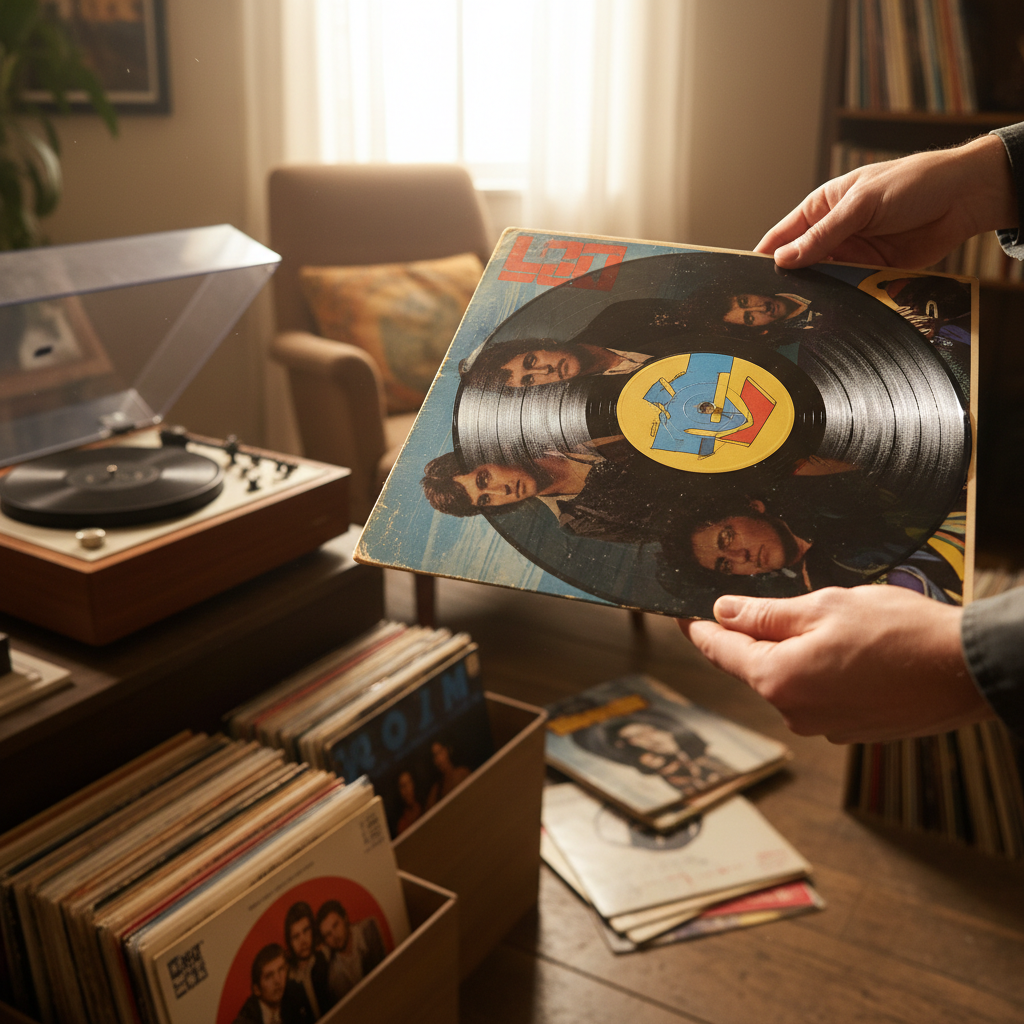
The VG+ grade offers exceptional value for collectors who prioritize music over investment. A first pressing of Miles Davis' "Kind of Blue" (Columbia CL 1355, six-eye label) in Near Mint condition sells for $800-$1,500, while VG+ copies regularly sell for $150-$300—providing 80-90% of the listening experience at 20% of the cost. For most jazz, rock, and soul records from the 1950s-1970s, VG+ represents realistic expectations given the age and the likelihood that desirable records were played frequently by their original owners.
When evaluating VG+ records, focus on playability over appearance. Minor visual defects are acceptable if the record plays cleanly through all tracks without skips, repeating grooves, or excessive surface noise. Light scratches that don't penetrate the grooves are preferable to deeper marks that affect playback. For those just learning how to start a vinyl collection, focusing on VG+ copies of essential albums allows you to build a substantial library without the premium costs of Near Mint examples. Many experienced collectors maintain that VG+ pressings from the original era often sound better than modern reissues, even accounting for minor surface noise.
Common Grading Mistakes and How to Avoid Them
The most frequent grading error is overgrading—assigning a higher grade than the record's actual condition warrants. Sellers often fall into this trap through optimism, attachment to their records, or unfamiliarity with grading standards. A record with visible scuffs and light scratches is VG+, not Near Mint, regardless of how well it plays. Similarly, any cover with ring wear, seam splits, or edge wear exceeding minor corner bumps cannot be graded Near Mint. Overgrading damages seller reputation on platforms like Discogs and leads to returns, negative feedback, and lost sales.
Another common mistake is grading only by appearance without play-testing. A visually VG+ record might have groove damage causing distortion or skipping, which would reduce the actual grade to VG or lower. Conversely, some records with visible surface marks play much better than they look—these should be graded conservatively based on appearance but with notes like "plays better than it looks" or "plays VG++." Professional dealers always play-grade valuable records before listing, using the lower of the visual or audio grade as the final assessment.
Inconsistent grading between vinyl and cover also confuses buyers. Always grade these elements separately and list both grades (e.g., "VG+/VG" means VG+ vinyl, VG cover). Some sellers use a single grade, which should represent the lower of the two conditions. Additionally, failing to note specific defects is problematic—always mention writing on labels, missing inserts, promotional markings, or any damage beyond what the grade implies. A table comparing common grading mistakes helps illustrate these issues:
| Common Mistake | Correct Approach | Impact on Value |
|---|---|---|
| Calling any opened record "Mint" | Reserve Mint for sealed copies only | Overstating by 20-50% |
| Ignoring light surface noise | Grade VG+ maximum if audible noise present | Overstating by one full grade |
| Not mentioning ring wear | Always note ring wear, reduces cover to VG+ max | Buyer disappointment, returns |
| Grading in poor lighting | Use bright, angled light to reveal all marks | Missing defects worth 10-30% |
| Not separating vinyl and cover grades | Always list as "Vinyl/Cover" (e.g., NM/VG+) | Confusion, potential disputes |
Understanding these pitfalls helps both buyers and sellers establish realistic expectations and fair transactions in the vinyl marketplace.
Professional Grading Tips for Rare and Valuable Pressings
When grading high-value records worth $500 or more, professional-level accuracy becomes essential. Start by researching the specific pressing characteristics that affect value—matrix numbers, label variations, and known defects or quality issues. For example, early UK Beatles pressings on Parlophone should have specific matrix information in the run-out groove; verifying these details is part of the grading process for valuable copies. Understanding the differences between LP, EP, and single formats also helps contextualize grading, as EPs and singles have different condition expectations than full albums.
For truly rare pressings, consider third-party authentication for records worth $1,000+. While vinyl doesn't have an equivalent to coin grading services like PCGS, some auction houses and specialist dealers offer authentication services that verify pressing details and provide professional condition assessments. This is particularly valuable for records prone to counterfeiting, such as early Beatles albums, rare punk 45s, and withdrawn pressings. Documentation of provenance—original purchase receipts, previous auction records, or chain of ownership—adds credibility and value to high-grade rare records.
Advanced grading techniques include using a jeweler's loupe or USB microscope (10-60x magnification) to examine groove condition on valuable records. This reveals whether apparent scratches actually penetrate the grooves or are merely surface-level marks. Weight verification is also important—original 1960s-1970s pressings typically weigh 120-140 grams, while modern counterfeits might use heavier 180-gram vinyl. Finally, comparative grading helps calibrate your standards—examine confirmed Near Mint copies of common records to establish a baseline, then apply those standards to rare pressings. VinylAI's collection management features allow you to track condition over time and compare your grading assessments with market sales data, helping refine your grading accuracy as you gain experience.