
Understanding 12 Inch Vinyl Dimensions and Standard Specifications
The 12 inch vinyl record format maintains precise physical specifications that have remained largely unchanged since its introduction over seven decades ago. The actual diameter measures 11.89 to 11.93 inches (302-303 mm), with the label typically occupying a 4-inch (100 mm) circle in the center, leaving approximately 3.95 inches of playable surface on each side. The center hole, known as the spindle hole, measures 0.286 inches (7.24 mm) in diameter, designed to fit snugly on turntable spindles without wobble or excessive play.
The thickness of a 12 inch record varies considerably based on the pressing weight, ranging from approximately 1.0 mm for lightweight 80-100g pressings up to 2.5 mm for premium 200g audiophile editions. Standard pressings from the 1970s and 1980s typically weighed between 120-140g, while modern reissues often use 180 gram vinyl for improved sound quality and durability. The groove depth ranges from 0.001 to 0.003 inches, with the groove width varying between 0.001 and 0.004 inches depending on the audio content and mastering engineer's decisions. These microscopic variations significantly impact the record's sound quality, wear characteristics, and maximum playback time.
The runout groove area, also called the lead-out groove or deadwax, extends from the end of the music to the label edge and typically contains crucial information including matrix numbers, mastering engineer signatures, and pressing plant codes. Collectors use this information to identify first pressings, determine pressing plant quality, and verify authenticity. For example, records pressed at Quality Records Pressing in the United States often command premium prices due to their superior pressing standards, with Discogs price data showing 15-30% higher values compared to generic plant pressings of the same titles.
Playback Time and RPM Standards for 12 Inch Records
The standard playback speed for 12 inch vinyl is 33⅓ revolutions per minute (RPM), which allows for approximately 22 minutes of music per side under optimal conditions. However, actual playback times vary significantly based on several technical factors. Records cut with wider grooves for louder, more dynamic music (such as rock, electronic, or orchestral recordings) may only accommodate 15-18 minutes per side, while spoken word or quieter acoustic recordings can extend to 25-27 minutes. The relationship between different playback speeds and audio quality becomes crucial when understanding why some 12 inch records are cut at 45 RPM instead.
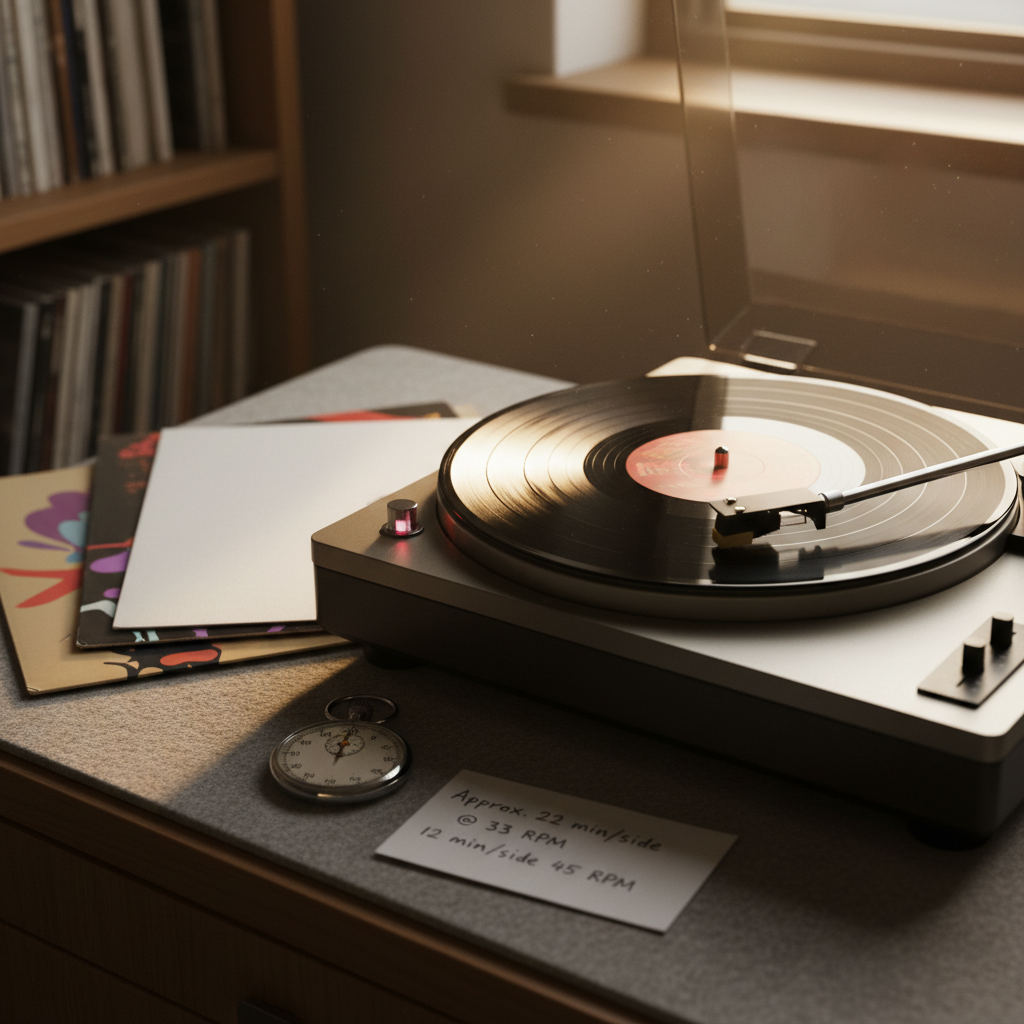
12 inch singles, particularly popular in dance and electronic music genres, are often pressed at 45 RPM to maximize sound quality and bass response. These records typically contain only 2-4 tracks per side, with each track running 6-12 minutes. The faster rotation speed allows for wider groove spacing, which translates to louder volume, better frequency response, and reduced inner-groove distortion. According to data from Popsike auction results, rare 12 inch disco and house singles from the 1980s pressed at 45 RPM regularly sell for $50-300, significantly higher than their 33⅓ RPM counterparts due to superior sound quality and DJ preference.
Some specialized releases use variable speeds or even 78 RPM on 12 inch formats, though these remain uncommon. The mathematical relationship is straightforward: at 33⅓ RPM, the outer grooves travel at approximately 500 mm per second, while the inner grooves slow to about 200 mm per second, creating the phenomenon known as inner-groove distortion. This speed differential explains why the last track on each side often sounds slightly compressed or less dynamic than earlier tracks, a consideration that mastering engineers carefully manage through strategic track sequencing.
Comparing Vinyl Sizes: 12 Inch vs 7 Inch and 10 Inch Formats
Understanding the differences between vinyl sizes is essential for collectors navigating the diverse landscape of record formats. The 7 inch vinyl single, measuring 7 inches (17.5 cm) in diameter, typically plays at 45 RPM and holds approximately 4-6 minutes per side. These smaller records were designed for single releases and became the dominant format for pop singles from the 1950s through the 1990s. The compact size made them economical to produce and ship, with production costs in the 1960s running approximately $0.15-0.25 per unit compared to $0.50-0.75 for 12 inch LPs.
The 10 inch LP represents a middle ground between singles and full albums, measuring exactly 10 inches (25 cm) in diameter. Popular during the early LP era (1948-1954) and experiencing periodic revivals, 10 inch records typically play at 33⅓ RPM and accommodate 12-15 minutes per side. Modern indie and jazz labels frequently use this format for EPs and shorter albums, with releases from labels like Numero Group and Sacred Bones commanding collector interest. A comparison of current production costs shows 10 inch records cost approximately 70-80% of 12 inch pressing prices, making them attractive for limited runs and special editions.
| Format | Diameter | Standard RPM | Playback Time/Side | Typical Use |
|---|---|---|---|---|
| 7 inch | 7" (17.5 cm) | 45 RPM | 4-6 minutes | Singles, B-sides |
| 10 inch | 10" (25 cm) | 33⅓ RPM | 12-15 minutes | EPs, short albums |
| 12 inch | 12" (30 cm) | 33⅓ RPM | 18-25 minutes | Full albums, LPs |
| 12 inch (45 RPM) | 12" (30 cm) | 45 RPM | 10-15 minutes | Singles, audiophile releases |
The physical size differences directly impact sound quality potential. Larger diameter records maintain higher linear groove velocity, especially in the outer grooves, resulting in better high-frequency response and lower distortion. This explains why audiophile labels like Mobile Fidelity Sound Lab (MoFi) and Analogue Productions often use 12 inch 45 RPM formats for their premium reissues, sometimes spreading an album across three or four sides instead of the standard two. These releases typically retail for $35-60 compared to $20-30 for standard 12 inch 33⅓ RPM pressings.
Vinyl Weight and Pressing Quality in 12 Inch Records
The weight of a 12 inch vinyl record serves as a significant indicator of pressing quality, though it's not the sole determinant of sound fidelity. Standard weight pressings from the 1960s through 1980s typically ranged from 120-140 grams, using the minimum vinyl necessary to maintain structural integrity while keeping production costs down. During the oil crisis of the 1970s, some major labels reduced vinyl weight to as low as 80-100 grams, resulting in notoriously flimsy records that warped easily and exhibited increased surface noise. Collectors often refer to these as "dynaflex" pressings (RCA's term) or "thin" pressings, and they generally command lower prices on the secondary market.

Modern heavyweight pressings, particularly the popular 180g standard, use approximately 50% more vinyl than traditional pressings. This additional material provides several benefits: improved resistance to warping during storage and shipping, better damping of unwanted resonances during playback, and a perceived psychological value that appeals to collectors. However, audio engineers debate whether the weight itself improves sound quality or if the correlation exists because manufacturers typically use virgin vinyl and more careful pressing techniques for heavier records. Independent listening tests conducted by Stereophile magazine in 2018 found that pressing quality, vinyl purity, and mastering quality mattered more than weight alone.
Premium audiophile pressings can reach 200 grams or more, with companies like Quality Record Pressings (QRP) and Pallas Group in Germany specializing in these ultra-heavyweight releases. The manufacturing process for heavy vinyl requires longer cooling times and more precise temperature control, with pressing times extending from 30 seconds for standard weight to 45-60 seconds for 200g pressings. This increased production time translates directly to higher costs: current industry rates show 180g pressings cost approximately $1.80-2.20 per unit compared to $1.20-1.50 for standard weight, explaining why heavyweight vinyl typically retails for $25-40 versus $18-25 for standard pressings.
Groove Specifications and Audio Quality Factors
The groove structure of a 12 inch vinyl record represents a remarkable feat of mechanical engineering, with microscopic variations in groove width, depth, and spacing directly translating to the music you hear. The groove walls contain the stereo information, with the left channel encoded on the inner wall (relative to the spindle) and the right channel on the outer wall. The groove modulation depth varies continuously based on the music's amplitude, ranging from near-zero for silence to maximum depth for the loudest passages. Cutting engineers must carefully manage these dynamics to prevent groove overcrowding, which causes distortion, or excessive spacing, which reduces playback time.
The concept of groove velocity fundamentally impacts audio quality on 12 inch records. At the outer edge of a 12 inch LP playing at 33⅓ RPM, the groove passes under the stylus at approximately 20 inches per second, while at the inner grooves (near the label), this velocity drops to roughly 8-10 inches per second. This velocity reduction causes inner-groove distortion, a phenomenon where high frequencies become increasingly difficult to accurately reproduce as the stylus approaches the center. Experienced mastering engineers like Bernie Grundman and Kevin Gray strategically sequence albums to place quieter, less dynamic tracks toward the end of each side, reserving the superior outer grooves for the most critical material.
Modern cutting lathes, such as the Neumann VMS-80 used by top mastering facilities, can cut grooves with tolerances measured in micrometers. The groove pitch (spacing between adjacent grooves) typically ranges from 200-350 grooves per inch, with variable pitch technology allowing the cutting computer to automatically adjust spacing based on the audio signal's amplitude. Louder, more dynamic sections receive wider spacing (fewer grooves per inch), while quieter passages pack more tightly. This variable pitch technology, standard since the 1970s, enables mastering engineers to maximize both playback time and sound quality, though the trade-offs remain inherent to the physical format.
Identifying Quality Pressings and Pressing Plant Variations
Not all 12 inch vinyl pressings are created equal, and knowledgeable collectors learn to identify superior pressings through careful examination of deadwax information, visual inspection, and pressing plant identification. The matrix number, etched or stamped in the runout area, provides crucial information about the metal stamper used to press the record. First pressings typically use the original master lacquer's stamper (often designated with a -1 or -1A suffix), while subsequent pressings use stampers created from mother plates or even second-generation fathers, each step potentially degrading sound quality.

Certain pressing plants have earned legendary reputations for quality work. Pallas Group in Germany consistently produces audiophile-grade pressings with exceptional centering, minimal surface noise, and accurate frequency response. Records pressed at Pallas typically display "Made in Germany" on the label and often include a small "Pallas" stamp in the deadwax. RTI (Record Technology Inc.) in California, which acquired the equipment and expertise from the defunct JVC Disc America plant, similarly commands respect among collectors. Using tools like the VinylAI app, collectors can quickly scan and identify pressing information to determine whether they're holding a premium Pallas or RTI pressing versus a budget plant release.
Visual inspection reveals pressing quality through several indicators. High-quality pressings exhibit perfectly centered labels (within 1-2mm of true center), smooth playing surfaces free from visible pressing artifacts like non-fill (incomplete vinyl flow), and clean, well-defined grooves visible under angled light. Poor pressings show off-center labels (causing wow and flutter during playback), visible ripples or waves in the vinyl surface, excessive flash (excess vinyl around the edges), and sometimes even foreign particles pressed into the surface. When evaluating record condition and pressing quality, collectors should examine records under good lighting at multiple angles, checking both the playing surface and the structural integrity of the vinyl itself.
The color and composition of the vinyl also indicate quality levels. Standard black vinyl uses carbon black as a filler and colorant, providing good durability and minimal surface noise when virgin vinyl is used. Colored vinyl, while visually appealing, historically suffered from higher surface noise due to the metallic compounds used for coloring, though modern manufacturing techniques have largely resolved this issue. Clear or translucent pressings can reveal the purity of the vinyl compound, with high-quality clear vinyl appearing perfectly transparent while cheaper formulations show cloudiness or streaking. Some audiophile labels explicitly use virgin vinyl (never recycled) and avoid colorants entirely, pressing on pure translucent or slightly amber-tinted vinyl for maximum purity.
Special 12 Inch Formats: Gatefold, Double LPs, and Box Sets
The 12 inch format extends beyond standard single-disc releases to encompass various special packaging configurations that enhance the collector experience and accommodate longer musical works. Gatefold sleeves open like a book, providing twice the surface area for artwork, lyrics, and liner notes while creating a more premium presentation. Originally introduced in the late 1950s, gatefold packaging became standard for important releases, concept albums, and deluxe editions. The additional cardboard and printing costs add approximately $1.50-2.50 to production expenses, reflected in typical retail prices of $28-35 for new gatefold releases compared to $22-28 for standard jackets.
Double LP configurations spread albums across two 12 inch discs, either because the music exceeds the approximately 44-minute capacity of a single disc or to improve sound quality by reducing groove crowding. Classic double albums like The Beatles' "White Album," Pink Floyd's "The Wall," and Fleetwood Mac's "Tusk" required the format for their extended running times. However, many modern reissues choose the double LP format even for albums originally released on single CDs, spreading the content across four sides to allow for wider groove spacing and reduced inner-groove distortion. For example, Mobile Fidelity's 45 RPM reissues of classic albums like Steely Dan's "Aja" (originally 41 minutes on one LP) use two discs for superior audio fidelity, retailing for $40-50 compared to $25-30 for standard single-disc reissues.
Box sets represent the premium end of 12 inch vinyl collecting, often combining multiple discs with elaborate packaging, books, posters, and other memorabilia. Recent examples include The Beatles' "White Album" 50th Anniversary Super Deluxe Edition (7 LPs, retail $140), Miles Davis' "Bitches Brew" 40th Anniversary Collector's Edition (4 LPs, retail $100), and various box sets from labels like Mosaic Records specializing in comprehensive jazz reissues. These sets appeal to serious collectors and often appreciate significantly in value, with limited edition box sets from artists like Led Zeppelin, Bob Dylan, and The Rolling Stones regularly selling for 2-5 times their original retail price on Discogs within 5-10 years of release.
Building Your Collection: Selecting Quality 12 Inch Vinyl
For collectors starting or expanding their vinyl collections, understanding 12 inch vinyl specifications enables informed purchasing decisions that balance sound quality, collectibility, and budget. When evaluating new pressings, research the mastering engineer and pressing plant before purchasing. Releases mastered by respected engineers like Bernie Grundman, Kevin Gray, Ryan Smith, or Chris Bellman and pressed at quality plants like RTI, QRP, or Pallas generally justify premium prices through superior sonics. Many audiophile labels clearly advertise these credentials on hype stickers and product descriptions.
Original pressings versus reissues present a complex decision matrix. First pressings often command premium prices based on collectibility and the assumption that they're closest to the original master tapes. However, this assumption doesn't always hold true. Master tapes deteriorate over time, but modern remastering technology and careful tape restoration can produce reissues that sonically surpass original releases. For example, Analogue Productions' reissues of classic Blue Note jazz albums, cut from the original master tapes using modern all-analog chains and pressed on 200g vinyl, frequently receive higher praise from audio reviewers than the original 1950s-1960s pressings, despite selling for $35-50 compared to $100-500+ for clean original pressings.
Understanding the relationship between different vinyl formats helps collectors make strategic purchases. A 12 inch LP provides the complete album experience with optimal sound quality for longer works, while 12 inch singles offer maximum fidelity for individual tracks. Budget-conscious collectors might prioritize standard weight pressings for casual listening and reserve heavyweight audiophile editions for favorite albums or critical listening sessions. The VinylAI app's barcode scanning feature allows collectors to quickly identify pressing details, compare prices across sources, and track which versions they own, preventing duplicate purchases and helping identify the most desirable pressings of particular titles.
Storage and handling practices directly impact the longevity and sound quality of 12 inch vinyl collections. Records should be stored vertically (never stacked horizontally) in a climate-controlled environment maintaining 65-70°F and 45-50% relative humidity. Original inner sleeves should be replaced with anti-static polyethylene or rice paper sleeves to prevent scratching and reduce static buildup. Outer sleeves (polyethylene bags that protect the jacket) add minimal cost ($0.25-0.50 each) but significantly preserve jacket condition, crucial for maintaining resale value. A well-maintained collection of quality 12 inch pressings not only provides superior listening pleasure but also represents a tangible asset that typically appreciates 3-8% annually for desirable titles, according to Discogs price trend data from 2015-2023.