
What Are 45 Records and Why 45 RPM?
The 45 record format represents one of the most significant innovations in recorded music history. When RCA Victor introduced the 45 RPM single in March 1949, it was a direct response to Columbia Records' launch of the 12-inch LP format the previous year. The choice of 45 revolutions per minute wasn't arbitrary—it represented a careful balance between sound quality, playing time, and manufacturing efficiency. At this speed, a 7-inch disc could deliver approximately 5 minutes of high-fidelity audio per side, which was perfect for the typical pop song length of the era.
The technical specifications of 45 records differ significantly from both 33 RPM LPs and the older 78 RPM records. The groove spacing on a 45 is wider than a 33 1/3 RPM record, allowing for greater amplitude and dynamic range despite the smaller physical size. This meant that a well-mastered 45 could actually sound louder and punchier than the same song on an LP, which is why many audiophiles and DJs prefer original 45 pressings. The format quickly became the standard for singles, with RCA producing the first 45s in seven different colors to denote different music genres—a practice that lasted only briefly but created some highly collectible variants today.
Understanding vinyl RPM speeds is crucial for collectors. While 33 RPM became the standard for albums and 78 RPM faded into obsolescence by the late 1950s, the 45 RPM speed remained dominant for singles well into the 1990s. The faster rotation speed of 45s compared to 33s means the stylus travels a greater linear distance per second, capturing more detail and providing better high-frequency response. This technical advantage made 45s the preferred format for radio stations and jukeboxes, where sound quality and durability were paramount.
Physical Specifications and Vinyl Sizes
The standard 45 record measures exactly 7 inches (17.78 cm) in diameter, placing it firmly in the category covered by our comprehensive guide to vinyl record sizes. However, what truly distinguishes a 45 from other 7-inch records is the large center hole, which measures 1.5 inches (38 mm) in diameter—significantly larger than the standard 0.286-inch (7.24 mm) spindle hole found on LPs and 78s. This oversized hole was designed for rapid record changing in jukeboxes and automatic record changers, allowing records to drop smoothly onto the spindle without jamming.
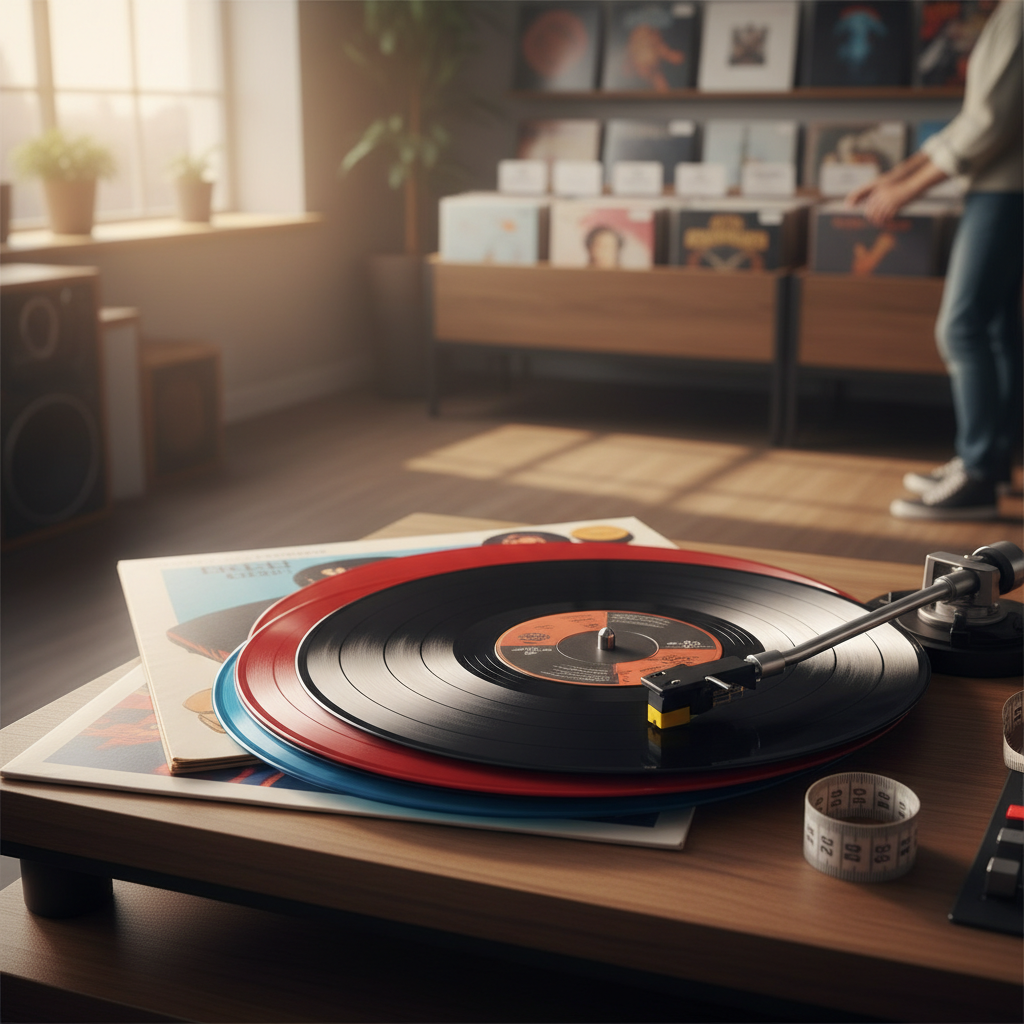
The weight of 45 records varies considerably depending on the era and pressing quality. Standard 45s from the 1950s through 1980s typically weigh between 35-45 grams, though this can vary. Modern audiophile 45 pressings sometimes approach 60-70 grams, offering increased durability and potentially better sound quality through reduced resonance. Unlike the 180-gram vinyl pressings common in modern LPs, 45s have never been standardized to a specific heavyweight specification, though heavier pressings are generally considered superior.
The physical construction of a 45 follows the same basic principles as other vinyl formats. The disc consists of polyvinyl chloride (PVC) compound pressed with a label on each side. The groove starts from the outer edge and spirals inward toward the center, with the lead-in groove, playing surface, and lead-out groove all precisely calibrated. The playing surface on each side typically spans from approximately 6.5 inches to 2.5 inches in diameter, though this can vary based on the length of the recording and the cutting engineer's preferences.
The History and Evolution of 45 RPM Singles
The introduction of the 45 in 1949 marked the beginning of the "War of the Speeds" between RCA Victor and Columbia Records. While Columbia championed the 33 1/3 RPM LP for albums, RCA promoted the 45 for singles, initially hoping it would become the universal format for all recordings. RCA even produced 45 RPM albums, with multiple discs packaged in boxes, but these proved impractical and expensive. By 1950, a détente emerged: 33 RPM for albums, 45 RPM for singles—a division that would last for decades.
Throughout the 1950s and 1960s, the 45 became synonymous with rock and roll, doo-wop, soul, and pop music. Record companies discovered that the format was perfect for promoting new artists and songs to radio stations and teenagers with limited budgets. A 45 typically cost between $0.50 and $1.00 during this golden era, making it accessible to young music fans. Jukeboxes across America were stocked exclusively with 45s, and the format became central to youth culture. Artists like Elvis Presley, The Beatles, and The Supremes released hundreds of 45s, many of which are now worth substantial sums to collectors.
The 1970s and 1980s saw the 45 continue to dominate the singles market, though new variants emerged. Picture discs, colored vinyl, and shaped discs became popular promotional items and collectibles. The 12-inch single emerged in the late 1970s, primarily for disco and dance music, offering extended mixes and better bass response, but the 7-inch 45 remained the standard for pop and rock singles. By the 1990s, CD singles and cassette singles began to erode the 45's market share, and by the early 2000s, major labels had largely discontinued the format. However, the vinyl revival of the 2010s brought 45s back, with independent labels and major artists alike releasing limited-edition singles that often sell out within hours.
Sound Quality and Audio Characteristics
The sonic characteristics of 45 RPM records offer distinct advantages over other speeds. The faster rotation speed means the groove moves past the stylus at approximately 19.4 inches per second at the outer edge, compared to 14.7 inches per second for a 33 RPM record of the same diameter. This increased linear velocity translates to better high-frequency response, lower distortion, and improved signal-to-noise ratio. Many mastering engineers consider 45 RPM the optimal speed for maximum audio fidelity on vinyl, which is why some audiophile labels release albums at 45 RPM across multiple discs.
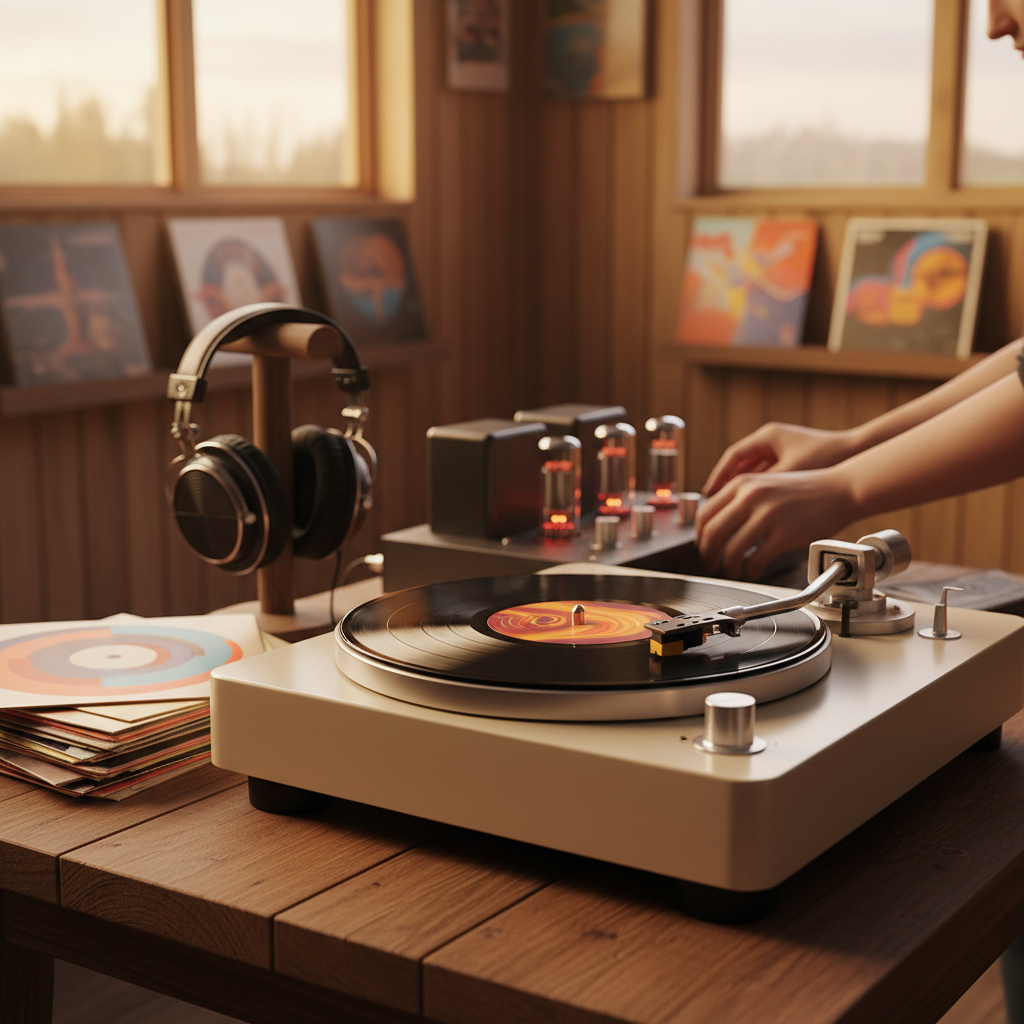
The wider groove spacing on 45s compared to 33s allows for greater groove modulation, meaning louder passages can be cut with more amplitude without risking groove overcrowding or distortion. This is particularly beneficial for music with prominent bass or dynamic range. However, the trade-off is reduced playing time—approximately 5 minutes per side for standard grooves, though some 45s were cut with tighter spacing to accommodate longer tracks, sometimes reaching 7-8 minutes at the cost of some sound quality.
Understanding the vinyl pressing process helps explain why 45s can sound exceptional when properly mastered. The smaller diameter means less surface area for the same playing time, which can actually be advantageous. The inner grooves on a 45, where linear velocity decreases, still maintain better speed than the inner grooves of a 12-inch LP playing the same duration of music. This is why many collectors and DJs seek out original 45 pressings of classic tracks—they often sound more vibrant and immediate than the album versions. Tools like VinylAI can help collectors identify first pressings and compare different versions to find the best-sounding copies.
Types of 45 Records and Variants
45 records come in several distinct categories that collectors should understand:
- Standard commercial singles: The most common type, featuring an A-side (the promoted song) and B-side (often a lesser-known track or album cut). These were mass-produced and sold in record stores nationwide.
- Picture sleeves: 45s packaged in printed cardboard sleeves featuring artwork, artist photos, and information. These are significantly more valuable than the same record in a plain sleeve, often commanding 2-5 times the price.
- Promotional copies (promos): Sent to radio stations and reviewers, often with special labels marked "Not For Sale" or "Demonstration Copy." These sometimes feature mono mixes or different versions than commercial releases.
- Colored vinyl and picture discs: Special editions pressed on colored vinyl or with images embedded in the disc itself. These were popular in the 1970s-1980s and have seen a resurgence in recent years.
- Extended play (EP) 45s: Sometimes called "compact 33s," these play at 45 RPM but use tighter groove spacing to fit multiple songs per side, though true EPs more commonly played at 33 RPM.
Regional variations also exist. In the UK and Europe, 45s were often pressed with small spindle holes rather than the large American-style center hole. Some countries produced 45s in unique sizes or with different label designs. Japanese 45s, for instance, are highly prized by collectors for their exceptional pressing quality and often include unique artwork and obi strips (the paper band wrapped around the sleeve with Japanese text).
Collecting 45 Records: Value and Rarity
The value of 45 records varies enormously based on artist, rarity, condition, and demand. According to Popsike auction data, rare soul and funk 45s from small independent labels regularly sell for $1,000-$5,000, with the most sought-after examples exceeding $10,000. For instance, Frank Wilson's "Do I Love You (Indeed I Do)" on Soul Records sold for over $40,000 in 2009, making it one of the most expensive 45s ever sold. Meanwhile, common 45s from major artists might sell for $1-$5 even in excellent condition simply due to the millions of copies pressed.

Condition is paramount in 45 collecting, perhaps even more so than with LPs. Because 45s were often played on portable record players and jukeboxes, many surviving copies show significant wear. Understanding vinyl grading standards is essential—a record graded Near Mint (NM) might sell for ten times the price of the same title in Very Good (VG) condition. The picture sleeve condition is equally important and is graded separately from the disc itself. A rare 45 in mint condition with an intact picture sleeve can be worth 5-10 times more than the disc alone.
Several factors determine 45 value:
| Factor | Impact on Value | Example |
|---|---|---|
| Label & Pressing | High | Original Sun Records Elvis 45s worth $500-2000; reissues worth $5-10 |
| Genre Demand | Very High | Northern Soul 45s: $100-5000; same-era pop: $5-50 |
| Picture Sleeve | High | Beatles 45 with sleeve: $50-200; without: $10-30 |
| Promotional Status | Medium | Promo copies often 20-50% more valuable |
| Condition | Extreme | Mint: $500; VG: $50 for same rare record |
Collectors should focus on specific genres or eras when starting a vinyl collection. Northern Soul, garage rock, early hip-hop, punk, and regional R&B are particularly active collecting areas. Discogs provides comprehensive pricing data, with over 8 million 45 listings showing real-time market values.
Playing and Caring for 45 Records
Playing 45 records requires specific equipment and techniques. Most modern turntables come with a small plastic adapter that fits over the standard spindle to accommodate the large center hole of 45s. These adapters, often called "spiders" or "45 adapters," are essential accessories. Some vintage turntables featured automatic 45 RPM spindles that could be raised or lowered as needed. When playing 45s, always ensure your turntable is set to the correct speed—playing a 45 at 33 RPM will sound slow and distorted, while playing a 33 at 45 RPM will sound fast and high-pitched.
Proper stylus pressure and cartridge alignment are crucial for 45s. The recommended tracking force for most cartridges ranges from 1.5 to 2.5 grams, though this varies by manufacturer. Because 45s have wider grooves than LPs, they're somewhat more forgiving of tracking force variations, but proper setup still matters for sound quality and record preservation. The anti-skate setting should also be adjusted according to your turntable's manual, as the smaller diameter of 45s can affect skating forces differently than 12-inch records.
Storage and preservation of 45s require attention to detail. Store records vertically in sturdy boxes or crates designed for 7-inch singles—never stack them horizontally, as this can cause warping over time. Keep them away from heat sources, direct sunlight, and humidity. Original picture sleeves should be protected in polyethylene outer sleeves to prevent ring wear, corner damage, and fading. The discs themselves should be kept in anti-static inner sleeves, preferably replacing original paper sleeves which can shed fibers and cause surface noise. Clean 45s before playing using a carbon fiber brush or record cleaning solution, and handle them only by the edges and label to avoid fingerprints on the playing surface.
Modern 45 Releases and the Contemporary Market
The vinyl revival has brought 45 records back into regular production, with both major labels and independents releasing new singles on the format. Contemporary artists across genres—from indie rock to hip-hop to electronic music—are embracing 45s as both a promotional tool and a collectible product. Limited pressings of 500-1000 copies are common, often selling out quickly and appreciating in value on the secondary market. Third Man Records, Jack White's label, has been particularly influential in reviving the 45 format, releasing hundreds of singles including exclusive recordings available only on 7-inch.
Modern 45 pressings often feature improved specifications compared to vintage singles. Many contemporary releases are pressed on heavyweight vinyl (50-70 grams compared to the standard 35-45 grams), providing better durability and potentially superior sound quality. Pressing plants like United Record Pressing in Nashville and Optimal Media in Germany produce high-quality 45s using modern equipment and virgin vinyl compounds. These new pressings typically cost $7-12 retail, significantly more than vintage 45s cost when new, but collectors appreciate the superior sound and collectibility.
The market for new 45s includes several distinct segments. Record Store Day releases often feature exclusive 7-inch singles that become instant collectibles, sometimes selling for 5-10 times their retail price within weeks. Subscription services like Singles Club offer curated monthly 45 deliveries from emerging artists. Reissue labels like Numero Group and Light in the Attic release meticulously researched compilations of rare soul, funk, and rock 45s, often the only legal way to obtain these recordings. For collectors using apps like VinylAI to catalog and track their collections, these modern releases integrate seamlessly with vintage 45s, creating comprehensive libraries that span decades of music history.