 VinylAI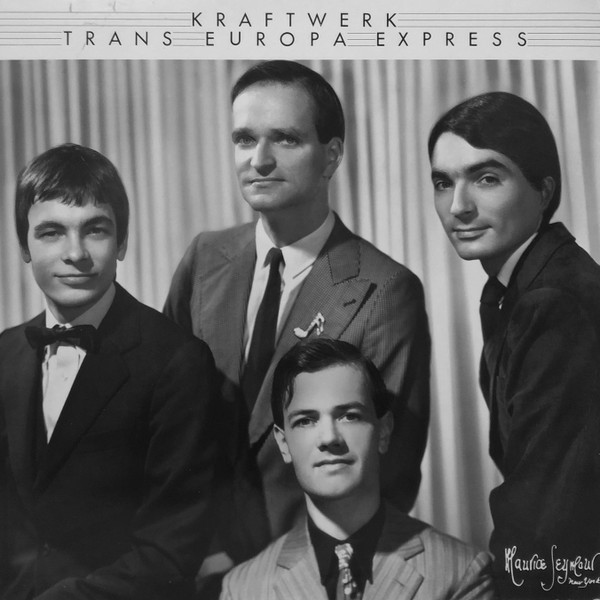
Data as of Jun 16, 2026
Kraftwerk – Trans Europa Express
1977 · Germany · Kling Klang · Vinyl LP Album Stereo
Be the first to list yours, or get an email the moment a copy appears.
Price guide
Estimated market value via Discogs · as of Sep 20, 2026
- MMint
- $325.02
- NMNear Mint
- $290.80
- VG+Very Good Plus
- $222.38
- VGVery Good
- $153.96
- G+Good Plus
- $85.53
- GGood
- $51.32
- FFair
- $34.21
- PPoor
- $17.11
94 copies listed on Discogs from $11.49.
These are reference estimates from Discogs sold/asking data for this exact pressing, not offers and not a guaranteed price. Actual value depends on condition, completeness and current demand. Any active seller offers on this page are listed separately above.
Offers
New to condition grades like NM or VG? Read our vinyl grading guide →
Pressing identification
Match these against your copy to confirm the exact pressing.
- Runout — side A
- 1 C 064-82 306 A82306A-1
- Runout — side B
- 1 C 064-82 306 B82306B-1
- Rights society
- GEMA
- Label Code
- LC 4513
- Other
- EMI(Debossed stamp, back cover)
- Record Company
- EMI Electrola GmbH
- Printed By
- 4P Nicolaus GmbH
- Pressed By
- EMI Electrola GmbH
Specifications
- Artist
- Kraftwerk
- Genre
- Electronic
- Style
- Electro
- Year
- 1977
- Label
- Kling Klang, EMI Electrola
- Catalog number
- 1C 064-82 306
- Country
- Germany
Tracklist
- A1Europa Endlos9:35
- A2Spiegelsaal7:50
- A3Schaufensterpuppen6:10
- B1Trans Europa Express6:40
- B2Metall Auf Metall2:10
- B3Abzug4:42
- B4Franz Schubert4:25
- B5Endlos Endlos0:45
- Producer [Produktion], Concept By [Album Konzept]
- Florian Schneider
- Producer [Produktion], Concept By [Album Konzept]
- Ralf Hütter
- Engineer [Toningineure Klingklang Studio]
- Peter Bollig
- Engineer [Toningineure Rüssl Studio]
- Thomas Kukuck
- Engineer [Toningineure The Record Plant]
- Bill Halverson
- Artwork [Inner Sleeve, Poster]
- Emil Schult
About this record
The 1977 German pressing on Kling Klang/EMI Electrola exists in two distinct material variants, separated by the presence or absence of a debossed EMI stamp on the back cover. This version—catalogue 1C 064-82 306—ships with a printed inner sleeve and poster, thinner paper stock (cover ~62g, inner sleeve ~20g, poster ~48g), and glossy labels, marking it as the EMI-stamped variant.
The runout matrix 1 C 064-82 306 A and 1 C 064-82 306 B confirm EMI Electrola GmbH as the pressing plant. Demand significantly outpaces supply: 3656 collectors want this pressing against 5940 who own one.
What drives its value
This pressing commands attention because the material and finish differ measurably from the non-stamped variant (release 32349882), yet both carry identical runout inscriptions and cover artwork positioning. The thinner paper construction, glossy label texture, and muted inner-sleeve colors are physical markers of the EMI-stamped edition.
With 3656 want entries against 5940 have entries in the community database, the ratio reflects strong ongoing collector interest in securing a clean copy. The 1977 German original on Kling Klang/EMI Electrola remains the first pressing; later reissues and other territories command lower premiums.
Condition grading is critical: the glossy label finish and thinner sleeve material show wear differently than standard pressings, making VG+ and Mint copies rarer to locate in the secondary market.
How to appraise this pressing
Confirm this pressing by the catalogue number 1C 064-82 306 printed on the front cover, spine, and inner sleeve. The back cover must bear a debossed EMI stamp (absent on variant 32349882).
Examine the runout groove: side A should read 1 C 064-82 306 A or 82306A-1, and side B should read 1 C 064-82 306 B or 82306B-1—all stamped, with no hand-etched additions. The labels are glossy and smooth; compare them to the matte finish of non-EMI pressings if available.
Weigh the components: cover approximately 62g, inner sleeve approximately 20g, poster approximately 48g. The inner-sleeve photograph displays muted color saturation and a lighter gray EMIL Schult logo compared to the variant without the EMI stamp.
All three components (cover, inner sleeve, poster) are noticeably thinner stock than release 32349882. The poster itself carries the catalogue number 1C 064-82 306 in the lower right corner.
Pressing plant EMI Electrola GmbH is confirmed in the dead wax and on the label.
Further reading: grading a record, what makes a pressing valuable.
Listen
Hear the album before you buy.
Official videos via YouTube.
Release notes
With printed inner sleeve and poster. Poster has cat. no. ""1C 064-82 306" printed in lower right corner Glossy cover, with the debossed EMI stamp on the back. Runout inscriptions are stamped, and contain no additional inscriptions except those transcribed in the BAOI section as matrix/runout. Cover, inner sleeve, and poster are made out of a thinner paper in comparison to the copies without the EMI debossed stamp on the back cover. Cover ~62g / Inner sleeve ~20g/ Poster ~48g. There are also some color differences. This version's inner sleeve's photo has less vivid colors, and the "EMIL Schult" logo is of a lighter gray shade. Furthermore, labels are glossy and smooth to the touch in comparison to the other version without EMI stamp. Both versions have identical runout inscriptions, and identical information on the cover's front, back and spine (positioning, and typeface/font).
Release 32349882: version without the debossed EMI stamp on the back cover. Weight: cover ~69g/ Inner sleeve ~48g/ Poster ~48g. Other differences as well, material thickness (i.e. especially inner sleeve), color shade differences (i.e. inner sleeve, image side, colors are more vivid), labels' texture...
[Back sleeve:] Klingklang Studio Düsseldorf Rüssl Studio Hamburg Record Plant Hollywood ℗ 1977 Kraftwerk Printed in Germany by 4P Nicolaus GmbH, Köln
[Inner sleeve:] Klingklang Studio Rüssl Studio The Record Plant © 1977
[Labels:] ℗ 1977 Kraftwerk Made in Germany
Notes sourced from the Discogs database.
Frequently asked
How do I tell this EMI-stamped version apart from the other 1977 German pressing?
The defining feature is the debossed EMI stamp on the back cover—present on this version, absent on release 32349882. Additionally, this variant uses thinner paper (cover ~62g versus ~69g on the non-stamped version), has glossy labels instead of matte, and the inner-sleeve photograph shows less vivid colors with a lighter gray EMIL Schult logo. Both versions share identical runout inscriptions and front/back/spine artwork.
What does the runout matrix tell me about this pressing?
The stamped runout 1 C 064-82 306 A (side A) and 1 C 064-82 306 B (side B)—or the alternative stamped format 82306A-1 and 82306B-1—confirm production by EMI Electrola GmbH in Germany. These inscriptions contain no hand-etched additions or variations, indicating a standard pressing run rather than a test or special edition.
Is this the original 1977 pressing or a reissue?
This is the original 1977 pressing, released on Kling Klang/EMI Electrola for the German market. The label carries the copyright mark ℗ 1977 Kraftwerk and the manufacturing credit 'Made in Germany.' Later reissues on other labels or in other territories will carry different catalogue numbers and pressing plant information.
Why do collectors distinguish between the EMI-stamped and non-stamped versions?
The material differences are substantial and affect both durability and aesthetics. The thinner paper stock, glossy label finish, and color-shifted inner sleeve of this EMI-stamped variant (release 32349882 is the non-stamped counterpart) represent a separate production decision by EMI Electrola. Collectors seeking the specific variant must verify the debossed EMI stamp and weigh the components to confirm authenticity.
What is the community demand for this pressing?
The pressing holds a 4.6 rating from 839 community votes. Demand is strong: 3656 collectors have marked it as wanted against 5940 who own a copy. This ratio indicates sustained collector interest, particularly for clean, well-preserved examples of the original 1977 German pressing.