 VinylAI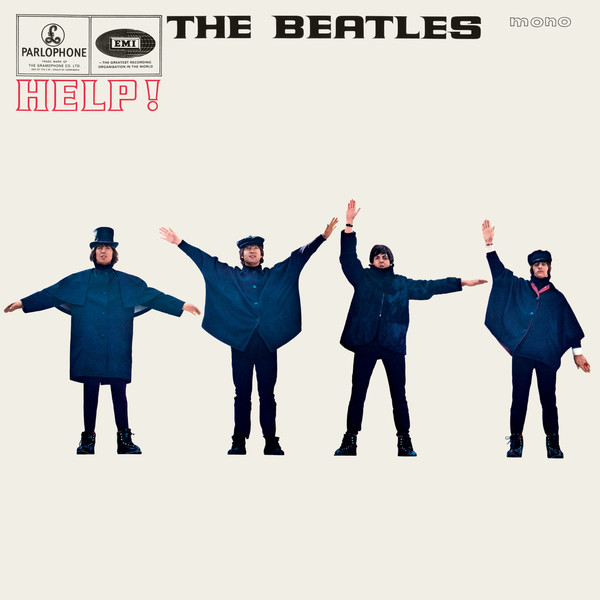
Data as of Jun 16, 2026
The Beatles – Help!
1965 · UK · Parlophone · Vinyl LP Album Mono
Be the first to list yours, or get an email the moment a copy appears.
Offers
New to condition grades like NM or VG? Read our vinyl grading guide →
Pressing identification
Match these against your copy to confirm the exact pressing.
- Runout — side A
- XEX.549XEX 549-2 AO L 4 3XEX 549-2 GM M 4XEX 549-2 GH T 4XEX 549-2 GG 11
- Runout — side B
- XEX.550XEX 550-2 AM M 3XEX 550-2 GL O 4XEX 550-2 RG O 1 8XEX 549-2 GG T
- Rights society
- NCB, Mecolico, BIEM
- Other
- KT(UK tax code )
- Other
- 6509(Printer code )
- Record Company
- The Gramophone Co. Ltd.
- Printed By
- Garrod & Lofthouse Ltd.
- Record Company
- E.M.I. Records
Specifications
- Artist
- The Beatles
- Genre
- Rock, Pop, Stage & Screen
- Style
- Beat, Soundtrack, Pop Rock, Rock & Roll
- Year
- 1965
- Label
- Parlophone
- Catalog number
- PMC 1255
- Country
- UK
Tracklist
- A1Help!
- A2The Night Before
- A3You've Got To Hide Your Love Away
- A4I Need You
- A5Another Girl
- A6You're Going To Lose That Girl
- A7Ticket To Ride
- B1Act Naturally
- B2It's Only Love
- B3You Like Me Too Much
- B4Tell Me What You See
- B5I've Just Seen A Face
- B6Yesterday
- B7Dizzy Miss Lizzy
- Producer
- George Martin
- Photography By
- Robert Freeman
About this record
The original 1965 UK pressing of Help! exists in at least three distinct label variants, and this copy bears Variant B's hallmarks: a thick-font label with the matrix numbers XEX.549 and XEX.550 stamped in the dead wax, positioned differently relative to the pressing date than Variant A. Pressed by Parlophone on black vinyl with the yellow Gramophone Co. logo, it arrived in August 1965 with a die-cut inner sleeve lined in tracing paper and the instruction to use Emitex cleaning compound—details that vanish on later reissues and Brazilian Odeon editions.
What drives its value
Condition drives the entire market for this pressing. A Mint copy commands 325.59 USD, while NM drops to 291.32 USD, VG+ to 222.77 USD, and VG to 154.23 USD—a steep cliff that reflects the scarcity of unplayed originals.
The lowest asking price across 181 active listings sits at 9.42 USD, capturing heavily played or damaged stock. Community demand is substantial: 5714 collectors want it against 13571 who own one, a want-to-have ratio that signals enduring appeal but not acute shortage.
The original UK Parlophone mono remains the reference pressing; Brazilian Odeon copies exist but command far less collector attention. For this Variant B label, condition grade alone determines whether a buyer pays near-Mint money or settles for a playable worn copy.
How to appraise this pressing
Confirm this pressing by the Parlophone catalogue number PMC 1255 and the black label with yellow Gramophone Co. logo and silver print. The runout matrices XEX.549 (side A) and XEX.550 (side B) are stamped into the dead wax and should read XEX 549-2 AO L 4 3 and XEX 550-2 AM M 3 respectively—these lacquer numbers shifted position relative to the date on Variant B, distinguishing it from Variant A's layout.
Look for the thick font on the label and the * credit indicator placed to the right of "I Need You" with a space between. The KT tax code may or may not be embossed on either side.
The die-cut inner sleeve should be lined with tracing paper and carry the Emitex cleaning instruction. Surface inspection is critical: original 1965 vinyl often shows light hairline scratches and faint groove wear even in VG+ condition; truly Mint copies with no visible play are exceptionally rare and command the 325.59 USD estimate.
Further reading: grading a record, what makes a pressing valuable.
Release notes
First pressing. August 6, 1965. Black label with yellow logo and silver print. “The Gramophone Co. Ltd.” printed at the start perimeter print and “Sold in U.K. subject…” text. Capitol print. Tracing-paper-lined “Use Emitex” die-cut inner sleeve. With or without KT tax code on the label.
The UK tax code KT, when present, can be found embossed on either side A or B label.
Variation A. The original 1st labels used a Sans-Serif font and the * credit indicator for “I Need You” was placed to the right of the song title with a space between: I Need You *.
Variant B (this one): Other of the original labels used a thick font and the same * credit indicator for “I Need You” was placed to the right of the song title with a space between: I Need You *. In addition, the laqueur numbers (XEX.549 & XEX.550) shifted relative to date on the both sides. Both runout matrixes are stamped.
Variation C. Side 1 is practically the same as in variation 1A but the titles of “Girl” on track 5 and 6 are now aligned directly above each other. Side 2 has a few more differences in the tracklist layout. Most noticeably, the second line now begins with BIEM instead of NCB; and “Yesterday” now no longer begins on its own line. The layout in general is neater with the space being used a little more efficiently.
Only the A Side of this album is from the film soundtrack.
Notes sourced from the Discogs database.
Other pressings of this release
Different editions of the same album — pressing decides value.
Frequently asked
What is the difference between Variant A and Variant B of this pressing?
Both are original 1965 UK Parlophone pressings, but they differ in label typography and matrix positioning. Variant A used a Sans-Serif font; Variant B (this one) uses a thick font. More tellingly, the lacquer numbers XEX.549 and XEX.550 shifted their position relative to the date stamp on Variant B, a detail visible in the dead wax when you examine the runout closely. Both variants carry the same catalogue number PMC 1255 and black label with yellow logo.
Is there a Variant C, and how does it differ?
Yes. Variant C is also an original 1965 pressing but features layout changes on both sides of the label. Side 1 aligns the titles of "Girl" (tracks 5 and 6) directly above each other, whereas earlier variants do not. Side 2 begins the second line with BIEM instead of NCB, and "Yesterday" no longer starts on its own line. The overall label layout is neater and more space-efficient. Variant C represents a minor mid-run adjustment but remains part of the first pressing family.
What is a VG+ copy of this pressing worth?
According to the price guide, a VG+ copy is estimated at 222.77 USD. This grade assumes light surface noise audible on quiet passages, very light wear to the label, and perhaps a light scratch or two that do not affect playback. At this price point, you are paying for a genuinely playable original that shows its age but has not been abused. Mint copies fetch 325.59 USD by comparison, so the jump from VG+ to M reflects the rarity of unplayed stock.
Why do I see copies listed at 9.42 USD when the price guide says VG is worth 154.23 USD?
The 9.42 USD figure is the lowest asking price across 181 active listings and likely represents heavily played, damaged, or defective copies—perhaps skipping, warped, or with significant label wear. The price guide estimates assume playable records in stated condition; a copy that skips, is warped, or has a large gouge falls below the Fair grade and may sell for a fraction of the listed value. Always inspect photos and seller notes before bidding on bargain listings.
Should I buy this pressing or a later reissue?
The 1965 UK Parlophone original is the definitive version of Help! and the only pressing that captures the first-release label variants and die-cut inner sleeve with Emitex instruction. Later reissues lack these details and command minimal collector value. If you want the album to play, a VG copy at 154.23 USD offers excellent sound; if you seek investment or completeness, condition and provenance matter enormously, and you should verify the Variant B matrix stamps in the dead wax before committing.