 VinylAI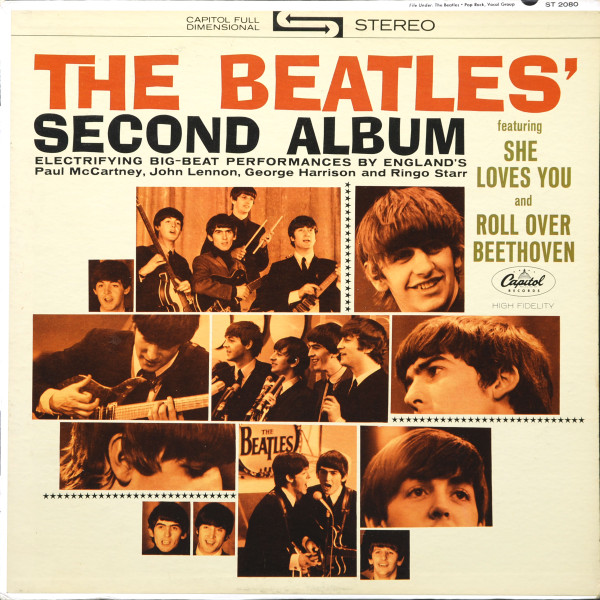
Data as of Jun 16, 2026
The Beatles – The Beatles' Second Album
1964 · US · Capitol Records · Vinyl LP Album Stereo
Be the first to list yours, or get an email the moment a copy appears.
Price guide
Estimated market value via Discogs · as of Sep 13, 2026
- MMint
- $353.46
- NMNear Mint
- $316.25
- VG+Very Good Plus
- $241.84
- VGVery Good
- $167.43
- G+Good Plus
- $93.01
- GGood
- $55.81
- FFair
- $37.21
- PPoor
- $18.60
21 copies listed on Discogs from $3.61.
These are reference estimates from Discogs sold/asking data for this exact pressing, not offers and not a guaranteed price. Actual value depends on condition, completeness and current demand. Any active seller offers on this page are listed separately above.
Offers
New to condition grades like NM or VG? Read our vinyl grading guide →
Pressing identification
Match these against your copy to confirm the exact pressing.
- Runout — side A
- ST-X-1-2080
- Runout — side B
- ST-X-2-2080
- Matrix / runout
- ST-1-2080-B-6 ' 1 ✲ST-2-2080-B-6 ' 1 ✲ST-2-2080-A-5 ' 1 ✲ST-1-2080-B-6 ' 2 ✲ST-2-2080-A-5 ' 3 ✲ST-1-2080-A-5' 3 ✲ST-2-2080-A-5' 3 ✲
- Rights society
- ASCAP, BMI
- Other
- 5(Printed on back cover)
- Pressed By
- Capitol Records Pressing Plant, Los Angeles
- Manufactured By
- Capitol Records, Inc.
- Printed By
- Modern Album, Terre Haute, Indiana
Specifications
- Artist
- The Beatles
- Genre
- Rock
- Style
- Beat, Rock & Roll
- Year
- 1964
- Label
- Capitol Records
- Catalog number
- ST 2080
- Country
- US
Tracklist
- A1Roll Over Beethoven2:44
- A2Thank You Girl2:01
- A3You Really Got A Hold On Me2:58
- A4Devil In Her Heart2:23
- A5Money (That's What I Want)2:47
- A6You Can't Do That2:33
- B1Long Tall Sally2:03
- B2I Call Your Name2:09
- B3Please Mister Postman2:34
- B4I'll Get You2:04
- B5She Loves You2:19
- Producer
- George Martin
- Written-By
- Lennon-McCartney
- Photography By
- Black Star
- Photography By
- Joe Covello
About this record
The Capitol Records pressing plant in Los Angeles stamped this 1964 stereo issue with catalogue ST 2080, distinguishable by the '5' printed on the back cover marking it as a fifth printing. The royal blue inner sleeve carries the Los Angeles plant code LA 12TC-1, a detail absent from later reissues.
Community demand reflects the album's canonical status: 4134 collectors own a copy against 461 actively seeking one, yet the original US Capitol pressing commands attention for its specific dead-wax matrix codes and pressing-plant origin.
What drives its value
This pressing's value hinges on condition and the scarcity of high-grade original Capitol Los Angeles stock. The price_guide data shows the spread between Mint and VG copies reflects how few copies survive unplayed; original 1964 Capitol pressings of this title face competition from later reissues and foreign variants, which typically trade lower.
With 4134 community copies recorded against 461 want entries, supply appears adequate, yet the original Capitol pressing—especially early printings—commands premiums over reissues. The catalogue ST 2080 and the specific matrix runout codes (ST-X-1-2080 and ST-X-2-2080 for sides 1 and 2) confirm authenticity; later pressings carry different dead-wax stamps.
Buyers pay for the Los Angeles plant provenance and the original royal blue inner sleeve marked LA 12TC-1, both markers of first-generation Capitol stock.
How to appraise this pressing
Confirm this pressing by the stereo catalogue number ST 2080 on the front cover and spine. The back cover must display a printed '5' indicating the fifth printing run.
Examine the dead wax (runout grooves) on each side: Side 1 should read ST-X-1-2080 or ST-1-2080-B-6 with a '1' and cross symbol; Side 2 should read ST-X-2-2080 or ST-2-2080-B-6 with matching marks. The original inner sleeve is royal blue with LA 12TC-1 printed; later reissues use different sleeve colors and lack this code.
The label itself reads Capitol Records with the catalogue number. The 11 tracks include "Roll Over, Beethoven" (spelled as shown on the back cover) and "Please Mr. Postman" as B3.
Grade by examining the vinyl surface under light, the condition of the jacket's printed '5', and whether the original inner sleeve remains intact.
Further reading: grading a record, what makes a pressing valuable.
Release notes
This Los Angeles pressing has a '5' printed on the back cover indicating a printing. Originally issued with a royal blue inner sleeve with marked number LA 12TC-1 as LA stands for Los Angeles. Produced in London by GEORGE MARTIN All photos / Joe Covello / Black Star
B2 credited to ASCAP, not BMI. A1 spelled "Roll Over, Beethoven" and B3 "Please Mr. Postman" on back cover.
Notes sourced from the Discogs database.
Frequently asked
How do I tell this 1964 Capitol pressing from later reissues?
Check the back cover for a printed '5'—this marks the fifth printing and confirms a Los Angeles pressing from the original Capitol run. Examine the inner sleeve: the original is royal blue with LA 12TC-1 printed on it. Later reissues use different sleeve designs and lack this plant code. The dead-wax matrix on each side must read ST-X-1-2080 (Side 1) and ST-X-2-2080 (Side 2), or the alternate codes ST-1-2080-B-6 and ST-2-2080-B-6 with a '1' and cross symbol. Reissues carry different runout stamps.
What does the LA 12TC-1 code on the inner sleeve mean?
LA 12TC-1 identifies the Los Angeles pressing plant and the specific inner sleeve batch. LA stands for Los Angeles, the location of the Capitol Records Pressing Plant that manufactured this copy. This code appears only on original 1964 Capitol pressings; later reissues and foreign variants do not carry it. Its presence confirms you hold an original Capitol stock copy rather than a later domestic or international reissue.
Why does the back cover spell some song titles differently than I expect?
The original 1964 Capitol back cover spells "Roll Over, Beethoven" on track A1 and "Please Mr. Postman" on B3 exactly as printed. These spellings match the original Capitol release notes and distinguish first pressings from later corrections or reissues that may have standardized the text. The back cover also credits B2 to ASCAP rather than BMI, another original-pressing detail.
Is the royal blue inner sleeve original to this pressing?
Yes. The original 1964 Capitol pressing was issued with a royal blue inner sleeve marked LA 12TC-1. This sleeve is a key identifier of authentic first-run Capitol stock. If your copy lacks this sleeve or has a different color, you may own a later reissue or a copy that has been separated from its original packaging. The presence of the royal blue sleeve with the plant code adds to the pressing's authenticity and collectibility.
What do the matrix codes ST-X-1-2080 and ST-X-2-2080 tell me?
These dead-wax stamps confirm the Los Angeles Capitol pressing plant and the catalogue number 2080. The X designation and the sequential 1 and 2 for each side identify this as an original Capitol pressing rather than a reissue. The alternate codes ST-1-2080-B-6 and ST-2-2080-B-6 with a '1' and cross symbol are also authentic variants from the same original pressing run. Different matrix codes indicate a different pressing plant or era.