 VinylAI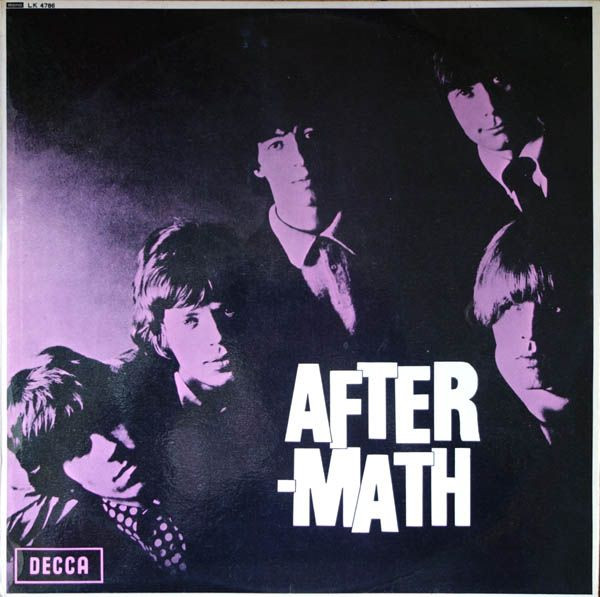
Data as of Jun 16, 2026
The Rolling Stones – Aftermath
1966 · UK · Decca · Vinyl LP Album Mono
Be the first to list yours, or get an email the moment a copy appears.
Offers
New to condition grades like NM or VG? Read our vinyl grading guide →
Pressing identification
Match these against your copy to confirm the exact pressing.
- Runout — side A
- XARL.7209XARL-7209-5BXARL-7209-4BXARL 7209-4BXARL-7209-1B 1 KT NXARL-7210-1B
- Runout — side B
- XARL.7210XARL-7210-1AXARL-7210-3AXARL 7210-1AXARL-7210-1A 1 KT AXARL-7210-5A
- Rights society
- BIEM, NCB, MCPS
- Record Company
- The Decca Record Company Limited
- Made By
- British Celanese Limited
- Recorded At
- RCA Studios, Hollywood
- Lacquer Cut At
- Decca Studios
Specifications
- Artist
- The Rolling Stones
- Style
- Pop Rock, Rhythm & Blues
- Year
- 1966
- Label
- Decca
- Catalog number
- LK 4786
- Country
- UK
Tracklist
- A1Mothers Little Helper2:40
- A2Stupid Girl2:52
- A3Lady Jane3:06
- A4Under My Thumb3:20
- A5Doncha Bother Me2:35
- A6Goin' Home11:35
- B1Flight 5053:25
- B2High And Dry2:52
- B3Out Of Time5:15
- B4It's Not Easy2:35
- B5I Am Waiting3:10
- B6Take It Or Leave It2:47
- B7Think3:10
- B8What To Do2:30
- Producer
- Andrew Loog Oldham
- Engineer, Liner Notes
- Dave Hassinger
- Arranged By
- The Rolling Stones
- Written-By
- Jagger-Richards
- Design, Cover
- Sandy Beach
- Photography By
- Guy Webster
About this record
The original UK mono pressing of Aftermath carries a distinctive label signature: boxed rights listings stacked and formatted differently between Side 1 and Side 2, with the dead-wax codes XARL.7209 and XARL.7210 stamped upside down in the runout. Pressed by British Celanese Limited for Decca in 1966, this first issue represents the earliest configuration of the album's UK release, before later pressings standardized the label design.
What drives its value
This pressing commands attention in the secondary market because demand significantly outpaces supply: 1613 collectors want it against 1861 who own one, a ratio that keeps prices firm. The price_guide reflects this scarcity across grades, with a Mint copy valued higher than VG+ and VG copies proportionally lower as condition deteriorates.
Approximately 132 community members have rated it 4.08 out of 5, indicating consistent collector regard. As the original UK mono issue on Decca with the first label design (before later reissues standardized the rights positioning), this pressing holds historical precedence.
The absence of a barcode confirms its 1966 vintage, predating the adoption of UPC encoding in the UK market. Condition and the specific label variant—particularly the upside-down, unbracketted code on Side 1—are the primary value drivers among copies in circulation.
How to appraise this pressing
Confirm this pressing by the catalogue number LK 4786 printed on the cover and label. Examine the dead-wax stampings: Side 1 should read XARL.7209 upside down without brackets, and Side 2 should read XARL.7210 upside down with brackets.
The label itself is the key identifier—look for the boxed rights listings [N.C.B.][B.I.E.M.] positioned horizontally on Side 1 and vertically on Side 2, a configuration unique to this first issue. The pressing plant mark British Celanese Limited may appear in the runout on either side.
The mono designation should be printed on the label. Verify the 14-track configuration and that no barcode is present on the cover or label.
Grade by examining the vinyl surface under strong light for hairline scratches, dust accumulation in the grooves, and any warping; listen for surface noise in quiet passages. A Mint copy will show virtually no signs of play; VG+ will have light surface marks audible only in silent sections; VG will show moderate wear but remain playable without distraction.
Further reading: grading a record, what makes a pressing valuable.
Listen
Hear the album before you buy.
Official videos via YouTube.
Release notes
First cat.nr. on cover, second on label.
Original UK mono issue. First label featuring stacked, boxed rights listings.
Label Side 1 has boxed rights positioned horizontally and code XARL.7209 upside down without brackets, while label Side 2 has boxed rights [N.C.B.][B.I.E.M.] positioned vertically and code XARL.7210 upside down with brackets.
Notes sourced from the Discogs database.
Frequently asked
How do I tell this 1966 original from a later UK reissue of Aftermath?
The label design is the definitive marker. On the original first issue, Side 1 displays the boxed rights horizontally with the matrix code XARL.7209 upside down and without brackets, while Side 2 shows the rights vertically with XARL.7210 upside down and with brackets. Later pressings standardized this layout. The catalogue number LK 4786 appears on both cover and label. Absence of a barcode is also consistent with 1966 UK pressings, before UPC adoption.
What is a VG+ copy of this pressing worth?
The price_guide lists a VG+ estimate; consult the specific guide date for the current valuation, as prices fluctuate with market availability. The spread between Mint and VG copies reflects the rarity of truly unplayed examples—most 1966 copies show some play wear after nearly six decades. Demand (1613 want against 1861 have) keeps prices above casual market noise.
Does the pressing plant matter for this record?
Yes. This pressing was manufactured by British Celanese Limited, one of the major UK vinyl suppliers in 1966. The plant mark may appear in the runout. Different plants sometimes produced slightly different vinyl compounds and surface finishes, which can affect sound quality and surface noise characteristics—a detail collectors of early Stones pressings track closely.
Why are there two catalogue numbers listed for this record?
The release notes indicate that the first catalogue number (LK 4786) appears on the cover, while the second (LK. 4786, with a period after LK) appears on the label itself. This is a printing inconsistency common in 1966 UK releases and does not indicate two different pressings—both refer to the same record.
Is this the only UK mono version of Aftermath?
No. This is the original first issue, identifiable by its unique label layout with the side-specific rights positioning and upside-down matrix codes. Decca later reissued the album in mono with standardized label designs. The original is preferred by collectors for its historical precedence and the specific label variant, which is why demand (1613 want) remains elevated relative to copies in circulation (1861 have).