 VinylAI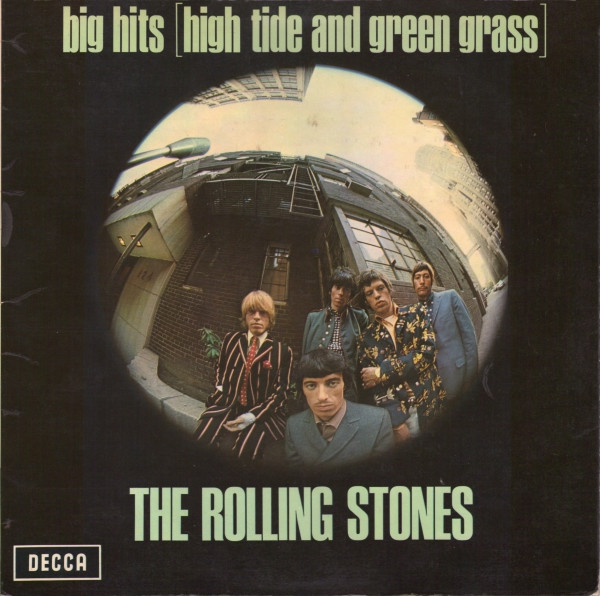
Data as of Jun 16, 2026
The Rolling Stones – Big Hits (High Tide And Green Grass)
1966 · UK · Decca · Vinyl LP Album Compilation Mono
Be the first to list yours, or get an email the moment a copy appears.
Offers
New to condition grades like NM or VG? Read our vinyl grading guide →
Pressing identification
Match these against your copy to confirm the exact pressing.
- Runout — side A
- XARL.7503XARL-7503-1A BC KT 2BXARL-7503-1AXARL-7503-2A UB KT 2CXARL-7503-2A 2D KT
- Runout — side B
- XARL.7504XARL-7504-3A UI KT 1XARL-7504-4AXARL-7504-4A M KT 1XARL-7504-3A 2D KT
- Rights society
- N.C.B., B.I.E.M., Gema
- Other
- K/T(Tax code on labels (KT on runouts))
- Record Company
- The Decca Record Company Limited
- Pressed By
- Decca Record Co. Ltd., Pressing Plant, UK.
- Lacquer Cut At
- Decca Studios
- Printed By
- Robert Stace
- Made By
- British Celanese Limited
Specifications
- Artist
- The Rolling Stones
- Style
- Pop Rock, Blues Rock, Rhythm & Blues, Psychedelic Rock
- Year
- 1966
- Label
- Decca
- Catalog number
- TXL 101
- Country
- UK
Tracklist
- A1Have You Seen Your Mother, Baby, Standing In The Shadow?2:30
- A2Paint It, Black3:10
- A3It's All Over Now3:20
- A4The Last Time3:35
- A5Heart Of Stone2:49
- A6Not Fade Away1:48
- A7Come On1:40
- B1(I Can't Get No) Satisfaction3:45
- B2Get Off Of My Cloud2:52
- B3As Tears Go By2:45
- B419th. Nervous Breakdown3:50
- B5Lady Jane3:06
- B6Time Is On My Side2:50
- B7Little Red Rooster2:55
- Producer
- Andrew Loog Oldham
- Engineer
- Bill Farley
- Engineer
- Dave Hassinger
- Engineer
- Glyn Johns
- Engineer
- Roger Savage
- Engineer
- Ron Malo
About this record
The tax code KT stamped in the dead wax of this 1966 Decca pressing is the first-edition fingerprint: it proves the record was pressed between July 1963 and November 1968, before the UK switched to VAT taxation. Without KT visible on both label and runout, you have a later reissue.
Demand for clean originals remains steady—368 collectors want it against 4079 who own one—but the early pressing commands attention because later mono editions lost the distinctive large Decca logo without the rectangular box.
What drives its value
The 1966 first pressing on Decca TXL 101 holds value because of its specific label design and tax-code dating. The community snapshot shows 4079 have-counts against 368 want-counts, indicating this is a widely held but still-sought compilation.
The early pressing is identified by the large Decca logo without rectangular box on light blue labels with silver print and the deep groove, plus the KT tax code on both label and matrix. Later mono reissues substituted a boxed logo and moved the booklet to an insert, making the original gatefold with stapled 6-page booklet a collecting point.
Condition and the presence of KT on the runout (XARL-7503-1A BC KT 2B or XARL-7504-3A UI KT 1) separate originals from reissues; the pressing plant—either Decca Record Co. Ltd. or British Celanese Limited—also marks the variant.
How to appraise this pressing
Confirm this pressing by the catalogue number TXL 101 on the label and spine. Examine the dead wax for the KT tax code: it must appear on both the label (around 12 o'clock) and the matrix runout.
The matrix strings XARL-7503-1A BC KT 2B (side one) and XARL-7504-3A UI KT 1 (side two) are the documented runouts for this first pressing. The label must show the large Decca logo without a rectangular box, printed in silver on light blue with the deep groove.
The gatefold sleeve should contain a stapled 6-page picture booklet; later reissues have the booklet as a loose insert. The pressing plant credit reads either Decca Record Co. Ltd., Pressing Plant, UK or British Celanese Limited.
Grade by surface noise, warp, and label condition; the 33rpm full frequency range recording ffrr logo and Made in England credit confirm authenticity.
Further reading: grading a record, what makes a pressing valuable.
Release notes
First pressing. This edition has the large Decca logo without the rectangular box on light blue labels with silver print; the labels have the deep groove. "Long Playing 33rpm" full frequency range recording "ffrr 'ear' logo"; Made in England · The Decca Record Co. Ltd. Issued in a gatefold sleeve with 6-page picture booklet stapled to the centre.
The early UK pressing is identified by the tax code "KT". It MUST be present on labels and on matrix/runout, otherwise it is a later pressing, as explained here below: Most of the Decca records also have a tax code around 12 o'clock on the vinyl. This tax code is not any specific Decca code but the official code used in UK before 1973 to determinate the sales tax %. - MT code was the official tax code in UK from January 1st to June 30th 1963. - KT code was used in between July 1st 1963 and November 22nd 1968. - JT code was used from November 23rd 1968 and up to April 1st 1973 when UK government took the VAT tax system into use. If the tax code is missing, then the LP is pressed after April 1st 1973. The dates mentioned are the official dates when the codes changed. There may be a slight overlap as it is not known how fast Decca did change the stampers to have the correct tax code. Some LP’s do have a double coding, both JT and KT on the same vinyl. These LP’s may have been pressed just about the time when the code change took place, November 1968.
A later mono pressing of has the rectangular 'box' logo and reissues have the booklet as an insert.
© 1966, The Decca Record Company Ltd, London
Publishing info: Essex Music - B6 Forward Music - B3 Jewel Music - A7, B7 Kags Music - A3 Mirage Music - A1, A2, A4, A5, B1, B2, B4, B5 Southern Music - A6
Notes sourced from the Discogs database.
Frequently asked
How do I tell a 1966 first pressing from a later mono reissue?
The KT tax code must appear on both the label and in the matrix runout. The label design shows a large Decca logo without a rectangular box, printed in silver on light blue with a deep groove. The gatefold sleeve contains a stapled 6-page picture booklet. Later reissues have a boxed logo, no KT code, and the booklet as a loose insert.
What does the KT code mean?
KT was the official UK sales tax code used from July 1st 1963 to November 22nd 1968. Its presence on both label and matrix proves the record was pressed during that window. After April 1st 1973, Decca stopped using tax codes entirely when the UK switched to VAT. A missing KT code indicates a pressing after 1973.
Which pressing plant made my copy?
This first pressing was made by either Decca Record Co. Ltd., Pressing Plant, UK or British Celanese Limited. The credit line appears on the label. Both plants produced valid first pressings; the plant name alone does not determine rarity or value.
What is the community demand for this record?
368 collectors list it as wanted against 4079 who own a copy. The rating is 4.37 stars from 227 votes. This ratio suggests the record is widely held but still actively sought, typical of a successful early compilation.
What should I look for when grading my copy?
Check for surface noise, warp, and label wear. The gatefold sleeve and stapled booklet should be intact. Verify the KT code on both label and matrix runout. The 14 tracks should play without skips. The ffrr logo and Made in England credit confirm you have the original 1966 pressing.